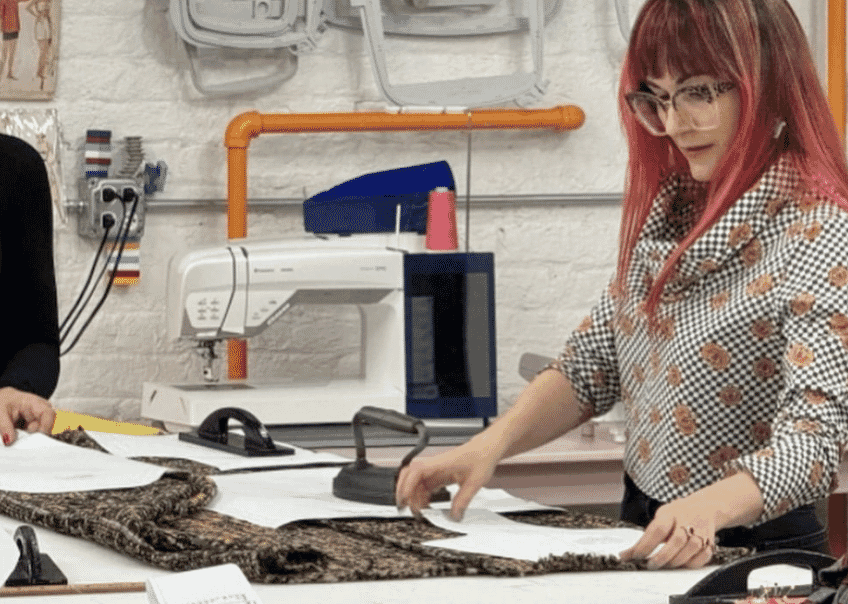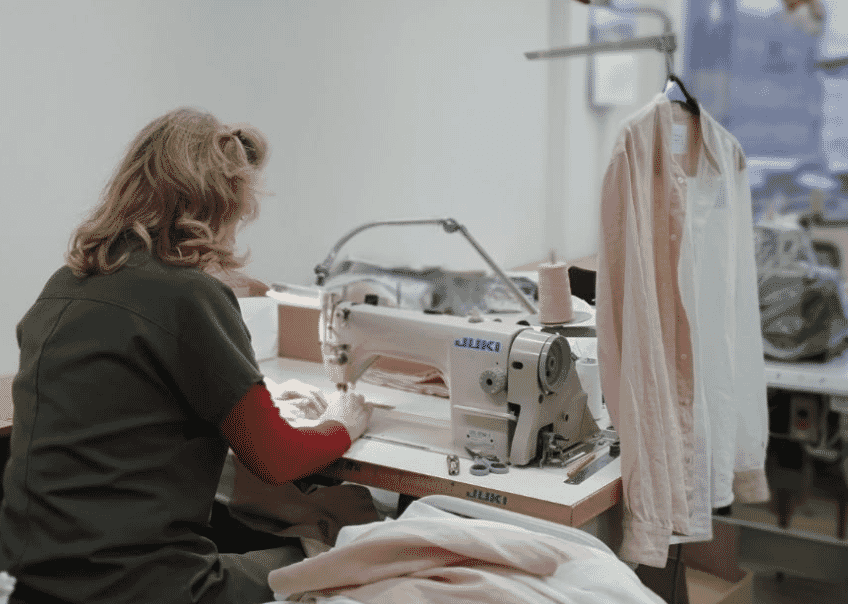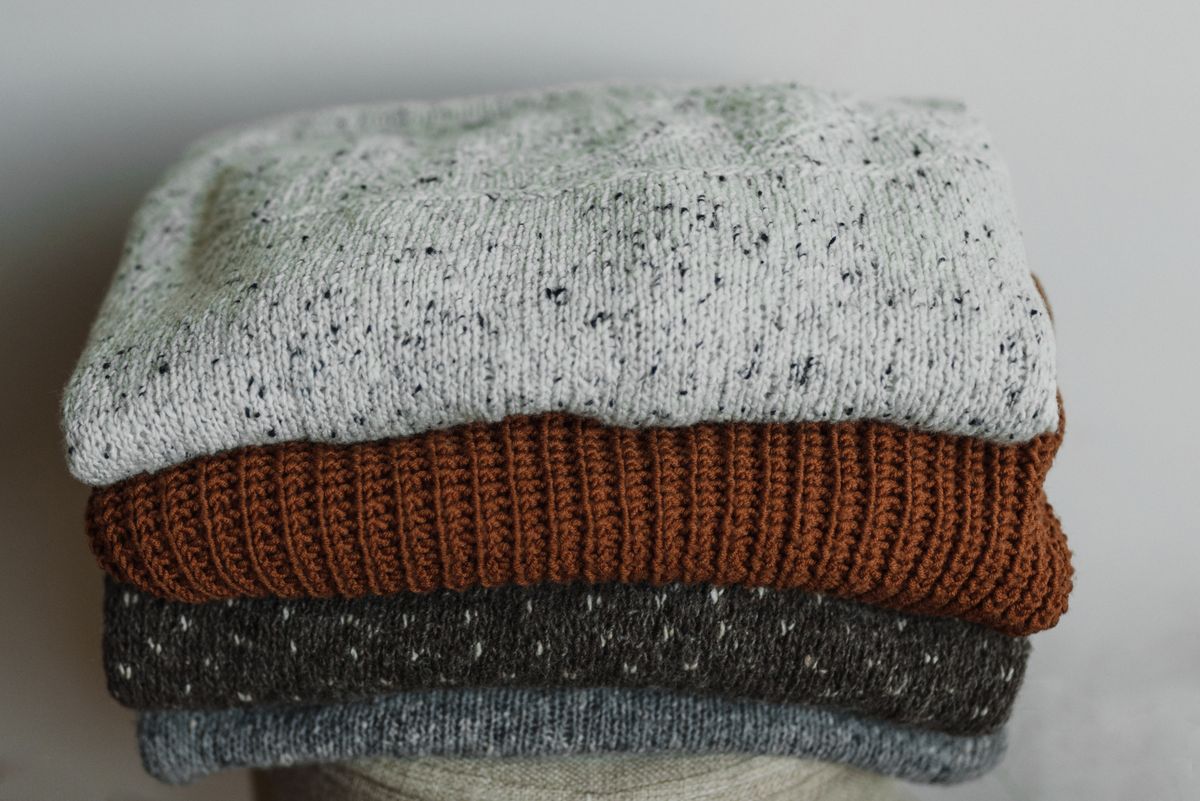
Knitwear is one of the strongest categories left in British clothing manufacturing. While much of the cut-and-sew capacity moved abroad, several knitting mills kept working, some of them for more than two centuries. Fine knitwear depends on skilled operators and on machinery set up for specific gauges, and that has been harder to move than a sewing line.
This page names the mills we could check on their own websites and on Companies House in October 2026, says which of them make everything in Britain and which make only part of their range here, and explains how knitwear minimums work. It is also clear about what a small brand can and cannot get made. For our own knitwear service, see knitwear manufacturing in the UK.
Heads up: We're UK Clothing Manufacturers, a group of documented clothing factories in the United Kingdom. The companies named below are independent businesses, checked on their own websites and on Companies House in October 2026, and are not members of our group. Our role is separate: our team replies to your brief within 24 hours, then places and manages your production with the factory in our group built for your product, from 100 pieces per style.
Key Takeaways
- John Smedley has knitted at Lea Mills since 1784 and says every garment is still made in England; it was reported in 2024 to be opening its factory to third-party manufacturing.
- Johnstons of Elgin says it makes what it sells and has been made in Scotland for over two centuries.
- Hawick is the cashmere town: Hawico knits on Duke Street, Pringle makes many of its cashmere pieces there, and Barrie, owned by Chanel since 2012, knits in Scotland.
- Corgi has made socks and knitwear in Wales since 1892.
- Most heritage mills are brands first. Ask whether they take outside work before you brief them.
Have a product in mind? Tell us the product, quantity and timeline and our team replies within 24 hours. Send a brief →
Try it free: Work out your true cost per garment in 60 seconds with our garment cost calculator. No email required.
Which knitwear manufacturers operate in the UK?
John Smedley (Lea Mills, Derbyshire). Founded at Lea Mills in 1784, John Smedley says the mill is the world's oldest continuously operating manufacturing factory still producing today and that every John Smedley garment is still made in England. Its history page also says it installed Britain's first fully fashioned knitting machines in the nineteenth century, and it received a Royal Warrant in 2013 (John Smedley, Our History). Companies House lists John Smedley Limited, 00040000 as active at Lea Mills.
For a brand looking for contract production, the notable development is that John Smedley opened its Derbyshire factory to third-party manufacturing, as reported by Knitting Industry Creative in May 2024. Confirm with the company that it is still taking outside work and on what terms before you build a plan around it.
Johnstons of Elgin (Elgin and Hawick). Johnstons of Elgin says it makes what it sells and has been made in Scotland for over two centuries, in its Scottish mills (Johnstons of Elgin, Heritage; Craftsmanship). It was founded in 1797 and has a knitting mill in Hawick alongside its Elgin mill (Wikipedia). Its website footer names James Johnston & Company of Elgin Limited, which Companies House lists as active (company, SC022553), with weaving and apparel manufacture as its business.

Who else knits in Britain?
Corgi (Ammanford, Wales). Corgi says it has made socks and knitwear in Wales since 1892, that it has been run by six generations of the family that started it, and that it makes what it sells in Wales (Corgi). Companies House lists Corgi Hosiery Limited, 03441080 as active in Ammanford, with knitted hosiery and knitted apparel as its business.
Hawico (Duke Street, Hawick). Hawico traces itself to The Hawick Hosiery Company, formed on Duke Street in 1874, and says the original mill building is still in use and that the same Duke Street factory now combines traditional skills with modern seamless knitting (Hawico, Our Heritage). Companies House lists The Hawick Cashmere Company Limited, SC128179 as active at Trinity Mills, Duke Street.
Pringle of Scotland (Hawick). Pringle dates itself to 1815 and says its home is in Hawick, where it is "proud to still make many" of its cashmere pieces and more intricate designs (Pringle of Scotland, Made in Scotland). Many, not all: check the country of origin of each style. Companies House lists Pringle of Scotland Limited, SC203627 as active in Hawick.
Barrie (Scotland). Barrie describes itself as one of the oldest cashmere knitting manufacturers in Scotland, and it joined Chanel's Métiers d'Art in 2012 (Barrie). Companies House lists Barrie Knitwear Limited, 02997679 as active. As part of Chanel, it is a reference point for the category rather than a contract option for a new brand.
Leicester and Nottingham. Commercial knitwear and jersey are concentrated in the East Midlands. The Leicester Made directory lists Leicester knitwear businesses; it states that it endorses none of them, so check any name on Companies House and with a sample before you commit. Our guide to clothing manufacturers in Leicester covers the area in more detail.
Citation capsule: John Smedley has made knitwear at Lea Mills in Derbyshire since 1784 and says every garment is still made in England; in 2024 it opened its factory to third-party manufacturing. Johnstons of Elgin says it has made in Scotland for over two centuries. In Hawick, Hawico knits on Duke Street and Pringle of Scotland makes many of its cashmere pieces.
What is the difference between fully fashioned and cut-and-sew knitwear?
It is the difference between knitting a shape and cutting one out, and it decides which manufacturers can make your product.
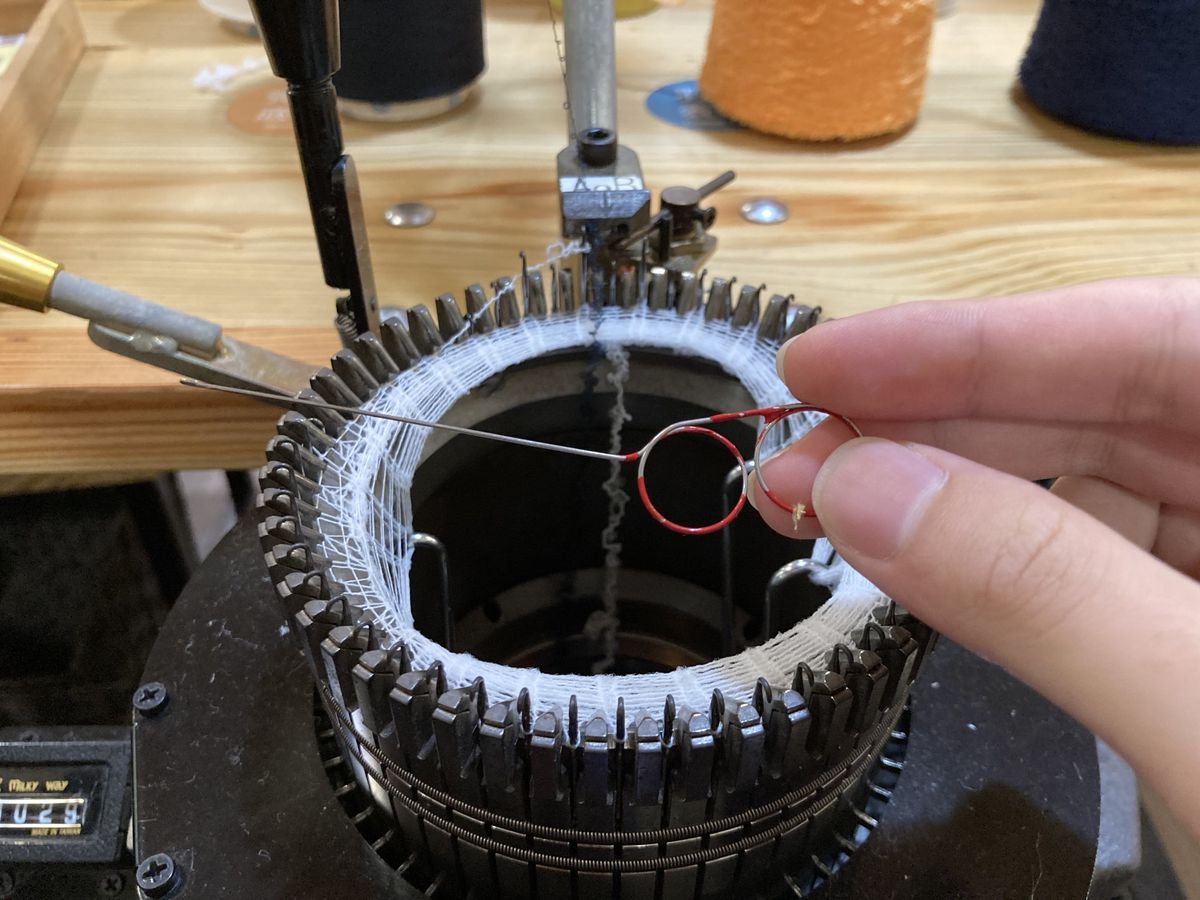
Fully fashioned knitwear is knitted to shape. The machine increases and decreases stitches to form each panel, so the edge is finished rather than cut. The panels are then linked together, often by hand. Little yarn is wasted, the seams are flat and the garment holds its shape.
Cut-and-sew knitwear starts from knitted fabric on a roll. The fabric is laid up, cut to pattern pieces like a woven and sewn on an overlocker. It is faster, it is how jersey and fleece garments are made, and it wastes some fabric in the cutting.
Much of what is sold as knitwear in the mass market is cut and sew. The heritage mills on this page are known for knitting garments, and the two are usually made by different businesses on different machines. Knitted hats sit with knitwear, not with felt hats; our guide to hat manufacturers in the UK explains the difference.
Why does the distinction decide your shortlist?
Because asking a Hawick cashmere mill to make hoodies is the wrong question, and so is asking a jersey factory for a fully fashioned merino jumper. Decide which construction you want before you write to anyone.
There is a middle category: some knitwear is knitted to shape and then cut at specific points, usually to save cost. If a quote for a fully fashioned garment comes back surprisingly low, ask whether any panel is cut.
Skip weeks of cold outreach: Browse our UK factory directory for £49, or get in contact: our team replies within 24 hours and places and manages your production with the factory in our group built for it. No commissions; the factory bills you directly.
How do UK knitwear manufacturers compare?
| Manufacturer | Location | Since | Made in Britain | Notable |
|---|---|---|---|---|
| John Smedley | Lea Mills, Derbyshire | 1784 | Every garment, it says | Third-party manufacturing reported 2024 |
| Johnstons of Elgin | Elgin and Hawick | 1797 | Says it makes what it sells in Scotland | Scottish mills |
| Pringle of Scotland | Hawick | 1815 | Many cashmere pieces, not all | Check origin per style |
| Hawico | Duke Street, Hawick | 1874 | Knits at its Duke Street factory | Seamless knitting |
| Corgi | Ammanford, Wales | 1892 | Says it makes what it sells in Wales | Socks and knitwear |
| Barrie | Scotland | Not stated on its site | Cashmere knitting manufacturer in Scotland | Part of Chanel since 2012 |
Source: each company's own website (Johnstons of Elgin founding year: Wikipedia), checked October 2026. None of these businesses publishes a minimum order quantity.
None of the six publishes a minimum, which is normal in knitwear: the minimum depends on gauge, yarn, shape and how many sizes and colours you need. And most are brands making their own collections, so the first question is whether they take outside work at all.
Why are knitwear minimums quoted per programme?
Because setting up a knitting machine for a garment is a heavier job than setting up a cutting table, and the cost makes sense spread across repeated production.
A knitting machine is set to a gauge, threaded with specific yarns and programmed for a specific garment shape. For a fully fashioned garment the programme encodes every increase and decrease that forms the panel. That work is done once and then serves every garment knitted from it, so a brand that reorders the same crew neck in the same yarn each season spreads the setup across several orders.
Three things reduce the number in practice. Use a yarn and gauge the mill already runs. Reduce colourways before you reduce quantity, since each colour is a separate threading. And if you genuinely intend to repeat a style, say so in writing.
Citation capsule: Knitwear minimums are often discussed per programme rather than per style. A knitting machine must be set to a gauge, threaded with specific yarns and programmed for the garment shape, and that setup is spread across repeated production. Using the mill's existing yarn and gauge and fewer colours lowers the minimum.
What can a small brand realistically get knitted in Britain?
A focused programme in a yarn the factory already runs, at a price that reflects the make. British knitwear is a premium product, so a brand needs a price position that supports it.
What works: one style, or a few, in two or three colours, in a yarn and gauge the factory runs routinely, ordered seasonally and repeated. What works poorly: six styles, bespoke yarns, a new gauge and no plan to reorder.
Through our group, knitwear starts from 100 pieces per style. Sampling takes 2 to 4 weeks and bulk 6 to 8 weeks from the approved sample, so send the brief at least 14 weeks before your ship date (knitwear manufacturing in the UK).
A factory-ready tech pack makes a knitwear brief legible. For knitwear it needs the yarn and composition, the gauge or knit weight, the measurements and the trims; our tech pack service builds one for £79 per style. How we work explains how a brief becomes a quote.
Why did knitwear survive when much of British cut-and-sew did not?
Three reasons are usually given, and they fit the mills on this page.
The knowledge sits in people. Getting a good garment out of a knitting machine at a given gauge in a given yarn takes judgement built over years: tension, how a yarn relaxes after finishing, which faults matter.
The machinery is specialised. A fine-gauge knitting machine is set up for a narrow range of work, which raises the barrier to entry and protected established mills.
The customers moved up the market. British knitwear sells to luxury and premium buyers who pay for provenance. Chanel bringing Barrie into its Métiers d'Art in 2012 is a clear example of a luxury house choosing to own Scottish knitting capacity.
Citation capsule: British knitwear held on where much domestic garment making did not because the skill sits in experienced operators, the machinery is specialised, and its customers moved towards luxury buyers who pay for provenance. Chanel bringing Barrie, a Scottish cashmere knitting manufacturer, into its Métiers d'Art in 2012 illustrates the last point.
How do you verify a UK knitwear manufacturer?
Companies House first, then two technical questions, then a sample.
The register is free and public (Companies House): confirm the company number, the status, the registered address and the nature of business. Check the name on the website footer too: Johnstons of Elgin, for example, trades through James Johnston & Company of Elgin Limited, while a company called Johnstons of Elgin Limited is registered as non-trading.
Which gauges do you run? A mill answers with numbers straight away, because gauge defines its business. A vague answer suggests the knitting happens somewhere else.
Is the linking done by hand or by machine, and where? A mill that links in house will say so; a company arranging production elsewhere tends to describe the finish rather than the process.
Then ask for a sample in your yarn at your gauge. Knitwear samples take longer than cut-and-sew samples, because programming is part of the sample. Finally, ask where the yarn is spun and where each style is knitted: some well-known names make only part of their range in Britain.
Related Reading
- Clothing manufacturers UK: the verified list
- Clothing manufacturers in Scotland
- Sock manufacturers UK
- Clothing manufacturers in Wales
- Clothing manufacturers in Leicester
Frequently Asked Questions
Who is the oldest knitwear manufacturer in the UK?
John Smedley, which was founded at Lea Mills in Derbyshire in 1784 and says the mill is the world's oldest continuously operating manufacturing factory still producing today. It says every John Smedley garment is still made in England.
Can I get knitwear made in the UK as a small brand?
Yes, if the brief is focused: one or two styles in a yarn and gauge the mill already runs, in a few colours, ideally repeated each season. Most of the heritage mills named here make their own brands, so ask whether they take outside work; John Smedley was reported in 2024 to have opened its Derbyshire factory to third-party manufacturing. Through our group, knitwear production starts from 100 pieces per style.
What is fully fashioned knitwear?
Knitwear knitted to shape: the machine adds and removes stitches to form each panel, so the edges are finished rather than cut. The panels are then linked together. Cut-and-sew knitwear is cut from knitted fabric on a roll and sewn, which is a different process, often in a different factory.
What are minimum orders for UK knitwear?
The mills named here do not publish minimums. Knitwear minimums depend on the yarn, the gauge, the shape and the number of colours, and are often discussed per programme rather than per style. In our group, knitwear starts from 100 pieces per style, with sampling of 2 to 4 weeks and bulk of 6 to 8 weeks from the approved sample.
Where is UK knitwear manufacturing concentrated?
Hawick and the Scottish Borders for cashmere (Hawico, Pringle of Scotland, Barrie, and Johnstons of Elgin's knitting), Derbyshire for John Smedley, Elgin for Johnstons of Elgin, Ammanford in Wales for Corgi, and Leicester and Nottingham for commercial knitwear and jersey.
We're a group of documented clothing factories in the United Kingdom. Tell us your product, volume and timeline: our team replies within 24 hours and, if it is a fit, places and manages your production with the factory in our group built for it, from 100 pieces per style. The factory quotes and bills you directly. No commissions.
Get in contact Download the directory (£49)Need a tech pack? Get a factory-ready single-style tech pack for £79. See what's included.
Editorial note: all company names, certification marks and trademarks referenced here are the property of their respective owners. Company details are taken from each company's own website and Companies House, read in October 2026; they can change, so confirm terms directly with the maker before committing.
Sources
- John Smedley, Our History: 1784 founding at Lea Mills, oldest continuously operating factory claim, every garment made in England, first fully fashioned machines, 2013 Royal Warrant.
- Knitting Industry Creative, John Smedley opens Derbyshire factory for third-party manufacturing: third-party manufacturing at the Derbyshire factory (May 2024).
- Johnstons of Elgin, Heritage and Craftsmanship: made in Scotland for over two centuries, Scottish mills.
- Wikipedia, Johnstons of Elgin: 1797 founding and the Hawick knitting mill.
- Corgi: made in Wales since 1892, family-run, makes what it sells.
- Hawico, Our Heritage: 1874 Duke Street origins, mill still in use, seamless knitting.
- Pringle of Scotland, Made in Scotland: home in Hawick, many cashmere pieces still made there.
- Barrie: cashmere knitting manufacturer in Scotland, Chanel Métiers d'Art since 2012.
- Leicester Made: Leicester textile directory (endorses no listed company).
- Companies House: company numbers 00040000, SC022553, SC064099 (non-trading), 03441080, SC128179, SC203627 and 02997679, read October 2026.