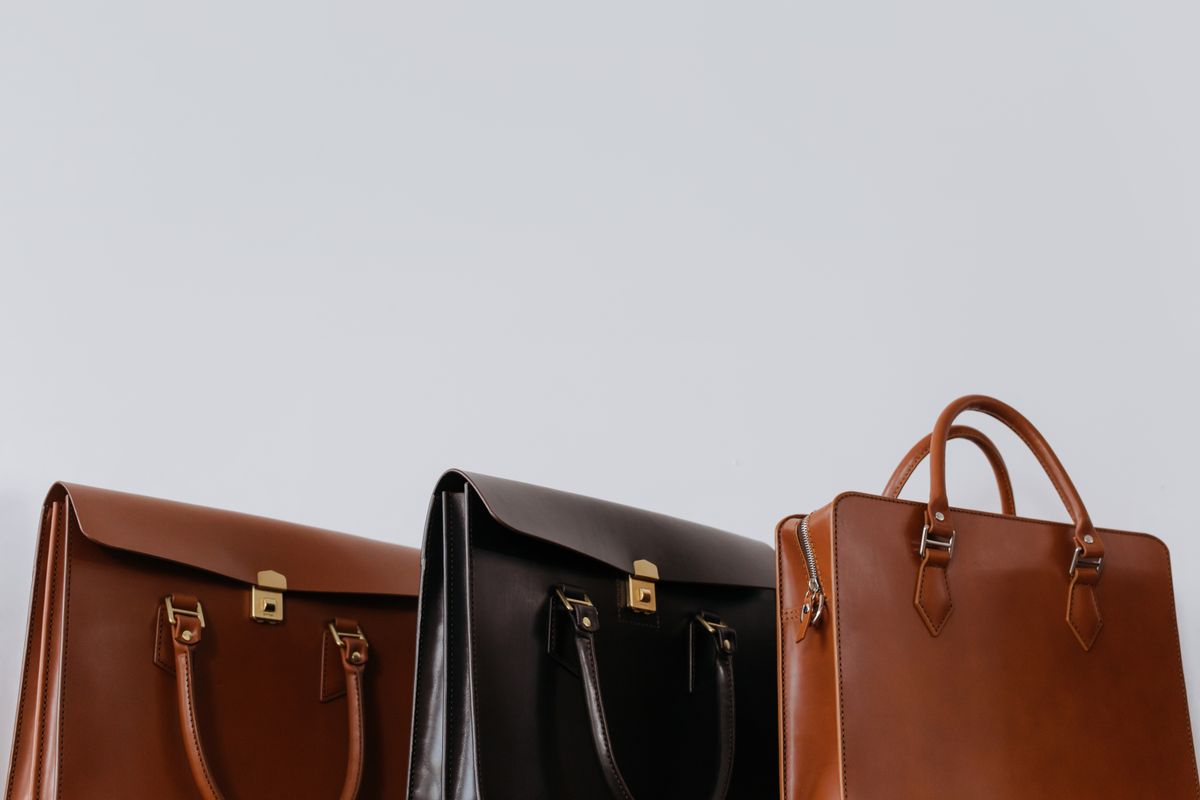
Bags are one of the few categories where British manufacturing has held a real position. A leather bag is material-heavy and hardware-heavy, it is bought partly on construction, and it is kept for years: conditions under which a high-wage country can compete.
The capacity sits in two places: a handful of long-established makers producing under their own names, and the Walsall leather trade. This page covers both, checked on each company's own website and on Companies House in October 2026, and is clear about which businesses say they take outside work.
Heads up: We're UK Clothing Manufacturers, a group of documented clothing factories in the United Kingdom. The companies named below are independent businesses, checked on their own websites and on Companies House in October 2026, and are not members of our group. Our role is separate: our team replies to your brief within 24 hours, then places and manages your production with the factory in our group built for your product, from 100 pieces per style.
Key Takeaways
- Billingham has made bags in England since 1973, from waterproof canvas or FibreNyte with leather trims (Billingham).
- Tusting has worked with leather since 1875 and handcrafts in its own workshop at its Lavendon headquarters (Tusting).
- Chapman handcrafts all its bags in Carlisle and its older trade site describes a private-label service (Chapman trade).
- Walsall is the leather goods town. Ettinger runs a factory there and Beorma makes everything by hand in its Walsall workshop.
- Most of the best-known names are brands, not contract manufacturers. Ask before you brief.
Have a product in mind? Tell us the product, quantity and timeline and our team replies within 24 hours. Send a brief →
Try it free: Work out your true cost per garment in 60 seconds with our garment cost calculator. No email required.
Which bag manufacturers still operate in the UK?
Billingham (West Midlands). A British maker of camera, laptop and travel bags. Its website says it has made bags in England since 1973, when Ros and Martin Billingham started with fishing and shooting bags, and that its bags use a three-layer canvas or FibreNyte material with a butyl rubber middle layer for waterproofing, with around 50 components made by the company itself (Billingham). Companies House: M. Billingham Holdings Limited, company 11976966, active, registered office in Cradley Heath, nature of business luggage and handbag manufacture.
Billingham is worth studying even if you never use it: camera bags are bought by people who will pay for construction and keep the product for a long time, a customer profile that supports domestic manufacture.
Tusting (Lavendon, Buckinghamshire). A British maker of leather handbags, work bags and luggage. Its website says it has worked with leather since 1875 and that every piece is designed and handcrafted in its own atelier workshop at Tusting HQ in England, in Lavendon; it also offers a bespoke service and repairs (Tusting). Companies House: J.R. Tusting & Company Limited, company 01710495, active, registered in Lavendon, nature of business luggage and handbag manufacture.
Chapman (Carlisle, Cumbria). Known for canvas and leather bags; it was originally a maker of fishing and shooting bags and now makes bags in leather, tweed and nylon as well as canvas. Its shop site says that for forty years all its bags have been handcrafted in Carlisle, in a workshop on Tannery Road (Chapman Made). Its older trade website, which it describes as the former trade site of John Chapman Limited, says the company also works with UK brands and offers a full design, sampling, development and production service for private-label clients, fully factored or CMT, with minimums on enquiry (Chapman trade). Companies House: John Chapman Limited, company 05721166, active.
Citation capsule: Billingham says it has made bags in England since 1973, from waterproof canvas or FibreNyte with leather trims. Tusting has worked with leather since 1875 and handcrafts in its own workshop in Lavendon, Buckinghamshire. Chapman handcrafts all its bags in Carlisle and has described a private-label service for other brands. All three are active companies on Companies House with luggage and handbag manufacture as their nature of business.
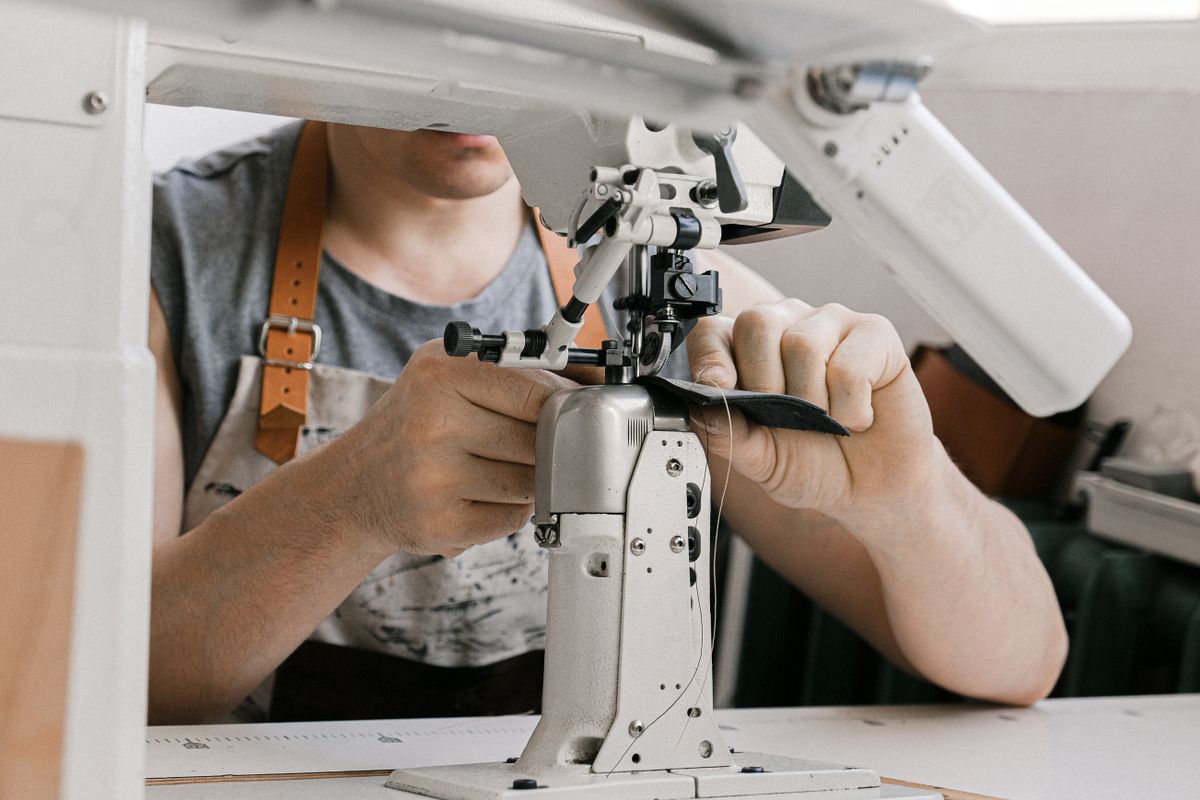
What is the Walsall leather trade and why does it matter?
Walsall, on the northern outskirts of Birmingham, was home to thousands of leather workshops and was at the heart of English saddlery, harness and small leather goods making (Ettinger). Beorma calls it, for centuries, the centre of England's saddlery trade (Beorma).
Why a concentration of makers matters more in leather than in most categories comes down to what a leather product needs: the hide, the hardware, the edge finishing, the stitching and often specialist work such as edge painting. Where those suppliers are close together, a maker can source and finish locally; elsewhere each one is a separate supplier with its own minimum and lead time. For the leather itself, our guide to leather manufacturers in the UK covers the tanneries still working in Britain.
Two public starting points help. Walsall Leather Museum publishes, through Walsall Council, a short list of leather trade suppliers (leather, saddlers, hardware and leathercraft supplies) dated 2022 (Walsall Council); treat it as a list of suppliers, not of bag factories, and check each entry is still trading. Leather UK, the trade association for the UK leather industry, runs a leather directory (Leather UK).
Skip weeks of cold outreach: Browse our UK factory directory for £49, or get in contact: our team replies within 24 hours, then we place your production with the factory in our group built for it. The factory bills you directly; no commissions.
Which leather makers work in and around Walsall?
Ettinger (Walsall). Founded by Gerry Ettinger in 1934, first as a UK representative for German leather goods factories; it bought its first factory in London in 1950 and in 1999 bought the Walsall factory of James Homer Ltd, a leather goods maker established in 1890, with its workforce (Ettinger, the Ettinger factory). It received a Royal Warrant in 1996 and a second in 2024, and takes wholesale and corporate gifting enquiries. Companies House: G. Ettinger Limited, company 00336826 and James Homer Limited, company 03730451, both active, nature of business luggage and handbag manufacture.
Beorma (Walsall). A maker of bags, briefcases, belts and small leather goods. Its website says every piece is cut, stitched and finished by hand in its own workshop in Walsall, where it also does repairs (Beorma). Companies House: Beorma Leather Company Limited, company 14368574, active.
Billy Tannery (the Midlands, not Walsall). A micro tannery in an old farm building, tanning goat and deer leather in small batches, which also makes bags and offers bespoke and trade work. It says that when it started in 2016 it was, as far as it can tell, the first new leather tannery built in the UK for nearly 100 years (Billy Tannery). Companies House: Billy Tannery Limited, company 10653455, active.
How do UK bag manufacturers compare?
| Maker | Location | Since | Makes | Outside work | Notable |
|---|---|---|---|---|---|
| Billingham | West Midlands (Cradley Heath office) | 1973 | Camera, laptop and travel bags | Not published | Canvas or FibreNyte with butyl layer; made in England |
| Tusting | Lavendon, Bucks | Leather since 1875 | Handbags, work bags, luggage | Bespoke service (own range) | Handcrafted in own workshop |
| Chapman | Carlisle, Cumbria | Forty years in Carlisle | Canvas, leather, tweed and nylon bags | Private label (older trade site) | All bags handcrafted in Carlisle |
| Ettinger | Walsall | 1934 (Walsall factory from 1999) | Bags and small leather goods | Wholesale, corporate gifting | Royal Warrants 1996 and 2024 |
| Beorma | Walsall | Not published | Bags, briefcases, belts, small goods | Not published | Cut, stitched and finished by hand in Walsall |
| Billy Tannery | Midlands | 2016 | Goat and deer leather, bags | Bespoke and trade | Micro tannery |
Source: each company's own website and Companies House, read October 2026. "Not published" means we did not find it on the company's website.
Read the "outside work" column carefully. Most of these are brands that make their own product, and only some publish anything about working for other brands. That is the defining feature of this category and a common reason a brand's enquiries go unanswered: a business with a factory and its own brand has no particular reason to advertise contract capacity. Asking directly is the technique, and the answer usually comes quickly either way.
Can a small brand get bags made in Britain?
Often, provided the product suits domestic manufacture and the price reflects it. There are three ways in, and they suit different briefs.
Ask a maker that describes outside work. Chapman's older trade website describes private-label production for other brands, fully factored or CMT; confirm with the company that the service is still offered and ask for its minimums.
Use the Walsall trade. Walsall makers such as Ettinger (wholesale and corporate gifting) are the obvious first calls, and the Walsall Leather Museum suppliers list and the Leather UK directory help you find leather, hardware and specialist suppliers.
Commission a bespoke maker. Billy Tannery offers bespoke and trade work. That suits low quantities where the product is a gift, a corporate item or a small capsule rather than a range.
What rarely works is approaching a heritage brand as though it were a contract factory. A factory-ready tech pack makes a bag brief legible to a manufacturer, and how we work sets out where that fits. A bag pack needs hardware specifications, edge finish, thread and lining detail, which is a different document from a garment pack.
Citation capsule: There are three ways into British bag manufacture for a small brand: ask a maker that describes outside work (Chapman has described a private-label service), use the Walsall leather trade with the Walsall Leather Museum suppliers list and the Leather UK directory, or commission a bespoke maker such as Billy Tannery for low quantities. Heritage brands that make only their own product are rarely contract factories.
Why does bag making survive in Britain when garment making did not?
Because the economics of a bag differ from those of a shirt in four ways.
Labour is a smaller share of a high-value leather bag. The leather and the hardware are a large part of the cost, so the wage difference between Britain and a low-cost country moves the total price less than on a t-shirt, where labour weighs more.
Construction is visible. A bag's stitching, edges and hardware can be inspected by the buyer, so quality differences turn into price differences.
Bags are kept. A camera bag or a leather holdall is bought to last for years, which changes what the customer will spend and turns the purchase from a fashion decision into a durable goods one.
Repair is part of the offer. A maker that is still trading can repair its own bags; Tusting and Beorma both offer repairs. That is only credible when the maker is reachable and continuous.
What drives the cost of a British-made bag?
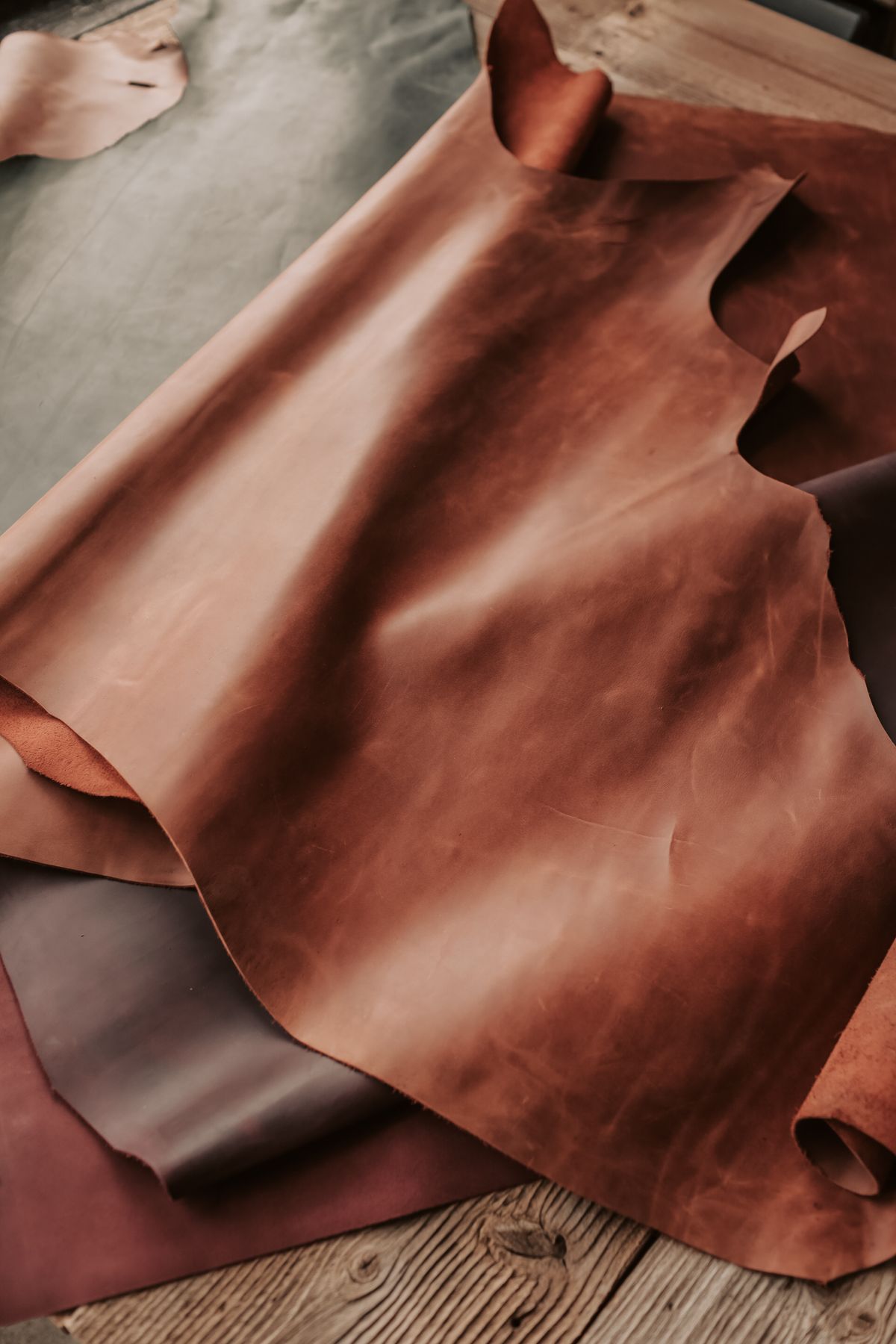
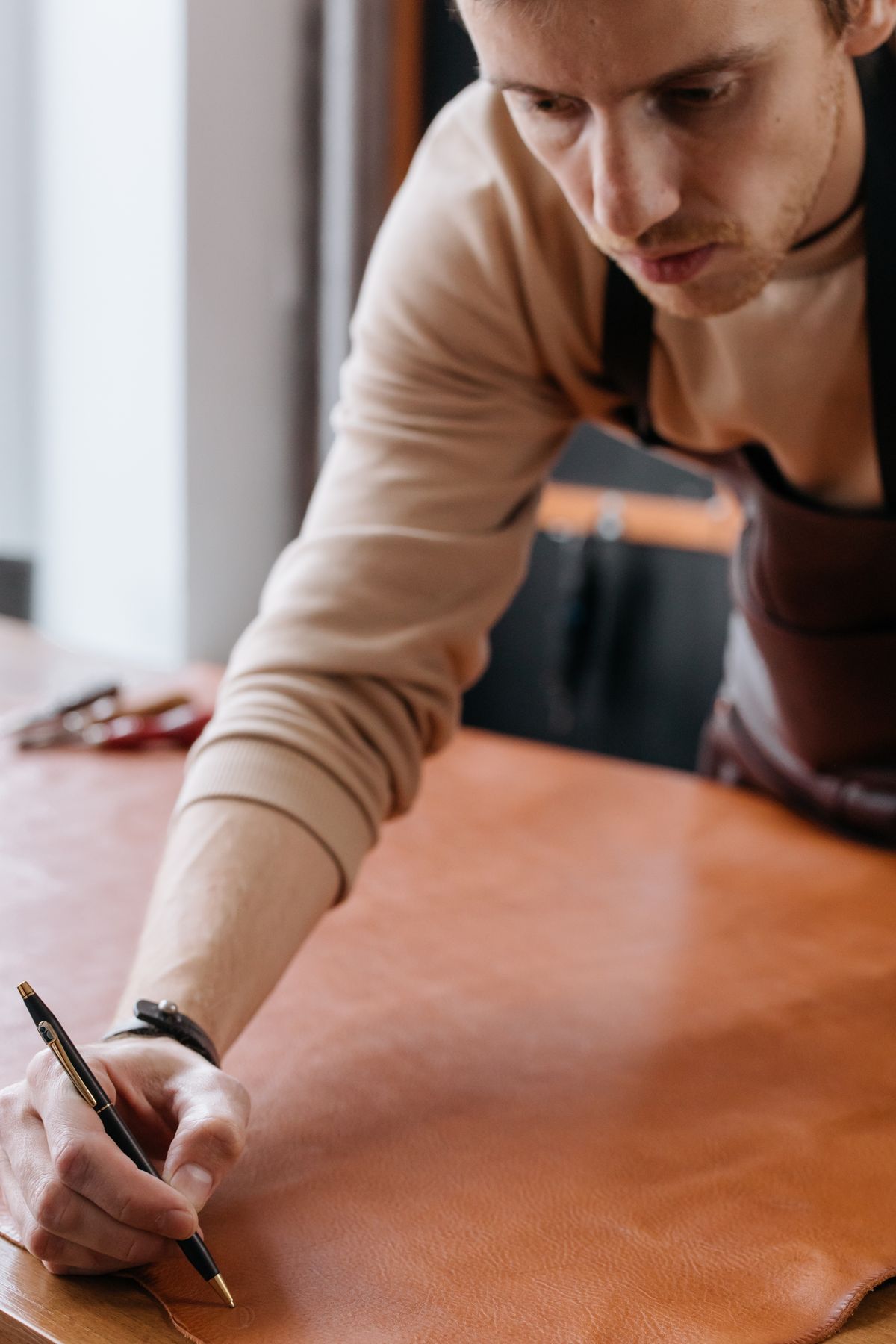
The hide. Leather is priced by grade, by tannage and by area, and a bag pattern does not nest perfectly on an irregular hide. A hide has firmer and looser areas, so a maker cutting a structured panel cannot use all of it. Ask how the maker prices leather and what yield it assumes.
The hardware. Buckles, clasps, rivets, zips and branded plates carry their own minimums, which can be higher than the bag minimum. Branded hardware also needs tooling that is paid for once and owned by someone. Decide the hardware before you fix the design.
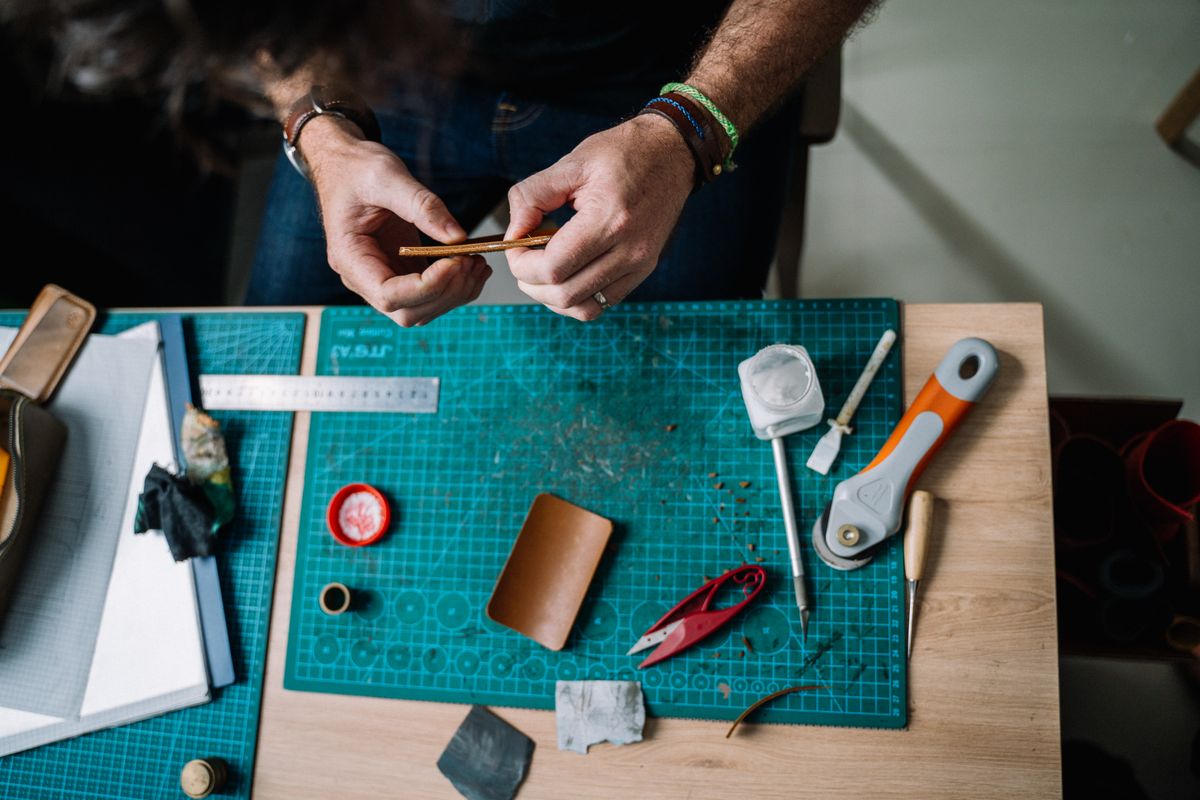
The edges. Edge finishing is where a lot of the hand labour in a leather bag goes. A painted edge is built up in layers with sanding between them; a folded edge needs the leather skived thin enough to turn. Both are slow and both are visible.
The stitching. Machine stitching heavy leather needs a machine built for it, and hand saddle stitching is much slower again. A specification that calls for hand stitching changes the quote, so say which you want.
Citation capsule: Four inputs drive the cost of a British-made leather bag: hide yield, because a hide is irregular and not all of it suits a structured panel; hardware, which carries its own minimums and, when branded, tooling costs; edge finishing, where much of the hand labour goes; and stitching method, since hand saddle stitching is much slower than machine work.
How do you verify a UK bag manufacturer?
Companies House first, then the decisive question, then the sample.
The register is free and public (Companies House): confirm the company number, the status, the registered address and the nature of business. It takes seconds. Billingham's website, for example, gives company number 11976966, which Companies House shows as M. Billingham Holdings Limited, active, with luggage and handbag manufacture as its business. A search also shows why the check matters: a Walsall company called Walsall Leather Goods Ltd appears in the register but was dissolved in January 2023.
Then ask the question this category needs above all: do you manufacture for other brands, and if so through which entity? Some British bag makers run a brand and a trade operation separately, sometimes under a different name.
Then ask where the hide comes from and where the cutting and stitching happen. Leather is a category where components travel, and a bag assembled in Britain from panels cut elsewhere is a different product from one made start to finish on site. Neither is wrong; only an undisclosed arrangement is.
Then ask for a sample and inspect the edges. The difference between a painted edge, a folded edge and a raw one is obvious in the hand and significant in the price, and a manufacturer will explain which it does.
Related Reading
- Clothing manufacturers UK: the verified list
- Clothing manufacturers in Birmingham
- Low MOQ clothing manufacturers UK
- Made in UK clothing
- Workwear manufacturers UK
Frequently Asked Questions
Are bags still made in the UK?
Yes. Billingham says its bags have been made in England since 1973, Tusting has worked with leather since 1875 and handcrafts in its own workshop in England, Chapman handcrafts its bags in Carlisle, and Ettinger and Beorma make leather goods in Walsall.
Can I get bags manufactured for my own brand in Britain?
Sometimes, but you have to ask. Most well-known British bag makers are brands making their own product. Chapman's older trade website describes a private-label service (design, sampling, development and production, fully factored or CMT), Ettinger takes wholesale and corporate gifting enquiries, and Billy Tannery offers bespoke and trade work. Confirm what each one offers today.
Where is leather goods manufacturing concentrated in the UK?
Walsall, on the northern outskirts of Birmingham, has long been a centre of saddlery, harness and small leather goods making. Ettinger and Beorma both make there. Walsall Leather Museum publishes a short list of leather trade suppliers, and Leather UK, the trade association, runs a leather directory.
Why is British bag manufacturing more viable than British garment manufacturing?
Materials and hardware are a large part of the cost of a leather bag, so labour is a smaller share than on a basic garment; construction is visible to the buyer; bags are kept for years; and repair is a credible part of the offer. Those conditions support domestic manufacture better than a low-value garment does.
What minimum order should I expect for UK-made bags?
None of the makers named here publishes a bag minimum; Chapman's trade site says minimums are on enquiry. The answer depends on the leather, the hardware and the construction, so ask against a full specification, and ask separately about hardware minimums, which can be higher than the bag minimum.
Editorial note: all company names, certification marks and trademarks referenced here are the property of their respective owners. Company details are taken from each company's own website and Companies House, read in October 2026; they can change, so confirm terms directly with the maker before committing.
Sources
- Billingham, Our Story: made in England since 1973, the 1973 start, materials and components.
- Tusting: leather since 1875, handcrafted in its own workshop, Lavendon headquarters, bespoke and repairs.
- Chapman Made and Chapman trade: Carlisle workshop, forty years of handcrafting, fishing and shooting bag origins, private-label service.
- Ettinger, Our Story and Ettinger, the factory: 1934 founding, 1950 factory, 1999 Walsall factory (James Homer Ltd, 1890), Royal Warrants, Walsall history.
- Beorma: handmade in its own Walsall workshop; Walsall saddlery history.
- Billy Tannery, our microtannery: micro tannery, 2016, goat and deer leather, bespoke and trade.
- Walsall Council: Walsall Leather Museum list of leather trade suppliers (2022).
- Leather UK: UK leather trade association and leather directory.
- Companies House: company numbers 11976966, 01710495, 05721166, 00336826, 03730451, 14368574, 10653455 and 10953742 (dissolved), read October 2026.