British hat making has shrunk to a handful of businesses, and the three kinds of headwear a brand might want (blocked felt hats, knitted beanies and cut-and-sew caps) come from three different trades. This page covers what we could verify in October 2026: who still makes headwear in Britain, how the trades differ, and how to check a maker before you send a brief.
Heads up: We're UK Clothing Manufacturers, a group of documented clothing factories in the United Kingdom. The companies named below are independent businesses, listed from their own websites and Companies House, and are not members of our group. Our role is separate: we place and manage clothing production with the factory in our group built for the product.
Key Takeaways
- Three trades, not one: felt hats are blocked, beanies are knitted, caps are cut and sewn. Approach a maker in the right one.
- Corgi (Ammanford, Wales) makes knitted beanies and says its products are designed and made in Wales, since 1892.
- Christys' parent company entered voluntary liquidation in 2026; the brand was reported sold to Laird Hatters (FashionUnited, March 2026).
- Stockport's felt-hat industry ended in 1997, after its big firms merged in 1966.
- Check every maker on Companies House and ask whether it makes for other brands or only its own label.
Have a product in mind? Tell us the product, quantity and timeline and our team replies within 24 hours. Send a brief
Which hat manufacturers still operate in the UK?
Corgi Hosiery (Ammanford, Wales): knitted headwear
Corgi describes itself as making socks and knitwear in Wales since 1892, and says its products are designed and made in Wales by its own craftspeople, including hand-framed knitted garments and accessories. Its beanie range includes wool, cashmere and Donegal beanies, plus bespoke beanies. The company is CORGI HOSIERY LIMITED, 03441080, active, with knitted hosiery and knitted apparel as its registered activities.
Corgi's site sells its own label and offers bespoke knitwear; it does not say whether it takes production for other brands, so ask before you plan around it. Our sock manufacturers guide and knitwear manufacturers guide cover the same knitted trade in more detail.
Christys' Hats: a heritage name in transition
Christys' has been the best-known name in British felt hats since 1773. Its Made in England page still says that almost all of its felt hats sold online are handmade in the UK and that it makes the majority of its styles in England. But the business behind the brand has changed: FashionUnited reported in March 2026 that Christy & Co., the parent company, had been placed into voluntary liquidation, and that Laird Hatters had agreed to buy the brand and planned to bring hat and cap making back to London. Companies House lists CHRISTY & CO. LIMITED, 06286866 as in liquidation.
For a brand, that means one thing: confirm who now makes the hats, where, and whether they take outside work, before treating Christys' as a production option.
Citation capsule: Corgi Hosiery, based in Ammanford, Wales (Companies House 03441080, active), says it has made socks and knitwear in Wales since 1892 and sells wool and cashmere beanies made there. Christys', the best-known British felt-hat name, changed hands in 2026: FashionUnited reported in March 2026 that its parent Christy & Co. entered voluntary liquidation and that Laird Hatters agreed to buy the brand.
Skip weeks of cold outreach: browse our UK factory directory for £49, or get in contact and our team replies within 24 hours. No commissions.
What happened to Stockport, the hat capital?
Stockport was the centre of British felt-hat making. Battersby, one of its major firms, told an Australian court in 1935 that it had capacity for 12,000 hats a week. In 1966 Battersby merged with Christy & Co, T. & W. Lees, J. Moores & Sons and Joseph Wilson & Sons to form Associated British Hat Manufacturers, and hat production at that group ceased in 1997 after a gradual decline (Wikipedia, Battersby Hats).
Merging firms cut overlapping costs but did not bring back the demand. As everyday hat wearing declined, the hats that kept their occasions were formal, ceremonial and country hats, which is where the surviving British felt-hat names sit today.
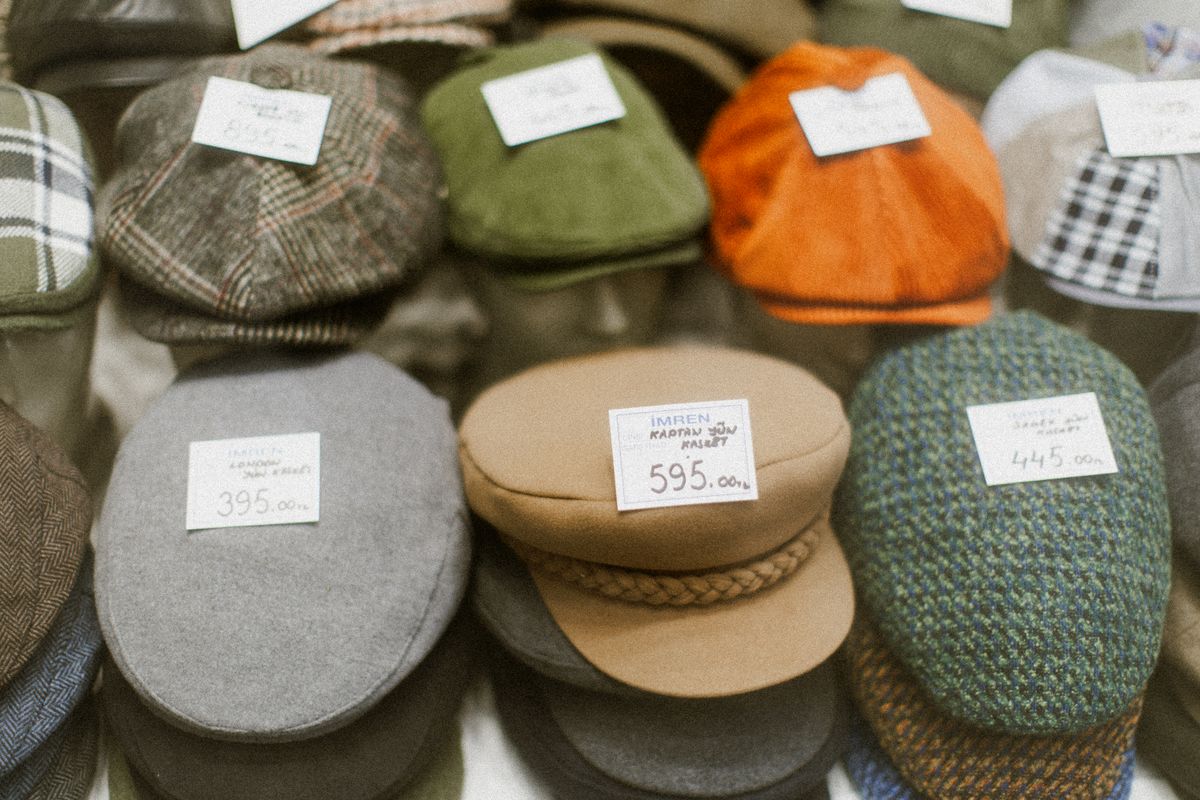
What is the difference between felt hats, knitted headwear and caps?
They are separate trades that happen to produce things worn in the same place.
- Felt hats start as felt (wool or fur) that is shaped over a wooden block with heat and steam, then stiffened, trimmed and finished, much of it by hand. A maker's range of blocks is part of what it can offer.
- Knitted headwear (beanies, hats with turn-ups, bobble hats) is made on knitting machines, so the questions are yarn, gauge and finished size, as for socks or jumpers. That is why sock and knitwear businesses such as Corgi make beanies.
- Cut-and-sew caps (baseball caps, flat caps) are panels cut from fabric and sewn, often with a stiffened peak. That is closer to garment making than to either of the above.
Work out which of the three your product is, then approach only makers in that trade. A felt-hat maker asked for 500 beanies will either say no or send you elsewhere.
Can a small brand get headwear made in Britain?
Knitted headwear is the most realistic option: the machinery is shared with knitwear and socks, so a UK knitter may take a small run alongside its own range. Ask for the minimum per colour and the yarn options, as none of the makers named here publishes a third-party minimum.
Blocked felt hats are a premium product with hand processes, and the price reflects it. Plan for that from the start rather than discovering it at the quote.
Whichever trade, a factory-ready tech pack is what makes a headwear brief legible: for knitted headwear give the yarn, gauge and finished measurements; for caps the panel construction, peak and closure; for felt hats the block shape, brim width and finish. Our how we work page explains where that fits.
How do you verify a UK headwear manufacturer?
- Companies House first. Confirm the company number, status and filing history on Companies House. In this category it matters: two headwear businesses we checked for this guide were in liquidation in October 2026.
- Ask the process question for the trade. Felt: is blocking done on the premises, and which blocks do you hold? Knitted: which gauges and yarns? Caps: peak construction and closures.
- Ask whether they make for other brands. Many heritage headwear names sell their own label only.
- Ask about sizing. Hats are sized by head circumference, not by garment size, so ask how the maker grades a size run.
- Ask for a sample before committing to a run, and check it against your spec.
Citation capsule: Verifying a UK headwear maker starts with Companies House: in October 2026, Xpose Limited (07422757) and Christy & Co. Limited (06286866) were both listed in liquidation. Then ask the process question for the trade (felt blocking, knitting gauge or cap construction) and whether the business makes for other brands or only its own label.
Related Reading
- Clothing manufacturers UK: the verified list
- Knitwear manufacturers UK
- Sock manufacturers UK
- Clothing manufacturers in Wales
- Bag manufacturers UK
Frequently Asked Questions
Are hats still made in the UK?
Yes, but by few businesses, and the three kinds of headwear come from different trades. Corgi makes knitted beanies in Wales. Christys' website says almost all of its felt hats sold online are handmade in the UK, although its former parent company entered liquidation in 2026 and the brand changed hands.
What is the minimum order for UK-made hats?
None of the makers named on this page publishes a minimum for third-party orders, so ask. For blocked felt hats the answer depends on the block and the construction; for knitted headwear it depends on the yarn, gauge and colours.
What is the difference between a blocked hat and a knitted one?
A felt hat is shaped over a wooden block with heat and steam and finished largely by hand. A beanie is knitted on a machine set to a gauge. A baseball cap is cut and sewn from panels. They are made by different businesses with different equipment.
Why did Stockport stop making hats?
Stockport's large felt-hat firms merged in 1966 into Associated British Hat Manufacturers, and hat production there ceased in 1997 after a long decline. Battersby, one of the firms, had told a court in 1935 that it could make 12,000 hats a week.
What happened to Christys' Hats?
FashionUnited reported in March 2026 that Christy & Co., the parent of Christys, had been placed into voluntary liquidation, and that Laird Hatters had agreed to buy the brand and planned to make hats in London. Confirm the current manufacturing arrangements with the business before planning an order.
We're a group of documented clothing factories in the United Kingdom. Tell us your product, volume and timeline: our team replies within 24 hours and, if it is a fit, places and manages your production with the factory in our group built for it, from 100 pieces per style. The factory quotes and bills you directly. No commissions.
Get in contact Download the directory (£49)Need a tech pack? Get a factory-ready single-style tech pack for £79. See what's included.
Editorial note: all company names and trademarks referenced here are the property of their respective owners. Company details are taken from each company's own website, Companies House and the reporting cited, read in October 2026; they can change, so confirm terms directly with the business before committing.
Sources
- Corgi, about Corgi and Corgi, beanies: socks and knitwear made in Wales since 1892, designed and made in Wales, beanie range.
- Christys' Hats, Made in England: felt hats sold online almost all handmade in the UK.
- FashionUnited, heritage hatmaker Christy & Co falls into liquidation: Christy & Co. voluntary liquidation and the reported sale of the brand to Laird Hatters (March 2026).
- Wikipedia, Battersby Hats: 1935 capacity evidence, the 1966 merger into Associated British Hat Manufacturers and the end of production in 1997.
- Companies House: company numbers 03441080, 06286866 and 07422757, read 31 October 2026.