The t-shirt is where the gap between "UK manufacturer" and "made in the UK" is widest. The category contains two completely different businesses using the same words.
One buys blank t-shirts made abroad and prints them here. The other cuts jersey and sews a garment. Both describe themselves as UK t-shirt manufacturers, both are legitimate businesses, and only one produces a garment you can legally label Made in UK. This page separates them and names the manufacturers that cut and sew.
Heads up: We're UK Clothing Manufacturers, a group of documented clothing factories in the United Kingdom. The companies named below are independent British businesses listed from their own public sources, not members of our group. Our role is separate: our team places and manages production with a documented factory in our group built for your product.
Key Takeaways
- Printing an imported blank does not make a t-shirt UK-made. Origin follows the last substantial transformation, and printing is explicitly insufficient (Make It British).
- Fashion Enter's Fashion Studio runs short production from 1 to 300 units in Haringey, London (Fashion Capital).
- Hook and Eye UK states 50 units per design or colour, with at least two designs for bulk; one garment in two colourways counts. Its own site says bulk is made by its team in China, so it is not a Made in UK option for bulk (Hook and Eye UK).
- Colourways Textiles states 120 units per style and 60 per colour for t-shirts on bespoke runs, from a family business manufacturing in England since 1972 (Colourways Textiles).
- T-shirts are one of the easier UK categories to compare: four of the five makers named here publish a minimum.
Have a product in mind? Tell us the product, quantity and timeline and our team replies within 24 hours. Send a brief →
Try it free: Work out your true cost per garment in 60 seconds with our garment cost calculator. No email required.
Which UK manufacturers actually cut and sew t-shirts?
Colourways Textiles (Leicester). A family business that says it has manufactured and supplied jersey wear in England since 1972 and in Leicester for three generations (Colourways Textiles). It makes t-shirts, sweatshirts, hoodies and other jersey garments to the customer's sizing, fabric and neck labels. For bespoke runs it states a minimum of 120 units per style and, per colour, 60 units for t-shirts or polo shirts and 80 for sweatshirts or hoodies, with 4 to 6 weeks to complete an order after the pre-production sample is signed off (Colourways bespoke manufacturing). Its white label service usually starts at around 50 units per colour on its stock fabrics and colours (Colourways white label).
The two figures belong to different services. White label uses the fabrics and colours Colourways already holds; bespoke means your choice of fabric, fit and colour, and carries the higher minimum.
Hook and Eye UK (Birmingham). A clothing design and manufacturing company working with fashion brands, start-ups and streetwear labels, on garments including t-shirts, hoodies, joggers and activewear. It offers tech packs, pattern cutting and sampling alongside bulk. Its stated minimum is 50 units per design or colour, rising with the complexity of the design, and bulk needs at least two designs, which can be one garment in two colourways. It quotes typically 4 to 8 weeks plus shipping for bulk, and its own site says bulk is made by its team in China (Hook and Eye UK). Useful for design and development; it is not a UK-made option for bulk, so ask where your order will be sewn.
Fashion Enter Ltd (Haringey, London). A social enterprise and ethical garment manufacturer (Grow London Local). Its Fashion Studio makes first patterns, samples and short production runs from 1 to 300 units and says it can stitch any product (Fashion Capital, Fashion Studio). Its London factory centres on womenswear soft separates in jersey and woven fabrics, and describes itself as the only UK company with leading status in the Fast Forward audit, alongside SMETA audits (Fashion Capital, The Factory London).
The T-Shirt Factory Europe Ltd (Leicester). Its listing on the Leicester Made directory describes design, manufacture and decoration services for fashion, ecommerce, promotional and licensing clients, established in 2012, with a production minimum of 150 and an average weekly capacity of 50,000 (Leicester Made listing). Leicester Made is a free directory funded by the UK Government through the Community Renewal Fund, and it states that it endorses no company listed on it. The listing does not say which steps happen in-house, so ask.
Apparel Inspired Ltd (Hartlepool). A UK clothing factory with its production unit in Hartlepool, on the North East coast, and a design office and showroom in Harrogate. Its site lists womenswear, menswear, activewear, swimwear, underwear and loungewear, and services including pattern making, grading, tech packs, sampling and private label (Apparel Inspired). It does not name t-shirts specifically or publish a minimum, so confirm both before you brief it.
Citation capsule: Five UK-based clothing businesses are named on this page, and four publish a minimum. Fashion Enter's Fashion Studio in Haringey runs 1 to 300 units. Hook and Eye UK in Birmingham states 50 per design or colour, with at least two designs for bulk, and makes bulk in China. Colourways Textiles in Leicester states 120 per style and 60 per colour for t-shirts on bespoke runs, and around 50 per colour on its white label service. The T-Shirt Factory Europe's Leicester Made listing gives 150. Apparel Inspired publishes none.
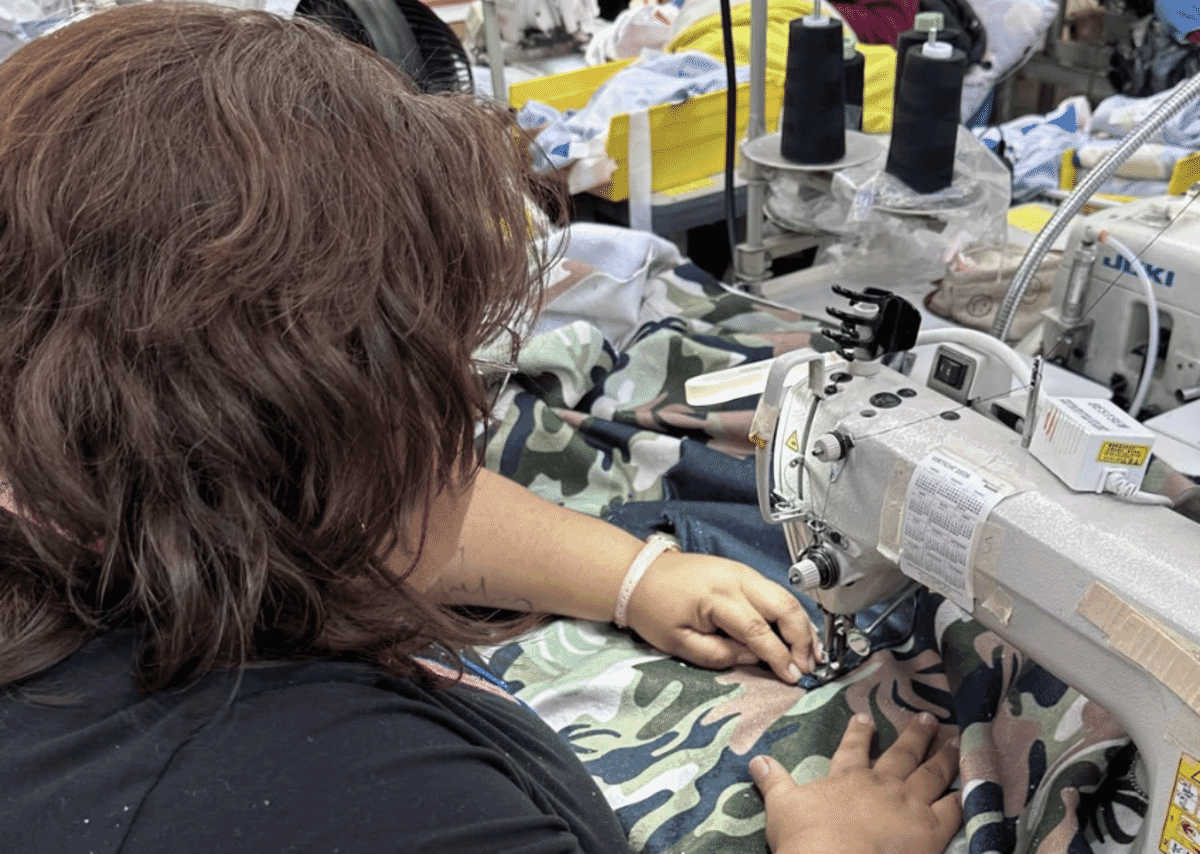
Why does printing a blank not count as making it here?
Because origin follows the last substantial transformation, and printing is not one. The test is whether the product changed its form or use and in doing so changed its commodity code (Make It British).
A blank t-shirt arrives as a t-shirt. It is printed. It leaves as a t-shirt. Nothing about its classification changed, so its origin remains the country where it was cut and sewn.
Contrast that with jersey fabric imported from overseas and cut and sewn into t-shirts in Leicester. Cloth and a finished garment sit under different tariff headings. The commodity code changed, so the garment is UK-made, even though not a thread of it was grown or spun here (Make It British).
None of this makes print-on-demand businesses dishonest. Many are precise about what they do and describe themselves as printers rather than garment manufacturers. The confusion is often created downstream by brands that read "UK manufacturing" on a printer's site and repeat it on a swing tag.
The practical consequence is worth stating plainly. If your customers care where the garment was made, you need a cut-and-sew factory, not a printer. If they care where it was printed, or you simply want short lead times and no stock risk, print-on-demand is an excellent model. There is no reason to overstate it.
Our view: A common origin error is not deception but a brand growing into a claim it never checked. A brand owner starts with printed blanks and writes an About page saying the products are made in Britain, because they are made by a British business, and never revisits it. The claim was wrong on day one and becomes a liability the moment a wholesale buyer asks which factory sewed the garment.
Skip weeks of cold outreach: Browse our UK factory directory for £49, or get in contact: our team replies within 24 hours and places your production with the factory in our group built for it. No commission from factories; the factory bills you directly.
How do UK t-shirt manufacturers compare?
| Manufacturer | Location | Minimum | Basis | Also makes | Notable |
|---|---|---|---|---|---|
| Fashion Enter | Haringey, London | 1 to 300 | Fashion Studio short runs | Any product (studio); womenswear jersey and woven (factory) | Fast Forward leading status, SMETA audited |
| Hook and Eye UK | Birmingham | 50 | per design or colour | Hoodies, joggers, activewear | Bulk made in China (own site); min 2 designs (2 colourways count); rises with complexity |
| Colourways Textiles | Leicester | 120 / ~50 | per style bespoke (60 per colour for tees) / per colour white label | Hoodies, sweats, polos | Active entity Co. No. 13310810; family business since 1972 |
| Apparel Inspired | Hartlepool | Not published | not stated | Swimwear, underwear, activewear | Design office in Harrogate |
| The T-Shirt Factory Europe | Leicester | 150 | not stated | Design, manufacture, decoration | Leicester Made listing; est. 2012 |
Source: the companies' own websites (Colourways, Hook and Eye UK, Fashion Capital for Fashion Enter, Apparel Inspired), Grow London Local and the Leicester Made listing, checked 26 October 2026. "Not published" means we did not find the figure on public sources.
Four of the five publish a minimum, which makes t-shirts one of the easier UK categories to compare before starting a conversation. Check the basis of each figure, because they are not measured the same way.
Read the basis column carefully. Fifty units per design or colour is not fifty t-shirts. A brand wanting black, white and grey versions of one tee at Hook and Eye is committing to 150 units, and because two colourways of one garment count as two designs, that plan meets the bulk requirement. At Colourways the same three colours on a bespoke run mean at least 60 per colour, so 180 pieces.
What drives the price of a UK-made t-shirt?
Fabric, colourways and complexity, in that order, and the first two surprise people more than the third.
Fabric is often the largest single input and it is bought to the mill's minimum. Jersey is sold per colour, so a three-colour range triples the fabric buy even if the garment count stays the same. In our experience it is a common reason a UK t-shirt quote comes back above expectation.
Weight changes everything. A 180gsm tee and a 240gsm tee are different products with different fabric costs, different handling and different customers. Specify the weight in the brief, because a factory quoting without it is quoting its house cloth.
Construction is not uniform. Side seams or tubular, taped neck or not, twin-needle or coverstitch hems, ribbed collar specification. Each decision moves the price a little and the finished quality a lot. A quote that does not mention them has assumed the cheapest version of each.
We are deliberately not publishing a pounds-per-tee figure, because a price without fabric weight, quantity, colourway count and construction is a fiction. Any page that gives you one without those four inputs is guessing, and the guess will favour whoever wrote it.
What can be said is that the UK will not compete with imported blank pricing and no honest comparison suggests otherwise. What UK production buys is a low minimum, a short lead time and a label claim that holds.
Citation capsule: Three inputs drive the cost of a UK-made t-shirt. Fabric is bought to the mill's minimum and sold per colour, so a three-colour range triples the buy. Fabric weight matters because a 180gsm and a 240gsm tee are different products with different costs. And construction details, including side seams, neck taping and hem stitching, are each silently assumed by a quote if the brief does not specify them.
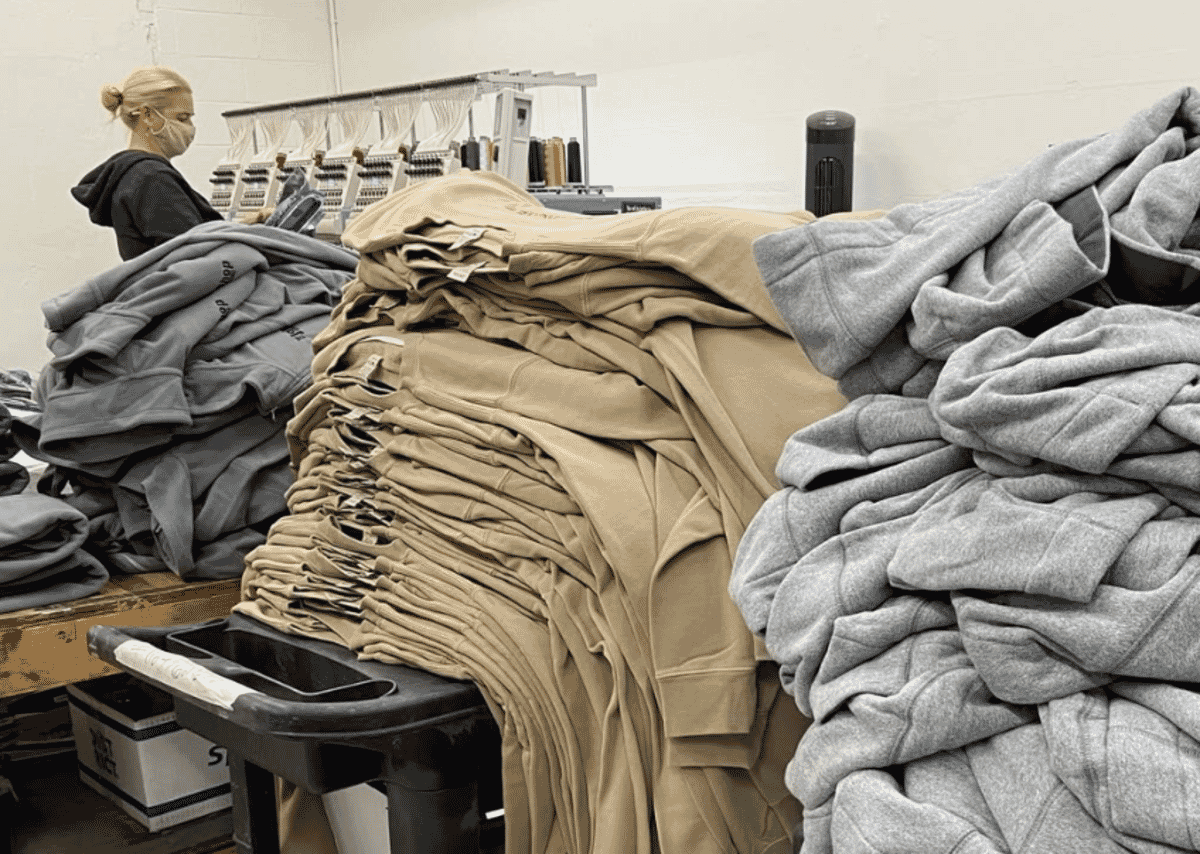
Can a small brand get t-shirts made in Britain?
Yes. The published minimums below are within reach of a small first run.
Under 50 units. Fashion Enter's Fashion Studio, from 1 to 300 units, is the realistic answer. Expect a per-unit price that reflects setup divided across a small run; the studio charges sampling development by the hour and sets production prices from it.
50 to 150 units. Hook and Eye at 50 per design or colour, with at least two designs, or two colourways of one garment, for bulk. Plan the colourway count carefully because it multiplies. Its bulk is made in China, so it does not give you a Made in UK label.
Around 50 per colour on stock fabric, or 120 per style bespoke. Colourways in Leicester: around 50 per colour on its white label service with stock fabrics and colours, or 120 per style and 60 per colour for t-shirts on a bespoke run. The T-Shirt Factory Europe's listing gives 150.
Often the bigger saving is in colourways rather than quantity. A first run of 100 units in one colour will cost less in total, and teach you more, than 50 units across two colours. The fabric buy is the constraint, and one colour halves it.
A factory-ready tech pack is what makes three jersey quotes genuinely comparable. How we work sets out where that fits. For a tee the pack needs fabric weight, construction details and a measurement chart, which is exactly what factories silently assume when it is missing.
Print on demand or cut and sew: which suits your brand?
They solve different problems and the decision should be made on stock risk rather than on provenance.
Print on demand means a printer holds blank stock, prints when an order arrives, and ships direct. You carry no inventory and pay per unit at a rate that assumes no volume commitment. You can list a hundred designs without funding any of them. The garment is made wherever the blank was made, and the origin claim belongs to that country.
Cut and sew means you commission a garment. You choose the fabric, the weight, the fit and the construction, you fund the run, and you own the stock until it sells. The unit cost is lower at volume, the product is yours rather than a decorated commodity, and the origin claim follows the sewing.
The honest comparison is about risk rather than cost. Print on demand converts a capital problem into a margin problem: nothing is tied up, and you earn less per sale forever. Cut and sew converts a margin problem into a capital problem: the unit economics are better and the money is committed before any customer has agreed with you.
Choosing between them by brand stage
Print on demand while you are testing, cut and sew once a design has proved it sells. The trigger to move is evidence, not ambition.
For many new brands the sensible sequence is print on demand first and cut and sew second, and the trigger to switch is evidence rather than ambition. When one design is selling consistently, that design justifies a run. The others do not, and moving the whole range at once is the mistake that turns a working business into a warehouse.
There is a middle option worth knowing. Some UK cut-and-sew factories will produce a blank to your specification which you then have printed. That gives you your own fabric, fit and origin claim while keeping the decoration flexible. It costs more than buying blanks, and it solves the problem brands usually have, which is that the standard blank does not fit the way they want.
Whichever model you choose, describe it accurately. A print-on-demand brand saying its products are printed in Britain is telling the truth and losing nothing. The same brand saying they are made in Britain is making a claim that will not survive the first buyer who asks which factory sewed them.
Citation capsule: Print on demand and cut and sew solve different problems. Print on demand removes inventory risk and permanently reduces margin per sale, with origin following the country where the blank was sewn. Cut and sew improves unit economics and gives control of fabric, fit and construction, at the cost of committing capital before demand is proven. The trigger to move between them is evidence that a specific design sells.
How do you check a UK t-shirt manufacturer?
Ask one question first: do you cut and sew, or do you print? Everything else follows from the answer, and it takes a line.
Then Companies House (Companies House): confirm the company number, the registered address and the filing history. Colourways' site footer gives Colourways Textiles Limited, company number 12833009; the register shows that company dissolved on 24 July 2026, and an active Colourways Textiles Factory Limited, 13310810, registered at the Leicester address the footer shows (12833009, 13310810). Publishing a number is a good sign. Reading what it returns is the check.
Then ask where the fabric comes from and whether it is stock or bought to order. On a t-shirt this determines both your minimum and your lead time. A factory should be able to answer quickly, because it is one of the first things worked out when quoting.
Then ask which processes happen at the address on the invoice. A cut-and-sew factory can usually name them. A business subcontracting the sewing will describe the outcome rather than the process.
Then buy a sample. A t-shirt sample is among the cheapest in apparel and it settles fabric hand, fit and finish in a way no description does. Wash it before you decide, because jersey shrinkage and twist are faults that often only appear after a wash.
Our view: Wash-test the sample before approving bulk, ideally more than once. Jersey can shrink and twist at the side seam, and both faults can be invisible on a fresh sample and obvious to a customer after a few washes. It is one of the cheapest quality checks in apparel, and one that is easy to skip when a launch date is close.
Related Reading
- Clothing manufacturers UK: the verified list
- Made in UK clothing: what the label legally means
- Low MOQ clothing manufacturers UK
- Clothing manufacturers in London
- Clothing manufacturers in Leicester
Frequently Asked Questions
What is the minimum order for UK-made t-shirts?
Among the makers named here: 1 to 300 units at Fashion Enter's Fashion Studio in London; 50 per design or colour at Hook and Eye UK in Birmingham (bulk made in China); around 50 per colour on stock fabric (white label) or 120 per style and 60 per colour for t-shirts (bespoke) at Colourways Textiles in Leicester; and 150 on The T-Shirt Factory Europe's Leicester Made listing. Our own group takes orders from 100 pieces per style.
Does printing a t-shirt in the UK make it made in the UK?
No. Origin follows the last substantial transformation, normally evidenced by a change in commodity code. An imported blank arrives as a t-shirt and leaves as a t-shirt, so printing it does not change its origin.
Is it cheaper to make t-shirts in the UK?
No, not per unit, and no honest comparison says otherwise. UK production buys low minimums, short lead times, the ability to visit the factory and a Made in UK label that holds. For a first run of a few hundred units those can outweigh the unit-cost gap.
Why does the colourway count matter more than the quantity?
Because jersey is bought from the mill per colour, so each additional colourway is an additional fabric minimum. A hundred units in one colour is usually cheaper in total than fifty units across two, even though it is twice as many garments.
What should a t-shirt tech pack specify?
Fabric weight in gsm, fibre composition, and construction details including side seams or tubular body, neck tape, collar rib specification and hem stitching. Plus a full graded measurement chart. A factory quoting without these will assume its own house standard for each.
Tell us what you're making. We're a group of documented clothing factories in the United Kingdom. Tell us your product, volume and timeline: our team replies within 24 hours and, if it fits, places your production with the factory in our group built for it, from 100 pieces per style. The factory quotes and bills you directly; our fee is quoted in writing, with no commission from factories. Get in contact · Get the directory (£49). Need a tech pack? A factory-ready single-style tech pack is £79. See what's included.
Editorial note: all company names, certification marks and trademarks referenced here are the property of their respective owners. Minimums and lead times are as each company publishes them on the pages cited, checked 26 October 2026; they change, so confirm terms directly with the factory before committing. This page makes no duty or tariff claims; for origin, check your own commodity code.
Sources
- Colourways Textiles, company site, with its bespoke manufacturing and white label pages, checked 26 October 2026. Source of the Leicester location, the family history since 1972, the published company number 12833009, the product range, the bespoke minimums and lead time and the white label minimum. Company statuses are from Companies House.
- Hook and Eye UK, company site, checked 26 October 2026. Source of the Birmingham location, the 50 units per design or colour minimum, the two-design requirement and what counts as a design, the complexity qualifier, the bulk lead time and the product range. Its clothing manufacturing page, checked 27 October 2026, is the source of the statement that bulk is made by its team in China.
- Fashion Capital (Fashion-Enter Ltd), The Fashion Studio and The Factory London, checked 26 October 2026: the 1 to 300 unit studio runs, hourly sampling, the factory's jersey and woven womenswear and its Fast Forward and SMETA status. Grow London Local for the social enterprise description.
- Apparel Inspired Ltd, British clothing factory, checked 26 October 2026. Source of the Hartlepool production unit, the Harrogate design office, the garment range and the services listed.
- Leicester Made, The T-Shirt Factory Europe Ltd listing, checked 26 October 2026. Source of the services, 2012 establishment date, minimum of 150 and weekly capacity. The directory states it endorses no company listed on it, and neither does this page.
- Make It British, can I label my product as made in the UK, 2026. Source of the substantial transformation and commodity code test and the imported blanks example.
- Companies House, the UK register of companies. Cited as the verification method rather than as a source of any statistic on this page.