Clothing manufacturers in Scotland are mostly specialists rather than generalists. Scottish textiles shrank too, but the best-known makers still trading concentrate on products that are hard to copy cheaply: cashmere knitwear from the Borders, cloth from mills such as Johnstons of Elgin, and handwoven tweed from the Outer Hebrides.
If you want cashmere knitwear, fully fashioned knits or authentic tweed cloth, Scotland is worth a serious look. If you want jersey t-shirts at 200 units, it is probably the wrong place to start, and this page says so rather than pretend otherwise.
Heads up: We're UK Clothing Manufacturers, a group of documented clothing factories in the United Kingdom. The companies named below are independent British businesses listed from their own public sources, not members of our group. Our role is separate: we place your production with a documented factory in our group built for your product.
Key Takeaways
- Johnstons of Elgin works from two Scottish mills: a vertically integrated weaving mill in Elgin and a knitting mill in Hawick, opened in 1980 (Johnstons of Elgin; company history).
- Harris Tweed is defined by its own Act of Parliament. It must be handwoven by islanders at their homes in the Outer Hebrides, from wool dyed and spun there (Harris Tweed Authority).
- Hawick is the knitwear town. Pringle of Scotland says it still makes many of its cashmere pieces there, Hawico still knits on Duke Street, and Barrie, owned by Chanel since 2012, knits its collections there.
- This is a category-specific base, not a general one. Knitwear, cashmere and cloth, rather than cut-and-sew jersey.
- Minimums are rarely published and are usually quoted per programme rather than per style.
Have a product in mind? Tell us the product, quantity and timeline and our team replies within 24 hours. Send a brief →
Try it free: Work out your true cost per garment in 60 seconds with our garment cost calculator. No email required.
Which clothing manufacturers operate in Scotland?
Johnstons of Elgin was founded in 1797 by Alexander Johnston and has been based at Newmill, on the River Lossie in Elgin, since 1800. Its process is split across two Scottish mills: a vertically integrated weaving mill at Elgin, and a knitting mill in Hawick bought in 1980 (Johnstons of Elgin; Johnstons of Elgin). The trading company, James Johnston & Co. of Elgin Limited, is listed as active at Companies House.
The company says that in 1851 it bought a bale of cashmere fibre from F. Buxton of Basinghall Street, London, and became the first Scottish company to weave with the yarn (Johnstons of Elgin). At the Elgin mill, carding, dyeing, spinning, weaving and finishing have been carried out on site since the early nineteenth century (Johnstons of Elgin). Few British textile businesses still cover that much of the chain under one roof.
Pringle of Scotland dates its knitwear to 1815 (Pringle of Scotland). It calls Hawick its home and says it still makes many of its cashmere pieces and more intricate designs there (Pringle of Scotland, Made in Scotland); not every Pringle product is made in Scotland, so check the label of the line you have in mind. Pringle of Scotland Limited is active at Companies House. Hawico began in 1874 as The Hawick Hosiery Company on Duke Street, Hawick, and says the same Duke Street factory still knits today (Hawico). It trades through The Hawick Cashmere Company Limited, active at Companies House.
Barrie opened in Hawick in 1903. Its collections are designed in Paris and knitted at its Borders manufacture, and in 2012 its long-standing client Chanel acquired it (Barrie). Barrie Knitwear Limited is active at Companies House. It shows what Scottish knitwear capacity can be worth to a luxury house.
ERIBÉ Knitwear describes itself as a knitwear design house and craft manufacturer in the Scottish Borders, with its showroom in Melrose (ERIBÉ). ERIBE Knitwear Limited is active at Companies House.
Citation capsule: Johnstons of Elgin, founded in 1797, works from two Scottish mills: a vertically integrated weaving mill at Elgin, where the company has been based since 1800, and a knitting mill at Hawick bought in 1980. In Hawick, Pringle of Scotland, Hawico and Barrie, owned by Chanel since 2012, all say they still knit there.
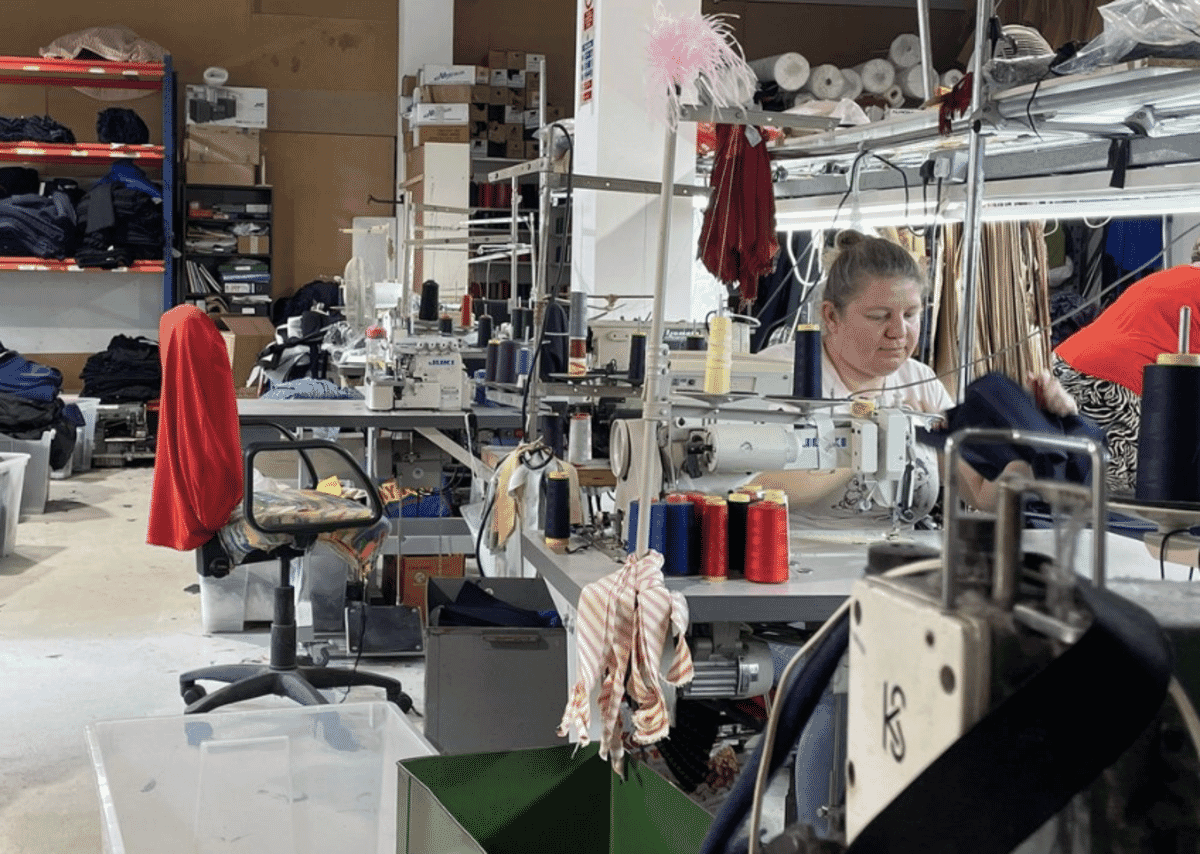
What makes Harris Tweed legally different from other cloth?
An Act of Parliament. The Harris Tweed Act 1993 created the Harris Tweed Authority, replacing the Harris Tweed Association set up in 1909, and put the definition of the cloth into law. That definition is about process and place rather than about quality claims (Harris Tweed Authority).
The Harris Tweed Act 1993 defines it as cloth "handwoven by the islanders at their homes in the Outer Hebrides, finished in the Outer Hebrides, and made from pure virgin wool dyed and spun in the Outer Hebrides" (Harris Tweed Authority). Every one of those conditions is geographic and procedural: cloth that is not handwoven at home in the Outer Hebrides cannot be sold as Harris Tweed.
The commercial consequence for a brand is unusual and worth understanding. The protection means the cloth cannot be imitated under its own name. It also means the supply chain is fixed. Weavers work at home, at a pace set by hand weaving, on an island, and that is not something a purchase order can accelerate.
Harris Tweed Hebrides, based at Shawbost Mill on the Isle of Lewis, describes itself as the foremost producer of the cloth, making 100% pure new wool fabrics for design houses (Harris Tweed Hebrides). Harris Tweed Hebrides Limited is active at Companies House.
The practical advice is to treat Harris Tweed as a fabric sourcing decision with a long lead time attached, not as an interchangeable cloth choice. Order it early, and design around its weight and hand rather than specifying it into a garment that wanted something lighter.
Our view: The Harris Tweed Act is a clear example of a protection that works because it describes a process and a place rather than a standard. A quality standard can be met by anyone, anywhere. A definition that names a place cannot be met outside that place, which is why the name cannot simply be copied.
Skip weeks of cold outreach: Browse our UK factory directory for £49, or get in contact and we'll place your production with the factory in our group built for it, normally within 24 hours. Flat fee, no commissions.
How do Scottish manufacturers compare?
| Manufacturer | Location | Founded | Makes | Notable |
|---|---|---|---|---|
| Johnstons of Elgin | Elgin and Hawick | 1797 | Cashmere, lambswool, Merino: cloth and knitwear | Vertically integrated weaving mill at Elgin; Hawick knitting mill since 1980 |
| Pringle of Scotland | Hawick | 1815 | Cashmere knitwear | Makes many, not all, of its cashmere pieces in Hawick |
| Hawico | Duke Street, Hawick | 1874 | Cashmere knitwear | Same Duke Street factory still knitting |
| Barrie | Hawick | 1903 | Luxury cashmere knitwear | Designed in Paris, knitted in Hawick; owned by Chanel since 2012 |
| ERIBÉ Knitwear | Melrose, Scottish Borders | Not published | Design-led knitwear | Describes itself as a craft manufacturer |
| Harris Tweed Hebrides | Shawbost, Isle of Lewis | Not published | Harris Tweed cloth | Cloth defined by the Harris Tweed Act 1993 |
Source: company websites and Companies House, checked 21 October 2026. All six trading companies were listed as active. "Not published" means the company does not state a founding year on its site.
Read the founding dates column. Four of the six state a founding year, and all four predate 1910. Fully fashioned knitwear and handwoven cloth are skills passed on person to person, and a business that has kept doing them has something a new entrant cannot buy quickly.
Read the locations column too. Five of the six are in the Borders or in Elgin, and the sixth is on Lewis. The makers named here are not spread across the country: Hawick in particular is the centre of Scottish knitwear. Our guide to knitwear manufacturers in the UK covers the Hawick mills alongside John Smedley and Corgi.
Can a small brand manufacture in Scotland?
Yes, with two adjustments to expectations, and both concern how the industry organises itself rather than how willing it is.
Minimums are usually quoted per programme rather than per style. Fully fashioned knitwear involves setting up a knitting machine to a specific gauge and garment shape, which is a heavier setup than cutting and sewing a woven. That setup is recovered across a run, so the economics favour a repeated seasonal programme over a one-off drop.
Lead times are long. Hand linking, hand finishing and in the case of Harris Tweed hand weaving all run at the speed a person works. Plan on ordering a season ahead rather than reacting within a season.
What a small brand gets in return is a product that is hard to copy. A competitor can make a cashmere jumper elsewhere, but it cannot call it Scottish-made, and it cannot call its cloth Harris Tweed. Part of what the customer is buying is the origin and the process.
The way in is usually the same. Approach with a specific yarn, a specific gauge and a specific quantity, and expect a conversation about next season rather than this one. A factory-ready tech pack is what makes a knitwear brief legible to a mill. How we work explains where that fits.
Citation capsule: Scottish knitwear minimums are typically quoted per programme rather than per style. Setting a knitting machine to a specific gauge and garment shape is a heavier setup than cutting and sewing a woven garment. Lead times reflect hand linking, hand finishing and, for Harris Tweed, hand weaving. All of those run at the speed a person works rather than the speed an order is placed.
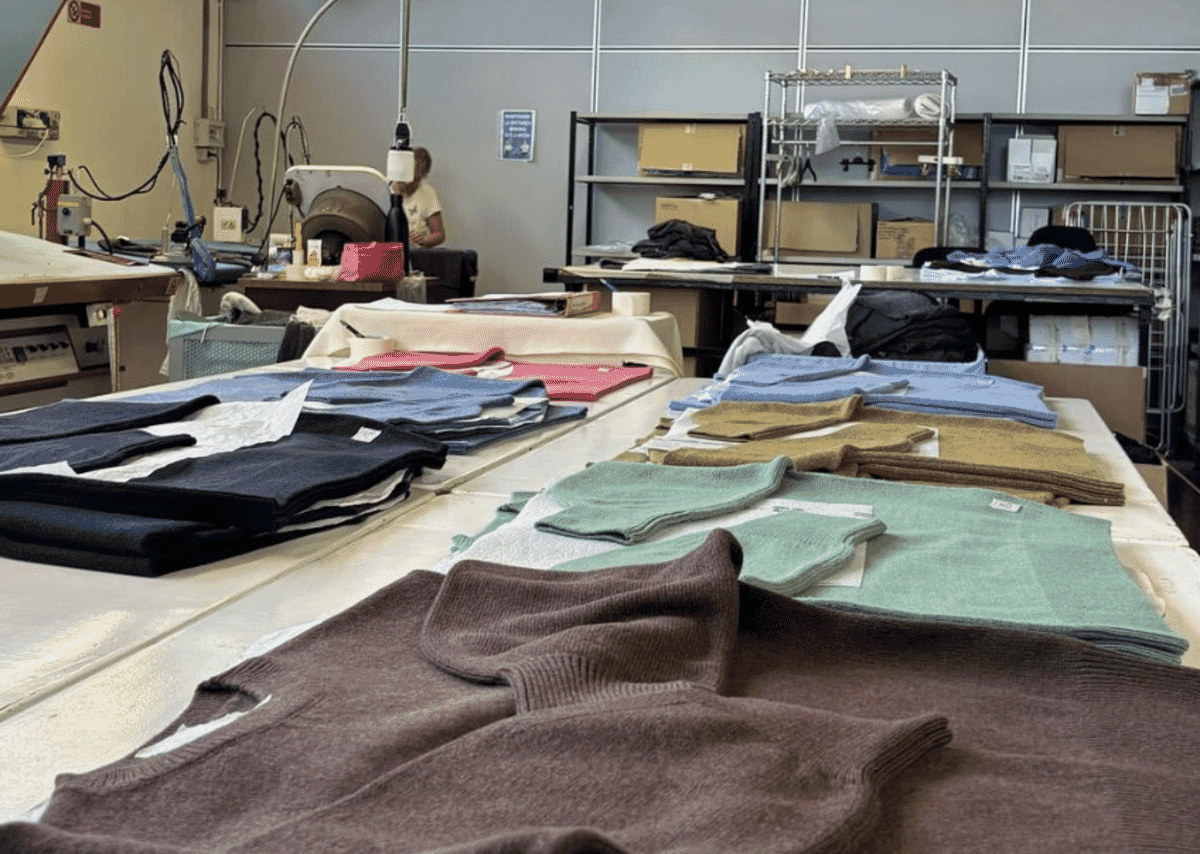
What does Scotland not do well?
General cut-and-sew at volume is not what the Scottish makers named here do, and it is better to say that clearly than to send a brand on a fruitless search.
The businesses covered here run knitting machines, looms and finishing rather than cutting tables and overlockers at scale. A brand wanting 500 jersey hoodies, 200 woven shirts or a mixed range of basics will usually find more options in Leicester or Manchester.
So the correct use of Scotland in a supply chain is as a category specialist. A brand can make its knitwear in the Borders, source tweed from the Hebrides, and cut and sew its jersey in Leicester. That is a normal arrangement rather than a compromise, as long as each origin claim stays accurate for the product it applies to. Wales works the same way on a smaller scale; our guide to clothing manufacturers in Wales covers its knitwear, cloth and uniform makers.
Capacity matters too. Established mills plan production around existing customers and seasonal programmes; Barrie, for example, made for Chanel for decades before Chanel bought it (Barrie). A new brand asks for time in a schedule planned in advance, which is another reason the conversation is usually about next season rather than this one.
The error to avoid is letting a Scottish component justify a Scottish claim across a whole range. If the knitwear is made in Hawick and the t-shirts are made elsewhere, the product pages say different things. This usually happens by accident: a brand writes one About page early and never revisits it as the range grows.
Why Scottish knitwear and tweed have lasted
Our view: largely because they compete on something that is hard to replicate, which is not quite the same as competing on quality.
Quality alone does not protect a manufacturer. A well-made shirt can be equalled by a well-made shirt from anywhere with skilled machinists and good cloth, and then the competition moves to price, which a high-wage country usually loses. Much of the British garment industry went that way.
What Scotland had instead was a set of products where the origin is part of the product. Cashmere knitting and finishing depend on skills built up over years, which a new factory does not acquire quickly. Harris Tweed cannot be made outside the Outer Hebrides at all, by law. Neither of those is a quality claim that a competitor can simply meet.
The second factor is the market these makers sell to. The firms named here sell at the luxury end, under their own names or to luxury houses; Barrie made for Chanel long before Chanel bought it in 2012 (Barrie).
The lesson for anyone manufacturing in a high-wage country: being slightly better at the same thing is rarely enough. It helps to make something where the place is part of what is being bought, and to protect that claim, as the Harris Tweed Act does.
Citation capsule: Scotland's best-known knitwear and cloth makers sell products where origin is part of the value. Hawick knitters such as Pringle of Scotland, Hawico and Barrie still knit there, and Harris Tweed can only be made in the Outer Hebrides under the Harris Tweed Act 1993. A competitor improving its own standards cannot copy either claim.
How do you verify a Scottish manufacturer?
Companies House first, as everywhere: name, registration number, registered address and filing history (Companies House).
For Harris Tweed specifically there is a second check. The Orb mark is applied by the Harris Tweed Authority, and cloth carrying it has been certified as meeting the statutory definition. Ask to see the stamped cloth or the certification rather than accepting a description, because the protection is only useful if you use it.
For knitwear, ask where the yarn is spun and where the linking is done. Those two processes are where the difference between Scottish manufacture and finishing-only operations shows up, and a mill that does both should be able to answer in detail.
Then visit if the relationship is going to be significant. The Borders and Elgin are a long trip from most of England. But a knitwear programme is a multi-season commitment, and the journey is proportionate to what is being decided.
Our view: Arrive with a precise brief. A knitwear enquiry that states the yarn, the gauge, the garment shape and the quantity is far easier for a mill to answer than one that asks the mill to interpret a mood board, and a technical question asked directly tends to get a technical answer.
Related Reading
- Clothing manufacturers UK: the verified list
- Best UK clothing manufacturers
- Clothing manufacturers in Leicester
- Low MOQ clothing manufacturers in the UK
- Knitwear manufacturing in the UK
Frequently Asked Questions
What is Scotland best known for manufacturing?
Cashmere and fully fashioned knitwear from the Scottish Borders, particularly Hawick, and handwoven Harris Tweed from the Outer Hebrides. Johnstons of Elgin also weaves cloth at its mill in Elgin, where the company has been based since 1800.
Why is Harris Tweed protected by law?
The Harris Tweed Act 1993 sets out the definition. The cloth must be handwoven by the islanders at their homes in the Outer Hebrides, finished in the Outer Hebrides, and made from pure virgin wool dyed and spun there. The Act created the Harris Tweed Authority, which certifies conforming cloth with the Orb mark.
Can I get jersey t-shirts made in Scotland?
It is not where we would start. The Scottish makers covered here are knitters, weavers and finishers rather than volume cut-and-sew units, so jersey basics are usually easier to place in Leicester and the East Midlands.
What are minimum orders for Scottish knitwear?
Rarely published, and usually quoted per programme rather than per style. Setting a knitting machine to a specific gauge and shape is a heavier setup than cutting a woven garment. Expect the economics to favour a repeated seasonal programme over a single drop.
How long do Scottish knitwear lead times run?
Longer than cut and sew, because hand linking, hand finishing and, for Harris Tweed, hand weaving run at the speed a person works. Plan on ordering a season ahead rather than reacting within one.
Editorial note: all company names, certification marks and trademarks referenced here are the property of their respective owners. Company facts come from each company's own website and from Companies House, checked on 21 October 2026. None of the companies named is part of our group, and we do not place orders with them or send brands to them. Confirm terms directly with any manufacturer before committing.
Sources
- Johnstons of Elgin. Encyclopaedic source for the 1797 founding by Alexander Johnston, Newmill on the River Lossie, the Elgin base since 1800, the vertically integrated Elgin mill and the 1980 Hawick mill.
- Johnstons of Elgin, our history. Company timeline: the 1851 cashmere bale and first Scottish cashmere weaving, and the Hawick mill established in 1980.
- Pringle of Scotland, our story and Made in Scotland. Company source for the 1815 date and for making many of its cashmere pieces in Hawick.
- Hawico, company history. Source for the 1874 start as The Hawick Hosiery Company on Duke Street and the Duke Street factory today.
- Barrie, the House of Barrie. Company source for the 1903 Hawick founding, Paris design and Borders knitting, and the 2012 Chanel acquisition.
- ERIBÉ Knitwear. Source of the design house and craft manufacturer description and the Melrose showroom.
- Harris Tweed Authority, our role. Source of the Harris Tweed Act 1993, the statutory definition quoted on this page and the Orb certification mark.
- Harris Tweed Hebrides. Source of the Shawbost Mill location and the pure new wool description.
- Companies House. Company status checked on 21 October 2026: James Johnston & Co. of Elgin Limited (SC022553), Pringle of Scotland Limited (SC203627), The Hawick Cashmere Company Limited (SC128179), Barrie Knitwear Limited (02997679), ERIBE Knitwear Limited (SC415651) and Harris Tweed Hebrides Limited (SC412084), all active.