Clothing manufacturers in Manchester are far fewer than the city's textile reputation implies. Manchester was Cottonopolis. It is not any more, and a page about manufacturing here has to start by saying so. Manchester's textile reputation and its current contract cut-and-sew capacity are further apart than in any other British city.
What Manchester retains is real but narrow: heritage brands running their own factories. What it has very little of is general contract cut-and-sew capacity of the kind Leicester or Birmingham can offer. This page names what is verifiable and is direct about the rest. A list padded out to ten is worse than a short list that is true.
Heads up: We're UK Clothing Manufacturers, a group of documented clothing factories in the United Kingdom. The companies named below are independent British businesses listed from their own public sources, not members of our group. Our role is separate: we place your production with a documented factory in our group built for your product.
Key Takeaways
- One Manchester manufacturer verifies cleanly from its own published sources. That is the honest count, not a round ten.
- Private White V.C. runs its own factory in Salford at 1 Cottenham Lane, where it hand-makes coats. It is a brand first, though a 2016 factory visit described it also making for private-label clients (Permanent Style, 2016).
- Xpose Limited, a knitted-accessories maker on our first draft, is in liquidation. Companies House shows a voluntary liquidator appointed in May 2024, and its website no longer loads (Companies House).
- For general cut and sew, look to Leicester or Birmingham. Manchester's strengths are specific rather than general.
Have a product in mind? Tell us the product, quantity and timeline and our team replies within 24 hours. Send a brief →
Try it free: Work out your true cost per garment in 60 seconds with our garment cost calculator. No email required.
Which clothing manufacturers actually operate in Manchester?
One, with enough published detail to stand behind, and it is not a general-purpose garment factory. A second name on our first draft no longer trades.
Xpose Limited: no longer trading. Xpose described itself as a UK manufacturer of knitted accessories such as beanies, gloves, scarves and snoods, and it was on the first draft of this page as a Manchester option. When we checked the register before publishing, Companies House showed that the company (07422757) resolved to wind up on 17 May 2024 and appointed a voluntary liquidator, with its accounts and confirmation statement overdue since. Its website no longer loads (Companies House). We have left it here as a warning rather than a recommendation: lists of Manchester manufacturers go stale, and a name on a list is not evidence of a working factory.
What can Private White V.C. actually do for you?
It owns its factory, which is rare, and it is a brand first and a maker for other labels second.
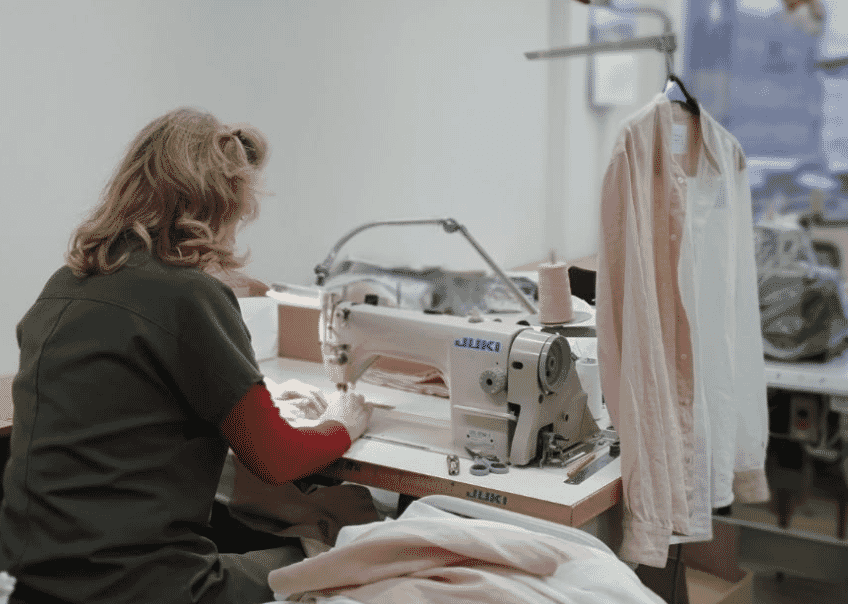
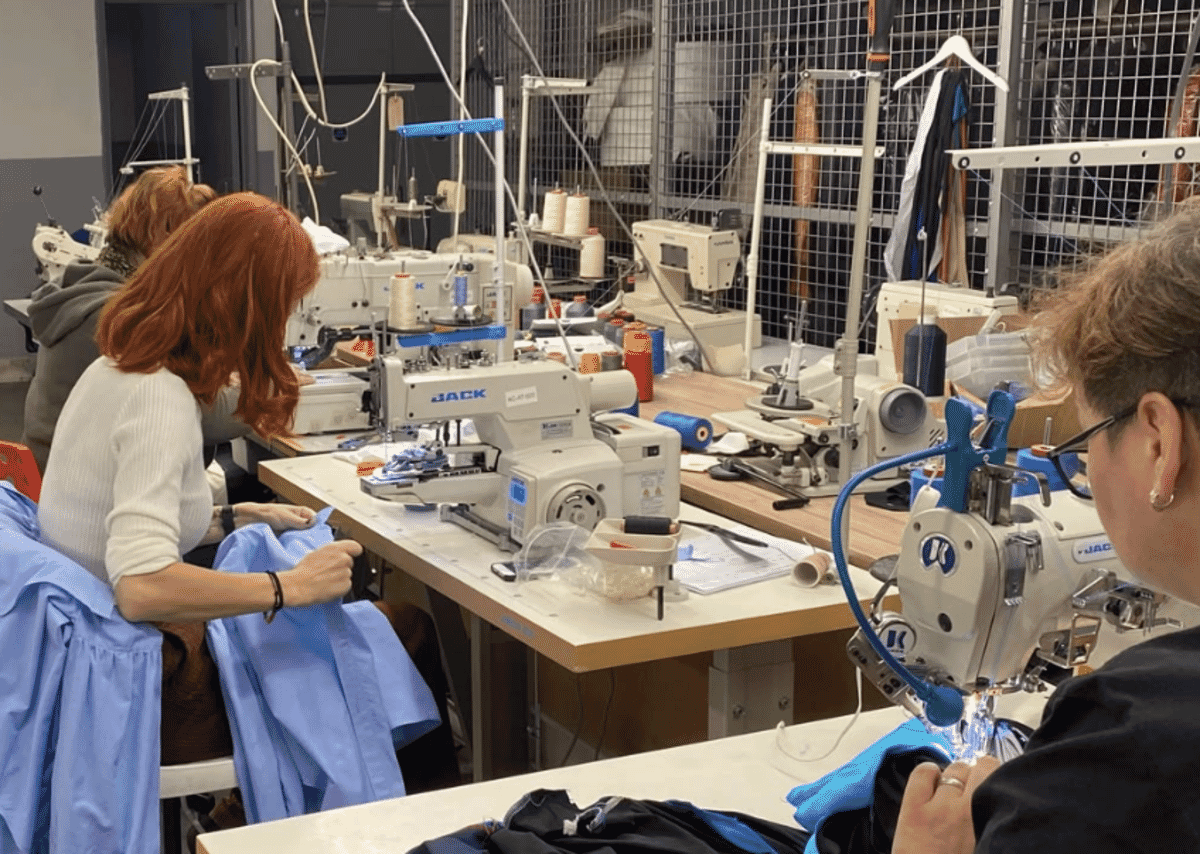
Private White V.C. (Salford, M3 7LJ). A menswear brand manufacturing in its own factory at 1 Cottenham Lane, Cottenham House, a building it describes as the city's last surviving factory from the Industrial Revolution. The company is named after Private Jack White V.C., who won the Victoria Cross in the First World War, and his family continues the business. It hand-makes coats there, and its range also covers knitwear, shirting and accessories (Private White V.C.).
It belongs on this list with a qualification. A 2016 factory visit by Permanent Style found 75 people working there and pieces being made for other names, including a jacket for Brooks and a Rapha x Christopher Raeburn collaboration. The owner said that to survive today a factory needs to be a brand, with more control over at least some of its production, and the visit described the brand as improving what it can produce for its private-label clients (Permanent Style, 2016). That is a decade-old snapshot and the balance may have shifted either way since. The company publishes no terms for third-party work, so treat it as a factory that can make outerwear extremely well and may or may not want your order, rather than as an open contract manufacturer. Private White VC Limited (07385261) is listed as active, registered at Cottenham House, 1 Cottenham Lane (Companies House).
Citation capsule: One clothing manufacturer in Manchester verifies from its own published sources: Private White V.C., which hand-makes coats in its own factory at 1 Cottenham Lane in Salford and has made for private-label clients alongside its own range. Xpose Limited, a knitted-accessories maker that was on our first draft as a Manchester option, has been in voluntary liquidation since May 2024.
Why is there so little cut-and-sew capacity in Manchester?
Because Manchester's textile history was spinning and weaving, not garment making, and those are different industries that failed at different times for different reasons.
Cottonopolis processed fibre into cloth. The mills spun yarn and wove fabric at enormous scale, and the finished-garment trade that grew around them was never proportionate to the cloth production. When cotton processing collapsed, it took the mill infrastructure with it. What it did not take was a deep cut-and-sew base, because that was in the East Midlands.
That geography persists today. Leicester, Nottingham and Derby became the heartland of hosiery and knitwear, and Leicester remains the densest garment cluster in Britain. Manchester's surviving textile activity skews towards the ends of the chain that were always strongest here. It also skews towards brands that vertically integrated, rather than contractors serving many customers.
There is a second, blunter reason, and it applies to the whole country. A contract garment factory is a low-margin business that needs steady volume from several customers to survive. When that volume left for lower-cost countries, the contractors closed and the vertically integrated brands with their own demand did not. The survivors are survivors because they were not dependent on contract work in the first place.
Our finding: The clearest sign of how thin this market is came from checking it. Of the two Manchester manufacturers on our first draft, one, Xpose Limited, had gone into voluntary liquidation in May 2024 and its website no longer loads. If you are shortlisting from any directory, open every website and check Companies House before you write the email, because a listing is not evidence of a live company.
Skip weeks of cold outreach: Browse our UK factory directory for £49, or get in contact and we'll place your production with the factory in our group built for it, normally within 24 hours. Flat fee, no commissions.
What can you realistically make in Manchester?
Two options, and they follow directly from what survived.
Premium outerwear, if the door is open. Private White V.C.'s Salford factory hand-makes coats, and outerwear is what it is known for. The constraint is willingness rather than capability, and the honest advice is to ask rather than assume.
Your own factory. The route a thin contract market pushes brands towards. Manchester has the conditions for it: industrial space, a design and creative base, and cheaper floor area than London. Private White V.C. is the worked example rather than the exception. It owns the machines it makes on, which is a large part of why it is still here when the contractors are not.
What you will struggle to find is a mid-size general contractor that will cut and sew 500 jersey hoodies to your specification. That business is in Leicester, and pretending otherwise wastes weeks. A brand in Manchester producing in Leicester is roughly two hours away by road and is still making in Britain.
How does Manchester compare with Leicester and Birmingham?
| City | Verified contract capacity | Strength | Typical minimum | Best for |
|---|---|---|---|---|
| Leicester | Deep. Garments, knit, fabric, labels, print, embroidery | Jersey and knitwear at volume | 120 to 150 per style (bespoke) at Colourways | Volume jersey and knitwear |
| Birmingham | Moderate | Development plus bulk production with a stated minimum | 50 per design and colour at Hook and Eye, at least two designs | Small runs with a published floor |
| Manchester | Thin. One verified operation | Premium outerwear | Not published | Outerwear, if the factory takes the work |
Source: company websites and the Leicester Made directory, 2026. "Verified" means the operation publishes enough on its own site or in a documented visit to be checked.
The table makes the decision straightforward. If your product is premium outerwear, ask in Manchester first. If your product is a garment at any volume, look to Leicester. Its cluster gives you fabric, labels, print and embroidery in the same place (Leicester Made), and Birmingham gives you a published floor to plan against, at 50 units per design and colour (Hook and Eye UK). Our guide to clothing manufacturers in Birmingham covers Hook and Eye UK and the rest of the West Midlands.
None of that is a reason to rule Manchester out. It is a reason to approach it for what it has. A month spent hunting locally for capacity that is a couple of hours away costs more than the journey does.
Citation capsule: Manchester's textile history was spinning and weaving rather than garment making. The collapse of cotton processing therefore removed mill infrastructure rather than a deep cut-and-sew base. The garment cluster was always in the East Midlands, which is why Leicester retains density today. Manchester's survivors are vertically integrated brands with their own factories.
What a thin local market changes about how you source
It changes the order of your decisions, and brands that recognise this early save a season.
In a deep market like Leicester you can pick the garment first and find capacity second, because capacity for most garment types exists. In a thin market you have to work the other way: find out what capacity exists, then decide whether your product fits it. That feels backwards to anyone who has designed a range already, and it is the correct order whenever the local pool is small.
The practical version is a single afternoon's work. Before you commit to a garment, establish what the nearest verified manufacturers actually run, at what minimum, with what lead time. Say they make coats for their own label and you are planning woven shirts at 80. You have learned in an afternoon what brands routinely take three months to discover.
The second change is that you should widen your radius earlier. A thin market makes distance cheaper by comparison: a couple of hours to Leicester is a small price for a factory that makes your category weekly. That journey costs almost nothing next to a season spent searching locally. Brands treat the city boundary as meaningful because it appears on the label, and customers almost never ask which city.
The third is that you should be sceptical of anyone who solves your problem too easily. Be careful with the company that responds quickly, offering exactly what you need at a comfortable minimum. In a market this thin, that is worth an extra verification step rather than fewer. The scarcity is real; a business that appears not to be constrained by it is doing something the factories are not. The usual something is arranging the work elsewhere.
Citation capsule: In a thin local manufacturing market the sourcing sequence has to invert. A brand establishes what the nearest verified manufacturers actually run, at what minimum and lead time. Only then does it decide whether the product fits, rather than designing a range and hunting for capacity afterwards. Widening the search radius early is usually cheaper than a season spent looking for local capacity that does not exist.
How do you check a Manchester manufacturer before ordering?
Open the website first. That sounds trivial, and it is the first sign that removed Xpose Limited from the recommendations on this page: its website no longer loads. Do it before you write anything.
Then Companies House. Search the name, confirm the number, the registered address and the filing history (Companies House). Searching Xpose Limited's 07422757 shows the liquidation in seconds. A company that will not give you a number is a company you cannot verify.
Then ask which processes happen at the address on the invoice, and ask for a visit. Manchester's advantage over offshore is the same as everywhere else in Britain: the factory is reachable, and an hour on the floor tells you machine count, operator count and current workload.
One Manchester-specific point. Because contract capacity is thin, you will encounter businesses positioned as Manchester manufacturers that are arranging production elsewhere. That is a legitimate service and it is not the same as a factory. The question that separates them is the same one that works everywhere: who owns the machines, and where are they?
A factory-ready tech pack is what makes your specification survive being sent to three different places. How we work explains where that sits in the sequence.
Is Manchester worth it for a clothing brand?
For garments, the honest answer is that being in Manchester is worth more than manufacturing in Manchester.
The city has design talent, cheaper space than London, a strong independent retail scene and a customer base that responds to local provenance. Those are real advantages for a brand headquartered here. None of them requires the sewing to happen within the city limits. A Leicester-made garment from a Manchester brand is still a British garment, made a couple of hours away.
Where brands go wrong is spending the first season hunting for local capacity the market does not contain, then concluding that UK manufacturing is impossible. It is not. It is concentrated somewhere else, and the concentration is why it works at all.
There is also a timing argument that favours staying put and looking outward. A brand's first two years are spent learning fit, learning which styles sell and learning how much stock it can carry. None of that learning requires a local factory, and all of it is easier with a manufacturer that already makes your category competently. Localising production is a decision worth revisiting in year three, when the range is stable and the volumes justify the conversation.
The exception is worth stating. Consider it if your volumes are small, your product is simple and you intend to make the same thing repeatedly. Buying three machines and hiring a machinist is a real option in a city with affordable industrial space. It solves the capacity problem by adding capacity rather than by hunting for it. That is the same logic that kept the one surviving factory on this page in business. The cost is that you are then running a factory as well as a brand, and that is a different job from the one you started.
Our view: Brands often overrate the marketing value of the city on the label and underrate the operational value of the cluster. A customer who cares that a coat is British-made almost never asks which British city. A brand that spends three months failing to find local capacity has paid for that distinction anyway, in the only currency that matters, which is a missed season.
Related Reading
- Clothing manufacturers UK: the verified list
- Clothing manufacturers in Leicester
- Clothing manufacturers in London
- Low MOQ clothing manufacturers UK
- The best UK clothing manufacturers
Frequently Asked Questions
Are there still clothing factories in Manchester?
Yes, but few. Private White V.C. hand-makes coats in its own factory at Cottenham House in Salford. General contract cut-and-sew capacity of the kind found in Leicester is very limited in the city.
What is the minimum order at a Manchester manufacturer?
Private White V.C. publishes no minimum for third-party work, so ask it directly. It is a brand first; a 2016 factory visit described it making for private-label clients alongside its own range. For a published floor, look further afield: Hook and Eye UK in Birmingham states 50 units per design and colour.
Why does Manchester have so little garment manufacturing given its textile history?
Because its history was spinning and weaving rather than garment making. The cut-and-sew base was always concentrated in the East Midlands, particularly Leicester, Nottingham and Derby, and that geography still holds today.
Can I manufacture jersey basics in Manchester?
Not readily. No verified Manchester operation offers general jersey cut and sew at volume. Leicester holds the density for that category, with fabric, garment production, labels, print and embroidery within a few miles of each other.
How do I check a Manchester manufacturer is still trading?
Open the website before anything else, then check the company number on Companies House. Xpose Limited (07422757), a knitted-accessories maker once listed as a Manchester manufacturer, went into voluntary liquidation in May 2024 and its website no longer loads. Tell us what you're making. We're a group of documented clothing factories in the United Kingdom. Tell us your product, volume and timeline, and we'll place your production with the factory in our group built for it, normally within 24 hours. You produce directly with the factory. Flat fees, no commissions, no pitch. Get in contact · Download the directory (£49) Need a tech pack? Get a factory-ready single-style tech pack for £79. See what's included.
Editorial note: all company names, certification marks and trademarks referenced here are the property of their respective owners. Minimums are as each company publishes them on its own site, checked in October 2026; they are not quotes and they vary by product, fabric and season. Company status is from Companies House on the same date. Always confirm terms directly with the factory before committing.
Sources
- Companies House, Xpose Limited (07422757). Source of the liquidation status, the 17 May 2024 resolution to wind up, the voluntary liquidator appointment and the overdue accounts and confirmation statement. Checked 19 October 2026.
- Private White V.C., about page. Source of the 1 Cottenham Lane, Salford M3 7LJ address, the Cottenham House description, the hand-made coats, the Private Jack White V.C. naming and the product range.
- Companies House, Private White VC Limited (07385261). Source of the active status and the registered address at Cottenham House.
- Permanent Style, Private White V.C. factory visit, 2016. Source of the 75 staff, the pieces made for Brooks and for Rapha x Christopher Raeburn, the owner's "a factory needs to be a brand" comment and the private-label clients. Dated 2016 and cited as a 2016 position, not a current one.
- Leicester Made. Cited for the comparison of cluster depth between cities.
- Colourways Textiles, company site, 2026. Source of the 120 to 150 units per style bespoke minimum used in the city comparison table.
- Hook and Eye UK, manufacturing page, 2026. Source of the 50 units per design and colour minimum, rising with design complexity, and the two-design minimum used in the city comparison table.
- Companies House, the UK register of companies. Cited as the verification route generally.