There is no best UK clothing manufacturer. There is a best one for a specific garment, at a specific volume, for a brand at a specific stage. Every page that ranks them one to ten without knowing those three things is ranking them on something else.
Usually that something else is who paid to be listed, or who has the most search visibility. Neither correlates with whether your hoodie arrives correct. The company that ranks first in Britain for "clothing manufacturers UK" states on its own site that it operates a factory overseas (Hawthorn, 2026). That tells you exactly how much ranking position is worth as a proxy for quality.
So this page does something different. It sets out the seven criteria that actually predict whether a manufacturing relationship works. It then scores the UK manufacturers that publish enough information to be scored, and says plainly where the information does not exist.
Who we are: UK Clothing Factory places and manages production with documented factories in the United Kingdom. The companies named below are independent British businesses listed from their own public sources, not members of our group. What we do is different: we place your production with a documented factory in our group built for your product.
In short
- Seven criteria predict outcomes: published minimum, stated specialism, verifiable registration, process transparency, audit status, whether you can visit, and whether they answer specifically.
- Seven of twelve UK manufacturers publish no minimum, which makes published figures a scoring criterion in itself.
- Fashion Enter scores highest on verifiability, with SMETA audit, Fast Forward leading status and named clients (Grow London Local).
- Specialism beats capability. A factory that makes your garment category weekly outperforms a generalist that can make anything.
- The tie-breaker is a paid sample, not a page like this one.
Making something? Send us the product, the quantity and your date, and our team replies within 24 hours. Brief us →
Cost it first: work out your true cost per garment with our garment cost calculator. It takes about a minute and needs no email.
What actually separates a good UK manufacturer from a bad one?
Not size, not age, and not how polished the website is. Seven things, and they are all checkable before you spend money.
A published minimum. Not because low is good, but because knowing your own number means you have measured your own setup cost. Factories that state a figure quote faster, price more specifically and revise less often after the sample. To sense-check a quote before you send a brief, our UK production cost calculator gives an indicative price range per piece.
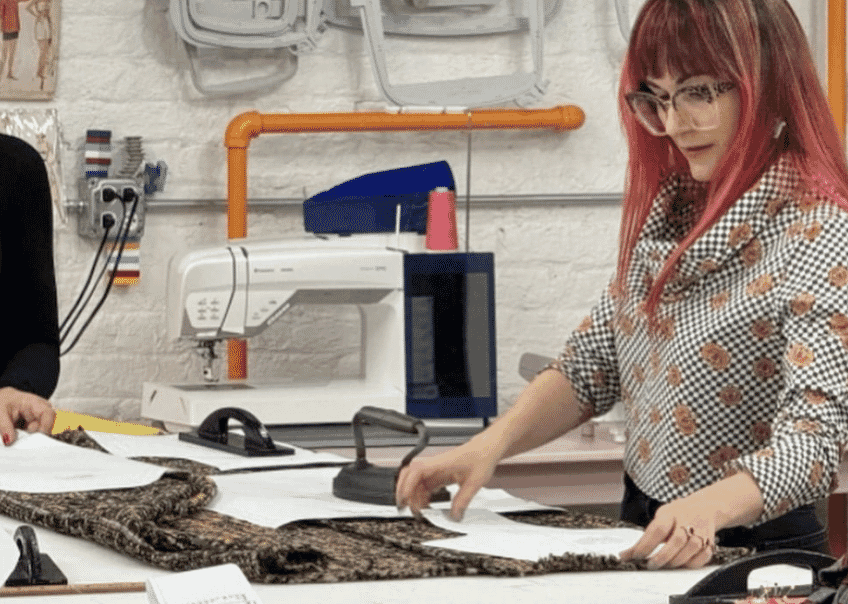
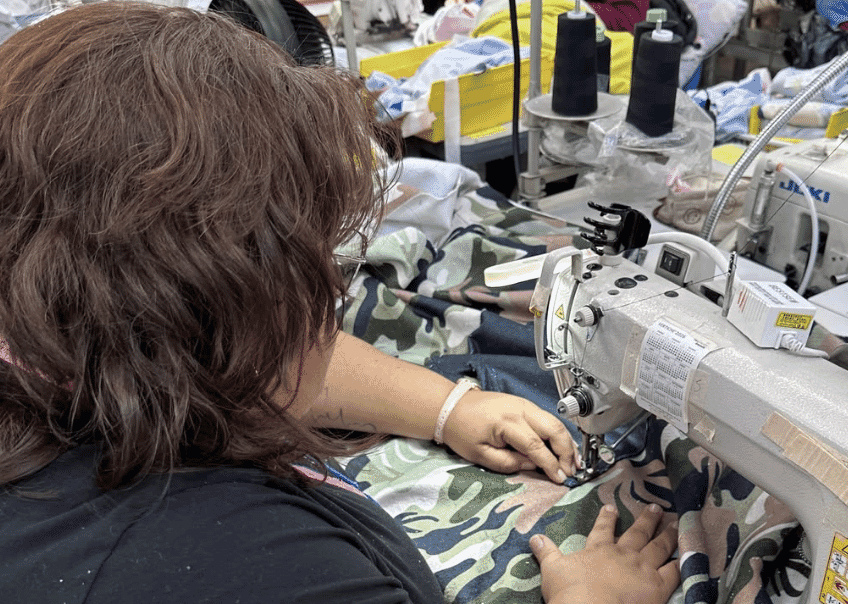
A stated specialism. A factory that runs jersey every week has the machines threaded, the operators practised and the faults already found. The same factory attempting a tailored jacket is starting from nothing. Denim works the same way, which is why our UK denim page lists its own minimum of 200 pieces per style. Capability lists are marketing; specialism is operational reality.
A verifiable registration. Companies House is free and public. A manufacturer that publishes its company number on its own site, as Colourways Textiles does, is making itself checkable on purpose. Read what the number returns rather than noting that it exists. The one Colourways publishes, 12833009, was dissolved in July 2026, and the group's active entity is Colourways Textiles Factory Limited, 13310810.
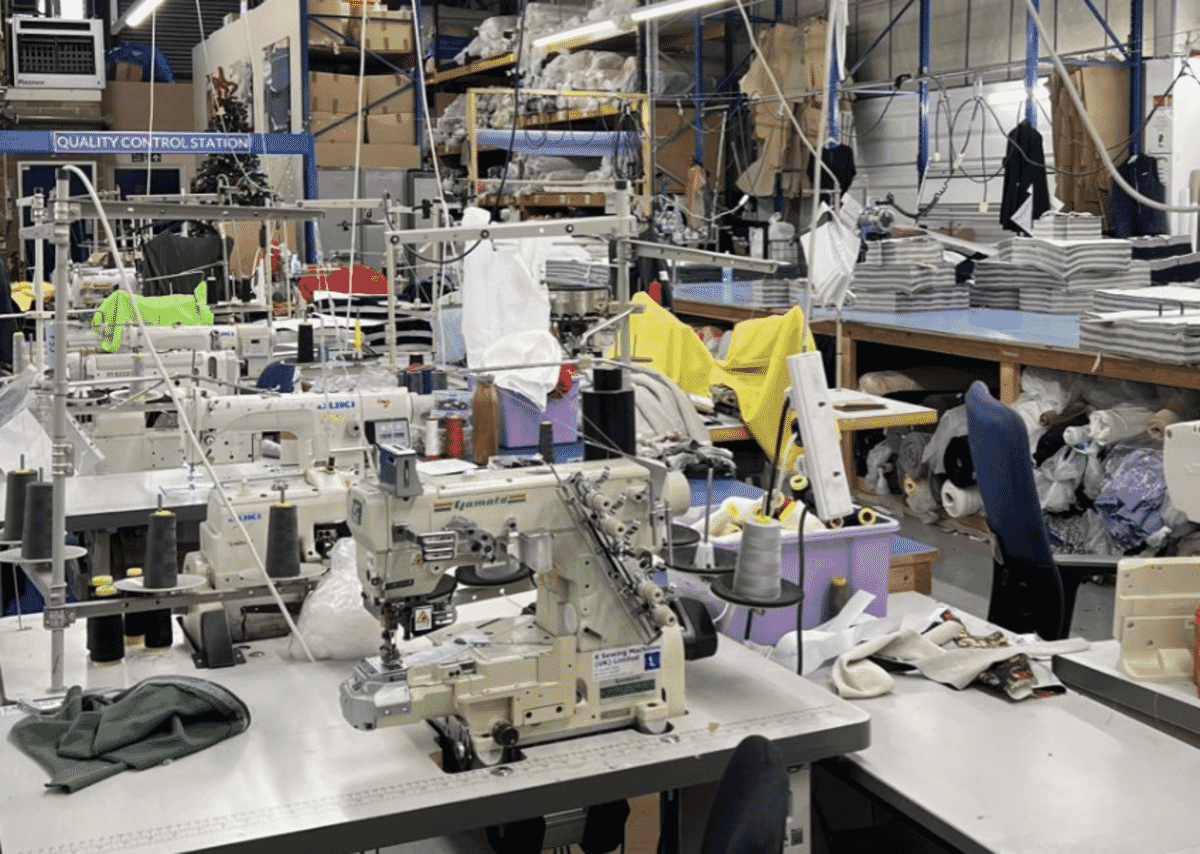
Process transparency. The question is which processes physically happen at the address on the invoice. A manufacturer answers in a sentence. Anyone who subcontracts will take a day and come back vague.
Which criteria can you check before making contact?
The last three, and they are the ones that separate a shortlist from a decision.
Audit or certification status. SMETA, Fast Forward and similar audits are not quality guarantees, but they mean a third party has been through the building. For a brand that will be asked about its supply chain by a retail buyer, that paperwork has direct commercial value.
Whether you can visit, at short notice. This is the one advantage domestic manufacturing has that offshore sourcing structurally cannot match, and it is the criterion brands skip most often. Ask to come within the next week rather than next month. A factory with nothing to arrange gives you a time, and the delay before an answer tells you more than the answer does.
Whether they answer specifically. Send a real specification and see what comes back. A specific question answered specifically is the single best predictor on this list, and it costs nothing to test.
Seven checkable criteria predict whether a UK clothing manufacturing relationship works: a published minimum order quantity, a stated garment specialism rather than a capability list, a Companies House registration the manufacturer publishes itself, a clear answer on which processes happen at the invoicing address, third-party audit status, whether the factory will let you visit at short notice, and whether a specific technical question receives a specific answer.
How do the main UK manufacturers score on those criteria?
Scored on published information only. A blank is a blank, not a low mark, and several strong manufacturers score poorly here purely because they publish little.
| Manufacturer | Published MOQ | Stated specialism | Public registration | Audit status | Best suited to |
|---|---|---|---|---|---|
| Fashion Enter (Haringey) | From 1 | Production plus training, short run to 5,000/wk | Trading as Fashion-Enter Ltd | SMETA, Fast Forward leading | Brands needing a floor of one and a ceiling of thousands |
| Hook and Eye UK (Birmingham) | 50 per design/colour | Streetwear, activewear | Address published | Not published | Streetwear brands wanting a stated number |
| Colourways Textiles (Leicester) | ~100 per style | Premium jersey | Co. No. 13310810 | Not published | Jersey programmes at 100+ |
| Studio Sew.n (Gloucester) | Zero | Design, development, cut and sew | Not published | Not published | First runs under 50 units |
| Fabrika (London) | Not published | Pattern-led, bespoke and luxury | Not published | Not published | Garments where the pattern is the hard part |
| Sew it in London (Dagenham) | Not published | Small to medium, sampling in house | Not published | Not published | Development and production in one building |
| Something Wicked | Made to order | Luxury lingerie | Not published | Not published | Intimates, which need a specialist |
| Pinkfudge | Not published | Stretch, performance, athleisure | Not published | Not published | Technical stretch garments |
| Tanya Dimitrova | Small runs | Bridal, RTW, bespoke | Not published | Not published | Occasionwear and bridal |
| Ivyi Rose Creations | None stated | Concept design through production | Not published | Not published | Fully custom small runs |
| Plus Samples (London) | Not published | Sampling, grading, production | Not published | Not published | Sampling-led projects |
| Artisan Seams Atelier | Small to large | Women's, men's, children's | Not published | Not published | Generalist cut and sew |
Source: company websites, the Make It British manufacturer directory and Grow London Local, 2026. "Not published" means the information was not found on public sources, not that it does not exist.
What does the scoring table not tell you?
Read that table for what it does not contain. Seven of the twelve publish no minimum and eleven of the twelve publish no audit status. That is the state of public information in UK garment manufacturing. It is why a page claiming to rank these companies by quality is claiming knowledge nobody has.
Our finding: The criterion with the highest predictive value is also the one no directory can score, because it only exists in a reply. Send two factories an identical specification with one genuinely difficult technical question in it. The factory that answers the difficult question directly, including saying it cannot do the thing, will be the better relationship. The one that answers the easy questions and quietly ignores the hard one has told you how the project will go.
Save the phone calls: Browse our UK factory directory for £49, or get in contact and we'll place your production with the factory in our group built for it, normally within 24 hours. Flat fee, no commissions.
Which UK manufacturer is best for your garment type?
Match the specialism, not the capability list. Almost every manufacturer will say yes to almost every garment, and almost every one of them has a category it actually runs.
Jersey: tees, hoodies, sweats, polos. Colourways Textiles in Leicester, which builds premium jersey specifically, or Hook and Eye in Birmingham for the streetwear end of it. Jersey is the most competitive category in the UK and therefore the one where you have most choice. Our guide to clothing manufacturers in Leicester covers Colourways and the other Leicester options in more detail, and our guide to clothing manufacturers in Birmingham covers Hook and Eye.
Technical stretch, sportswear and athleisure. Pinkfudge lists stretch garments and performance wear as its specialism. This category punishes generalists harder than any other, because stretch fabric behaves differently under the needle and a factory that handles it monthly will produce a visibly different result from one that handles it yearly. Our guide to sportswear manufacturers in the UK checks who sews stretch in Britain and who sends bulk overseas.
Lingerie and intimates. Something Wicked, which lists luxury lingerie and accessories made to order. Grading a bra block runs on an entirely different curve from a t-shirt size run. A generalist applying standard apparel grading will produce a sample that fits nobody particularly well.
Bridal, occasionwear and bespoke. Tanya Dimitrova, covering bridal, ready to wear and bespoke across womenswear and menswear.
Pattern-heavy and luxury. Fabrika in London, which is a sampling and pattern-making studio first and a production unit second. If the difficulty in your garment is the pattern rather than the volume, that ordering is the right way round. Our London clothing manufacturers guide lists the city's sampling studios alongside its outer-borough factories.
Anything at genuinely tiny volume. Fashion Enter's Fashion Studio from one unit, Studio Sew.n at zero, Ivyi Rose Creations with no stated minimum.
Does a bigger UK factory produce better garments?
No, and the relationship frequently runs the other way for a small brand.
Scale buys consistency at volume, better machinery, and the audit and compliance paperwork that retail buyers ask for. Those are real advantages and they matter enormously once you are ordering thousands.
What scale costs a small brand is attention. A 500-unit order at a factory running 5,000 garments a week is a rounding error in their schedule. It will be treated like one when something needs deciding quickly. The same order at a nine-person factory is a significant week's work and gets significant attention.
The sector is structured accordingly. Of UK fashion and textile businesses counted in 2020, 8,245 were manufacturers, and 80% of manufacturing businesses employ nine people or fewer (UKFT). The micro factory is the normal case in British garment manufacturing, not the exception, and the industry's capacity to quote 50 units is a direct consequence of that.
The practical rule: pick the factory where your order is large enough to matter and small enough not to strain them. Being somebody's biggest customer is fragile and being somebody's smallest is invisible.
Of the businesses counted in the UK fashion and textile sector in 2020, 8,245 were manufacturers, and 80% of manufacturing businesses employed nine people or fewer. The micro factory is the structural norm in British garment production rather than the exception, which is the direct reason UK manufacturers can quote minimum runs that offshore factories will not price.

What should you do before choosing?
Run a three-factory test, and make it identical for all three.
Write one specification. Send it unchanged to three manufacturers whose stated specialism matches your garment. Include one genuinely difficult technical question. Then compare four things: the price, the lead time, how specifically they answered the hard question, and how long they took.
The price spread will be wider than you expect, and the cheapest quote is frequently the one that understood the least. A quote materially below the other two usually means something was left out, and the thing left out surfaces as a variation charge later.
Then pay for a sample from the one that answered best rather than the one that quoted lowest. A sample is the only test that produces evidence rather than impressions, and it costs a fraction of discovering the same information at bulk. If your specification is not written yet, a factory-ready tech pack is what makes three quotes genuinely comparable, and how we work sets out where that fits in the sequence.
Finally, verify the entity before money moves. Search the name on Companies House, confirm the registration number and address, and check that the company quoting you is the company invoicing you. It takes thirty seconds and it is the cheapest risk reduction available anywhere in this process.
Where manufacturer comparisons usually go wrong
Two failures recur before you even reach price, and each produces a confident decision built on nothing.
Ranking on visibility. A directory that lists manufacturers in order of search ranking, advertising spend or how recently they updated their website is measuring marketing, not making. In UK garment manufacturing the correlation runs weakly and sometimes negatively, because the best small factories are busy with repeat work and have no reason to invest in acquisition. The nine-person operation with a website last redesigned in 2016 and a two-year waiting list is not findable by the method most brands use to find factories.
Treating a capability list as evidence. Almost every manufacturer lists almost every garment type, because listing them costs nothing and excluding one loses enquiries. A capability list tells you what a factory is willing to attempt. It tells you nothing about what it runs weekly, which is the only thing that predicts the result. The question that cuts through it is blunt and effective: what did you make most of last month?
Which comparison mistakes cost real money?
One above all, and it produces a decision that looks rigorous and is not.
Comparing prices from different specifications. This is the most expensive of the three because it feels like diligence. Three factories quoting from three different verbal descriptions have quoted three different garments, and the spread you are reading is a spread in assumptions rather than in price. The cheapest number in that comparison is usually the factory that assumed the least construction, and the difference reappears as a variation charge once the sample exposes it.
There is a fourth, subtler failure worth naming. Brands weight the factors they can see, which are price and minimum, and ignore the factor that dominates the outcome, which is whether the factory understands the garment. A manufacturer who has made your category for fifteen years will catch a fit problem in your pattern before cutting. One who has not will make exactly what you specified, including the mistake, and charge you correctly for it.
Manufacturer comparison fails in three recurring ways: ranking factories by search visibility rather than production record, reading a capability list as evidence of what a factory actually runs, and comparing quotes generated from different specifications. The third is the most costly, because a price spread between three verbal briefs measures differing assumptions about construction rather than differing prices.
Does UK production need to be the whole supply chain?
No, and treating it as all-or-nothing costs brands money for no gain in credibility.
A common and entirely legitimate structure is to produce the core range offshore, where volume justifies it. The UK then runs what the UK is good at: short runs, seasonal drops, repeats on best sellers, and anything where the lead time matters more than the unit price. A brand doing that can accurately describe the UK-made products as UK-made, provided it does not let the claim drift across the whole range.
The reason it works is that the two systems fail in opposite directions. Offshore production is efficient at volume and inflexible about timing. UK production is expensive per unit and quick to react. A best seller that has sold out with eight weeks of season left is a problem only one of those two can solve.
The discipline it requires is labelling honestly at product level rather than brand level. If four of your twelve styles are made in Leicester, four of your twelve product pages say so and the other eight do not. Brands that blur this are not usually being dishonest; they write one About page early on and never revisit it as the supply chain changes underneath it.
Our finding: The brands we see handling this best treat UK capacity as an insurance policy rather than a moral position. They run volume where volume is cheap, and they keep a UK factory warm with small regular work specifically so that the relationship exists when a repeat order suddenly has to happen in four weeks. The factory gets predictable filler work, the brand gets a call answered in March. Neither party is doing the other a favour.
Related Reading
- Clothing manufacturers UK: the verified list
- Low MOQ clothing manufacturers UK
- Made in UK clothing: what the label legally means
- Estimate your per-garment production cost
- How we place and manage production
Frequently Asked Questions
Who is the best clothing manufacturer in the UK?
There is no single best. The right manufacturer depends on your garment category, your funded volume and your brand stage. Fashion Enter scores highest on verifiable public information, with SMETA audit and Fast Forward leading status. A jersey brand at 200 units may still be better served by a Leicester jersey specialist.
Why do so few UK manufacturers publish their minimums?
Because for most garments the honest answer depends on construction, fabric and colourway count, so they quote per project. Seven of the twelve manufacturers reviewed here publish no minimum. It usually indicates per-garment quoting rather than a high hidden figure.
Does ranking first on Google mean a manufacturer is better?
No. The company ranking first in Britain for "clothing manufacturers UK" states on its own site that it operates a factory overseas. Search visibility measures marketing investment, not manufacturing quality, and the two are frequently uncorrelated in this sector.
Are audited UK factories worth paying more for?
They are worth it if you sell wholesale. SMETA and similar audits mean a third party has inspected the site, and retail buyers increasingly ask for that paperwork. For direct-to-consumer brands the commercial value is lower, though the underlying assurance is the same.
How many manufacturers should I approach before deciding?
Three, all sent the identical specification. Fewer than three gives you no way to judge whether a price is high. More than three rarely adds information and slows the process, because each additional factory needs the same explanation and the same follow-up. Tell us what you're making. We're a group of documented clothing factories in the United Kingdom. Tell us your product, volume and timeline, and we'll place your production with the factory in our group built for it, normally within 24 hours. You deal with the maker directly. One flat fee, no commission, no sales pitch. Brief our team, or buy the UK factory directory for £49. A factory-ready tech pack for one style is £79.
Editorial note: trade names and marks mentioned here belong to their owners. Minimums, costs and lead times are market ranges from the published sources below, not a quote from any one maker, and they vary by product, fabric and season. Duty and origin rules were checked on the publication date and may since have changed. Check your commodity code and agree terms with the maker before committing.
Sources consulted
- Grow London Local, ethical UK sampling and production services for fashion brands. Source of the Fashion Enter minimum of one, the 5,000 garments per week capacity, the SMETA and Fast Forward leading audit status and the named clients.
- Hook and Eye UK, company site, 2026. Source of the Birmingham address and the 50 units per design and colour minimum.
- Colourways Textiles, company site, 2026. Source of the Leicester location, the published company number 12833009 and the premium jersey specialism. The active entity number 13310810 is from Companies House.
- Make It British, UK clothing manufacturers for small businesses. Source of the listings and specialisms for Studio Sew.n, Fabrika, Sew it in London, Something Wicked, Pinkfudge, Tanya Dimitrova, Ivyi Rose Creations, Plus Samples and Artisan Seams Atelier.
- Hawthorn, company site, 2026. Source of the statement that it operates a factory overseas, cited here only in relation to search ranking as a quality proxy.
- UKFT industry footprint report. Source of the 8,245 manufacturers count and the 80% micro business share, 2020 data.
- Companies House, the UK register of companies. Cited as the verification method rather than as a source of any statistic on this page.