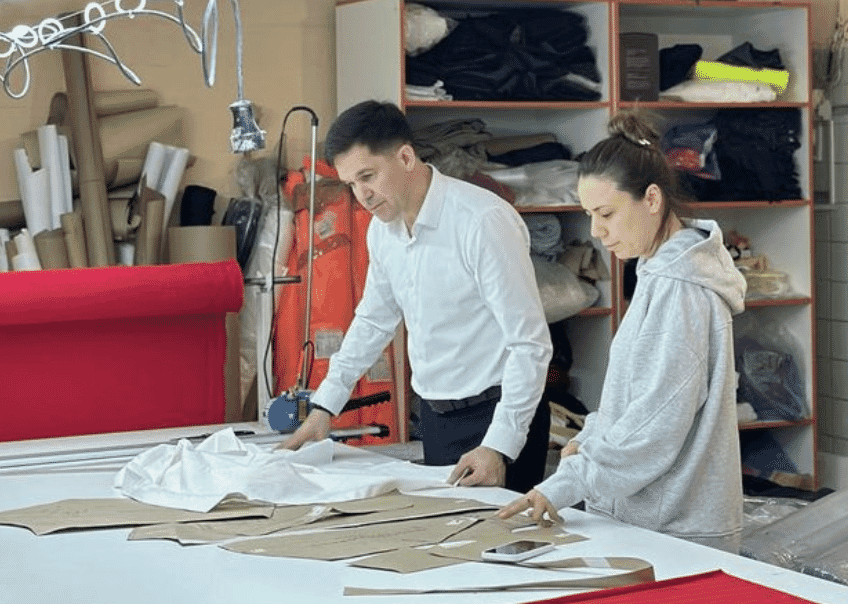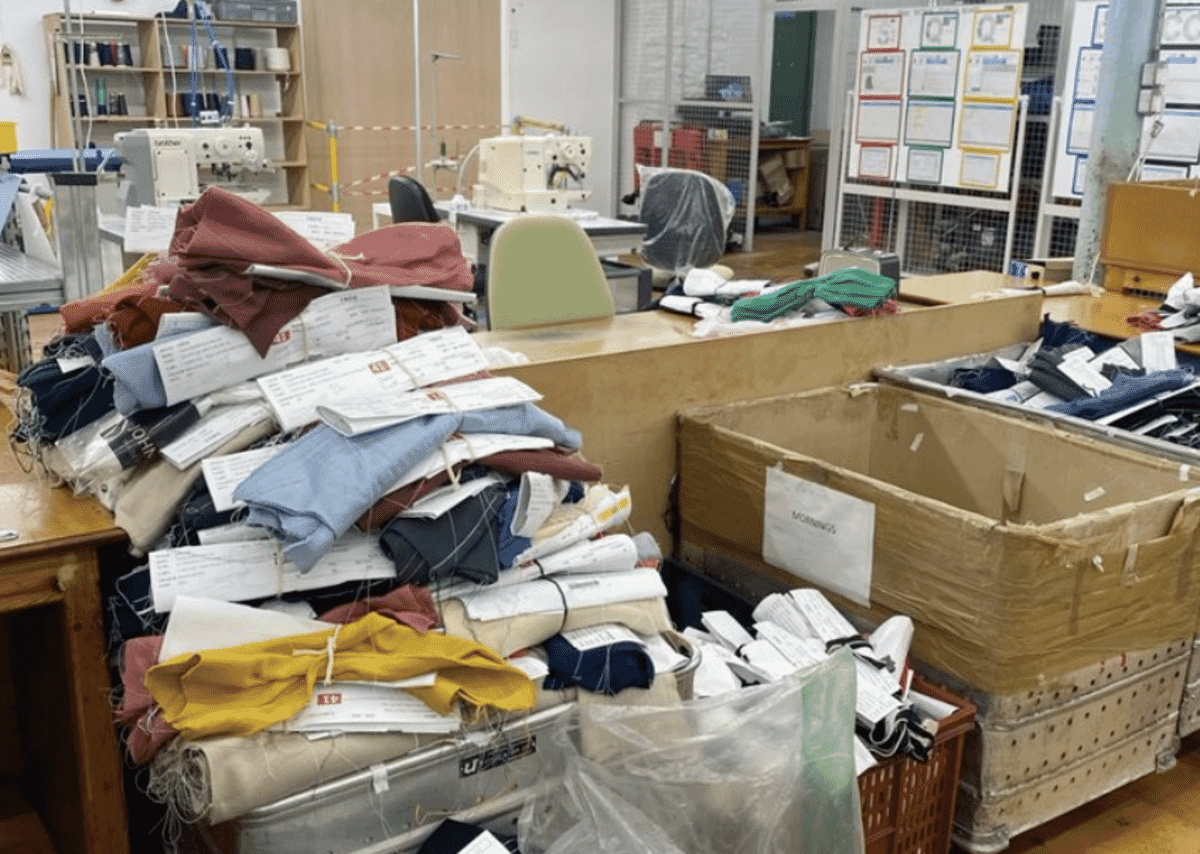
Clothing manufacturers in London still exist, and they work in places nobody puts on a fashion map. Haringey, Dagenham, Greenwich. The romantic version of London manufacturing is a Soho studio; the working version is an industrial estate off the North Circular with the machines running.
Seven London operations follow. Each one is a real business with a public trace, and this page describes each by what it publishes rather than by what it might be able to do. Where a company gives an address, you get the address. Where it states a minimum, you get the minimum. Where it does neither, this page says so rather than filling the gap.
Heads up: We're UK Clothing Manufacturers, a group of documented clothing factories in the United Kingdom. The companies named below are independent British businesses listed from their own public sources, not members of our group. Our role is separate: we place your production with a documented factory in our group built for your product.
Key Takeaways
- Fashion Enter in Haringey quotes minimums from one unit through its Fashion Studio, alongside capacity to 5,000 garments per week (Grow London Local).
- The capacity is in outer London, not central. Haringey, Dagenham and Greenwich, not Mayfair.
- London is sampling-heavy and production-light. More of these businesses lead with pattern cutting and sampling than with bulk.
- A local pack sits on this search. Map results outrank organic here, so search alone will under-represent factories without strong Google Business Profiles.
- Visiting is the advantage. Every business here is reachable in an afternoon, which is the entire case for making in your own city.
Have a product in mind? Tell us the product, quantity and timeline and our team replies within 24 hours. Send a brief →
Try it free: Work out your true cost per garment in 60 seconds with our garment cost calculator. No email required.
Which clothing manufacturers actually operate in London?
Seven, with enough published detail to verify. This page groups them by what they are useful for rather than ranking them.
Fashion Enter Ltd (Haringey, N4 1LZ). A social enterprise garment manufacturer at Unit 4 Crusader Industrial Estate, Hermitage Road, running production alongside training courses and workspace. Its Fashion Studio quotes minimums from one, and its production side runs to 5,000 garments per week. It is SMETA audited and holds leading status in the Fast Forward audit, and its clients include Gymshark, N Brown and Community Clothing (Grow London Local). It also runs accredited training and apprenticeships across London and Leicester, which makes it the most institutionally connected manufacturer on this list.
Sew it in London (Dagenham). A sustainable fashion service and manufacturer handling small to medium production, pre-production sampling, product development, tech packs, toiles and pattern cutting. Its team is described as holding twenty to forty years of garment industry experience (Sew it in London). Development and production sit in the same building, which removes the most common handover failure in a first order.
Fabrika (London). A high-end sampling and pattern-making studio specialising in bespoke, luxury and contemporary garments, offering pattern cutting, grading, sampling and small to medium production runs (Fabrika). Right choice when the pattern is the hard part rather than the volume.
Which London studios work at the smallest scale?
Four, and they are the ones to approach when the job is a handful of pieces rather than a production run.
Plus Samples (London). Garment sampling, grading and production for designers. Publishes no minimum.
The London Pattern Cutter. A London factory offering small-batch production with no minimums, including swimwear sample development (The London Pattern Cutter). Notable because technical stretch categories usually carry higher floors, not lower ones.
B Fashion Studio. An ethical sample studio offering tech packs, pattern cutting, prototype sampling and production. No London address is published, so treat the location as unconfirmed.
Something Wicked. Luxury lingerie and accessories, made to order. No location is published.
Citation capsule: Seven clothing manufacturers with verifiable public detail operate in London, concentrated in outer boroughs rather than central districts. Fashion Enter in Haringey publishes the lowest minimum, quoting from one unit through its Fashion Studio while running production capacity to 5,000 garments per week. Most London operations lead with sampling and pattern cutting rather than bulk production.
How do London manufacturers compare?
| Manufacturer | Area | Published address | Minimum | Leads with |
|---|---|---|---|---|
| Fashion Enter | Haringey N4 1LZ | Unit 4 Crusader Ind. Est., Hermitage Rd | From 1 | Production plus training, SMETA audited |
| Sew it in London | Dagenham | Published on own site | Not published | Development and production together |
| Fabrika | London | Not published | Not published | Pattern cutting and luxury sampling |
| The London Pattern Cutter | London | Not published | No minimums | Small batch, swimwear development |
| Plus Samples | London | Not published | Not published | Sampling and grading |
| B Fashion Studio | Not published | Not published | Not published | Ethical sampling and prototypes |
| Something Wicked | Not published | Not published | Made to order | Luxury lingerie |
Source: company websites, Grow London Local and the Make It British manufacturer directory, 2026. "Not published" means not found on public sources, not that the information does not exist.
Two patterns in that table are worth reading deliberately. First, five of seven publish no address, which for a city where visiting is the main advantage is a strange thing to withhold. Ask for it in the first email. A manufacturer that will not give an address before a contract is a manufacturer you cannot visit, and in London that removes most of the reason to be in London.
Second, the businesses that lead with sampling outnumber those that lead with bulk. That is not a weakness, it is what London is. The city retains pattern cutting, grading and sampling skills at a density nowhere else in Britain matches. It has also lost most of its volume capacity to Leicester, the East Midlands and offshore.
Our finding: The most useful London factories for a new brand are frequently the ones that describe themselves as sample rooms rather than manufacturers. A sample room that also runs 200 units will give a first order more attention than a production unit for which 200 units is an interruption. Brands filter for the word manufacturer and skip exactly the businesses best suited to their volume.
Skip weeks of cold outreach: Browse our UK factory directory for £49, or get in contact and we'll place your production with the factory in our group built for it, normally within 24 hours. Flat fee, no commissions.
Why is London production concentrated in the outer boroughs?
Floor space, and the arithmetic is not subtle. Cutting tables, roll storage and sewing lines need square footage at a rent garment margins can carry. Central London rents defeat garment margins at any volume.
So the capacity migrated outward to where industrial estates still exist. Hermitage Road in Haringey, the Dagenham corridor, the light-industrial pockets of Greenwich and Newham. That migration also explains why London manufacturing is hard to find. Those addresses do not read as fashion addresses, and the businesses occupying them rarely have a shop window or a reason to market to the public.
There is a consequence for search. A local pack sits on this query, which means Google shows map results above organic ones, ranked substantially on Google Business Profile signals and proximity to the searcher. A genuine factory in Dagenham with no profile and no reviews will sit below an agency in Shoreditch that has both. Searching alone will systematically under-represent the actual manufacturing base.
The practical workaround is to search by process rather than by outcome. "Pattern cutting London", "sample machinist London" and "CMT London" surface different businesses from "clothing manufacturer London", because the businesses describing themselves that way are describing the work rather than the industry.
Is making clothes in London worth the premium?
It is if you use the proximity, and it is not if you do not. That sounds glib but it is the whole calculation.
London production costs more than Leicester production, which costs more than offshore production. What London buys is the shortest possible loop between a problem and a person who can fix it. A fit issue spotted on Tuesday can be looked at on Wednesday with the garment on a body in the room. That loop is worth real money to a brand still learning its fit, and worth nothing at all to a brand that approves everything by email.
London's fashion and textile sector is substantial enough that this infrastructure persists (UKFT). But the manufacturing share of it is small and specialised, and the honest framing is that London is where you develop a garment and frequently not where you scale it. A brand that samples in Haringey and produces in Leicester is not compromising. It is using each place for what it is good at. Our guide to clothing manufacturers in Leicester covers the checks to run before producing there.
If the loop is the reason you are here, then commit to it. Book the fitting, go to the fitting, bring the garment back. Brands that pay London rates and then approve samples from photographs have bought the expensive option and taken the cheap option's outcome.
Citation capsule: London retains a dense concentration of pattern cutting, grading and sampling skill while most bulk garment capacity has moved to Leicester, the East Midlands and offshore. The economic case for producing in London rests on proximity: a fit problem can be examined in person within a day. Brands that approve samples remotely pay the London premium without collecting the benefit it buys.
How do you verify a London clothing manufacturer?
Companies House first, then the address, then the sample. The register is free and public (Companies House): search the name, confirm the registration number, check the registered address and the filing history.
Then ask for the production address specifically, because in London the registered address is frequently an accountant's office or a residential flat and tells you nothing about where machines are. The question to ask is which processes physically happen at the address you would be invoiced from.
Then visit. This is the one verification step London makes genuinely easy and it is the one most brands skip. An hour on a floor tells you the number of machines, the number of operators, what is currently in production and whether the place is busy. None of that is available from a website, and all of it predicts how your order will go.
There is a London-specific trap worth naming. Serviced offices and virtual addresses are cheap and abundant here. A company can hold a plausible London registered address for a few pounds a month while every garment is sewn somewhere else entirely. That is legal, and it is not necessarily dishonest, but it makes a London postcode worth nothing as evidence. Treat the address as a question rather than an answer.
Finally check that the entity quoting is the entity invoicing. A mismatch between the name on the quote, the name on the invoice and the name on the register means there is a layer between you and the factory. Not automatically a problem. An undisclosed one is.
Our finding: A London address in a manufacturer's marketing is not evidence of London production, and the sector knows it. A company can keep a registered office in a serviced building in Zone 1 while every stitch is sewn abroad, all of it perfectly legal and none of it disclosed. The test is not where the company is. It is where the cutting table is, and that question has a one-sentence answer for anyone who owns one.
What London is actually good at making
Development, short runs, and anything where the fit has not been solved yet. That is a narrower claim than most London manufacturers make about themselves, and it is the one the evidence supports.
The skill that survived in London is pattern cutting. When volume production left, the sample rooms stayed, because a sample room needs three people and a first-floor unit rather than forty people and a shed. What that leaves is a city with an unusual ratio: a lot of people who can solve a pattern, comparatively few who can sew a thousand of them.
So the categories where London performs well are the ones where the pattern carries the difficulty. Tailoring and structured outerwear, where a millimetre in the armhole changes everything. Occasionwear and bridal, where every garment is effectively bespoke. Technical stretch and swimwear, where the block behaves unlike any woven and a generalist will get it wrong twice before getting it right.
The categories where London performs less well are the high-volume basics. A plain jersey tee at 2,000 units is a job Leicester does better and cheaper, and a London unit quoting for it is quoting against its own cost base. There is no shame in that and no reason to pretend otherwise. Ask a London manufacturer what it makes most of, and if the answer is samples, believe the answer.
If you have the fit solved and the specification written, the case for London weakens considerably. If you have neither, it is the best place in Britain to fix both. A factory-ready tech pack gets you to the first position from the second, and a London sample room will read it in the conventions it was written in.
Citation capsule: London retained garment pattern cutting and sample-room capacity when volume production left, because a sample room requires three people and a small unit rather than a large workforce and a warehouse. The result is a city strong in categories where the pattern carries the difficulty, including tailoring, occasionwear and technical stretch, and comparatively weak in high-volume jersey basics.
How do you approach a London factory so it replies?
With a garment, a quantity and a date, in the first three lines. Most London manufacturers employ a handful of people and nobody whose only job is answering email, so an enquiry competes for attention against work already on the floor.
What gets read: the garment type, the fabric if you know it, the quantity, the delivery window, and whether you have a pattern or a tech pack. Five facts, one short paragraph. A manufacturer can tell within seconds whether that is a job they can do and price.
What gets skipped: the brand story, the founder journey, the market opportunity and the deck. None of it is irrelevant to you and all of it is irrelevant to the question of whether they can make the thing.
Expect a week. Following up after a week is normal practice in this sector and is not read as pestering. Brands routinely conclude from silence that a factory is uninterested when in fact the person who reads enquiries has been on the floor covering an absence.
One more thing, and it costs nothing. Ask a specific technical question that only a manufacturer could answer, such as how they would finish a particular seam on your fabric. The quality and directness of the answer tells you more than the price does. A factory that says it would not recommend your construction has just given you the most valuable reply in the inbox.
Related Reading
- Clothing manufacturers UK: the verified list
- Best UK clothing manufacturers: how to judge them
- Low MOQ clothing manufacturers UK
- Made in UK clothing: what the label means
- How we work
Frequently Asked Questions
Are there still clothing factories in London?
Yes, concentrated in outer boroughs rather than central London. Fashion Enter operates from Haringey, Sew it in London from Dagenham, and several sampling and pattern-cutting studios operate across the city. Volume capacity is far smaller than Leicester or the East Midlands.
What is the lowest minimum order in London?
One unit, through Fashion Enter's London Fashion Studio, which quotes from one for sampling and short runs. The London Pattern Cutter also states no minimums for small-batch production. Both are unusually low even by UK standards.
Is London more expensive than Leicester for manufacturing?
Generally yes, because floor space and labour both cost more. The trade is proximity: a fit problem can be examined in person within a day. Brands that develop in London and produce in Leicester are using each location for its strength rather than compromising.
Why can't I find London factories through Google?
Because a local pack sits on the search, ranking heavily on Google Business Profile signals that genuine industrial-estate factories rarely invest in. Searching by process instead, such as pattern cutting London or CMT London, surfaces different and often more relevant businesses.
Should I visit a London factory before ordering?
Yes, and it is the main practical advantage of producing in your own city. An hour on the floor shows machine count, operator count and current workload, none of which appears on a website. A manufacturer that will not give a production address before a contract cannot be visited. Tell us what you're making. We're a group of documented clothing factories in the United Kingdom. Tell us your product, volume and timeline, and we'll place your production with the factory in our group built for it, normally within 24 hours. You produce directly with the factory. Flat fees, no commissions, no pitch. Get in contact · Download the directory (£49) Need a tech pack? Get a factory-ready single-style tech pack for £79. See what's included.
Editorial note: all company names, certification marks and trademarks referenced here are the property of their respective owners. MOQ, cost and lead-time figures are market ranges compiled from the published sources listed below, not quotes from any individual factory, and they vary by product, fabric and season. Duty and rules-of-origin figures were correct at the date of publication and the position continues to move. Always verify your own commodity code and confirm terms directly with the factory before committing.
Sources
- Grow London Local, ethical UK sampling and production services for fashion brands. Source of the Fashion Enter Fashion Studio minimum of one, the 5,000 garments per week capacity, the SMETA and Fast Forward audit status and the named clients.
- Fashion Enter, company site, 2026. Source of the Haringey address at Unit 4 Crusader Industrial Estate, Hermitage Road, and the training and workspace activities.
- Sew it in London, about page. Source of the Dagenham location, the service list and the twenty to forty years team experience range.
- Fabrika London, company site. Source of the London location and the pattern cutting, grading, sampling and small to medium production description.
- The London Pattern Cutter. Source of the London factory, the no-minimums small batch description and the swimwear sample development.
- Make It British, UK clothing manufacturers for small businesses. Source of the Plus Samples, B Fashion Studio and Something Wicked listings.
- UKFT, London fashion and textile industry report. Cited for the scale of London's fashion and textile sector.
- Companies House, the UK register of companies. Cited as the verification method rather than as a source of any statistic on this page.