British leather is two industries that are often confused. Tanneries turn hides into leather. Leather goods manufacturers turn leather into products. A brand that needs one and contacts the other loses weeks, because the two have almost nothing in common operationally.
This page names the UK tanneries we could check on their own websites and on Companies House in October 2026, says what each one makes, and explains where leather goods are made, what a clothing brand can realistically source and how to check a supplier.
Heads up: We're UK Clothing Manufacturers, a group of documented clothing factories in the United Kingdom. We don't tan leather or make leather goods, and the companies named below are independent British businesses, not members of our group. Our team places and manages clothing production; leather trims for your garments are part of that brief.
Key Takeaways
- Thomas Ware & Sons has operated since 1840 and says it remains the biggest of the traditional British leather pit tanneries (Thomas Ware).
- J&FJ Baker in Colyton, Devon describes itself as Britain's only remaining traditional oak bark tannery, with a tannage of about a year (J&FJ Baker).
- Drapers reported in 2015 that UK tanneries had fallen from about 125 in 1983 to 23 (Drapers).
- Leather goods are made in Walsall, the historic centre of the English saddlery trade; Ettinger has made there since 1999 (Ettinger).
- Tanning and leather goods manufacture are separate industries. Decide which you need before contacting anyone.
Have a product in mind? Tell us the product, quantity and timeline and our team replies within 24 hours. Send a brief →
Which tanneries still operate in the UK?
Five that we checked on their own websites and on Companies House in October 2026. Each company's descriptions below are its own.
Thomas Ware & Sons (Bristol). A traditional leather tannery that has operated since 1840 and says it remains the biggest of the traditional British leather pit tanneries. It makes sole leather, equestrian, industrial and speciality leathers and leather for quality leather goods (Thomas Ware). Companies House: Thomas Ware & Sons Limited, 00031652, active, at Clift House Tannery, Bristol, registered for tanning and dressing of leather.
Pit tanning explains the price and the lead time. The hides spend a long time in pits of tanning liquor rather than a short time tumbling in drums, and the process cannot be hurried. A tannery that still runs pits is making a choice about the product.
J&FJ Baker & Co (Colyton, Devon). Describes itself as Britain's only remaining traditional oak bark tannery, run by the same family for six generations and tanning with oak bark since 1862 on a site it says has been a tannery since Roman times (J&FJ Baker). Its hides come from Devon beef cattle, and its process page describes a tannage of about a year in oak bark pits (the process). Companies House: J.& F.J. Baker & Company Limited, 00050647, active, Colyton.
Charles F. Stead (Leeds). Tans at Sheepscar Tannery in Leeds and has produced leather there since 1904; it moved from traditional leathers into the suede on which its reputation is based, and describes itself as a leading supplier of suede to top-grade shoe and bag makers (C. F. Stead heritage). Companies House: Charles F. Stead & Company Limited, 00080604, active, Sheepscar Tannery.
Devonia Sheepskin & Tannery (Buckfastleigh, Devon). Describes itself as Britain's oldest established sheepskin tannery, producing sheepskins in Buckfastleigh on the edge of Dartmoor for some 200 years. It tans locally sourced lambskins, sources some skins from overseas, offers contract dressing and sells to manufacturers (Devonia). Companies House: Devonia Sheepskins & Tannery Limited, 08432876, active.
Billy Tannery (Midlands). Converted a farm building in the Midlands into a small-batch tannery in 2016 and says it was the first new leather tannery built in the UK for nearly 100 years, adding that the details are hard to confirm. It tans goat and deer leather and makes handmade leather goods, bags and bespoke products from its on-farm microtannery (our microtannery; about us). Companies House: Billy Tannery Limited, 10653455, active.
Citation capsule: UK tanneries still working in 2026 include Thomas Ware & Sons in Bristol, which has operated since 1840 and calls itself the biggest of the traditional British pit tanneries; J&FJ Baker in Colyton, Devon, Britain's only remaining traditional oak bark tannery by its own description; Charles F. Stead, tanning suede at Sheepscar Tannery in Leeds; Devonia, a sheepskin tannery in Buckfastleigh; and Billy Tannery, a goat-leather microtannery in the Midlands opened in 2016.
How many tanneries are left in Britain?
Far fewer than a generation ago. In 2015, Drapers reported that the number of UK tanneries had fallen from about 125 in 1983 to 23, as tighter effluent rules raised costs for UK producers (Drapers, June 2015). That figure is now more than ten years old, so treat it as an indication of scale rather than a current count.
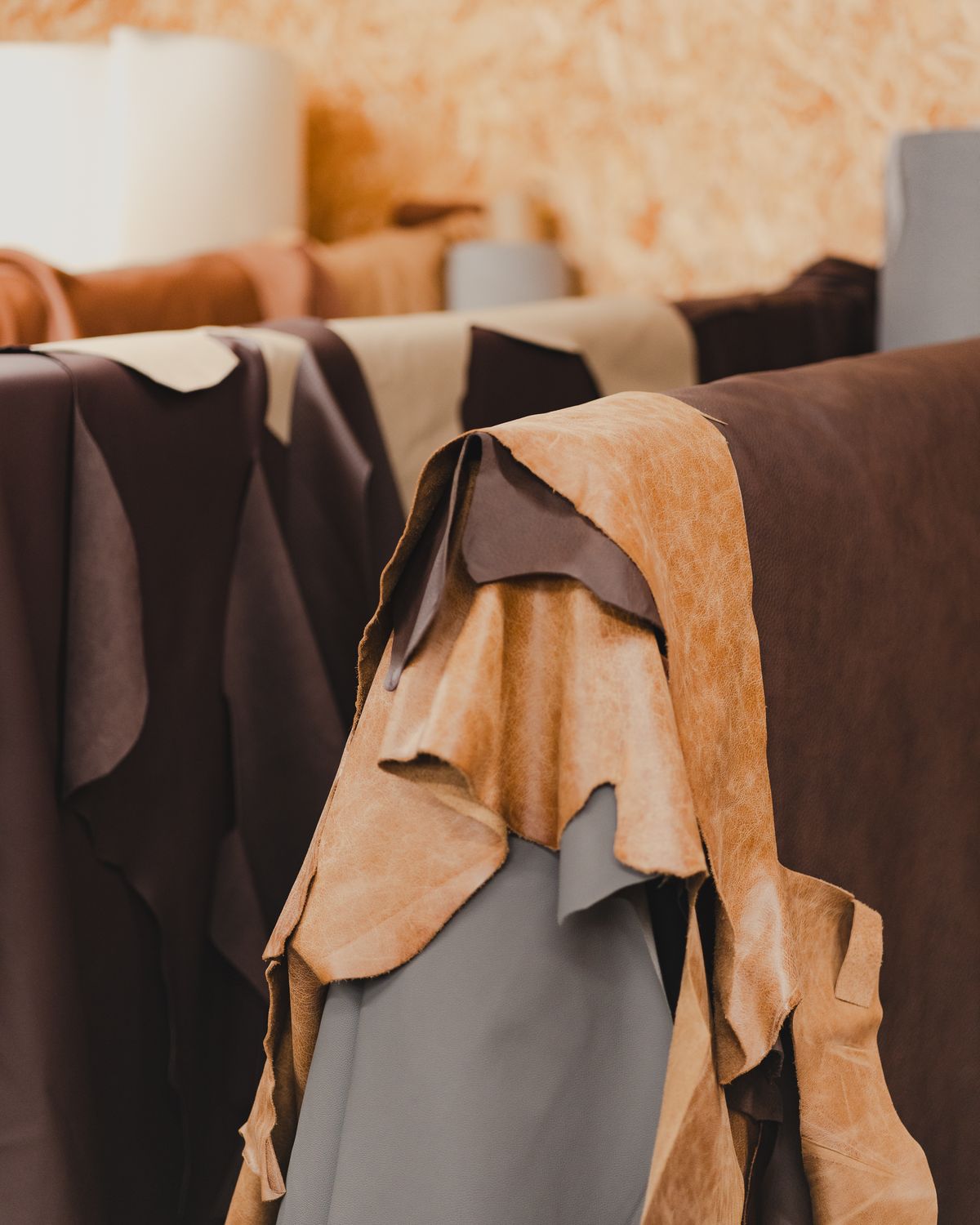
What survives is specialised: pit-tanned sole and equestrian leather, oak bark leather, suede, sheepskin and small-batch goat leather. The practical consequence is that British leather is a specification exercise rather than a shopping one. With few tanneries, each with distinct capabilities, the right question is which one makes the leather you need.
The trade body Leather UK publishes its membership list (Leather UK members), which includes Charles F. Stead and Billy Tannery, and runs a directory of UK leather businesses (Leather UK).
What is the difference between a tannery and a leather manufacturer?
A tannery makes the material; a manufacturer makes the product.
A tannery receives raw or part-processed hides and turns them into finished leather: soaking, liming, tanning, retanning, dyeing, drying and finishing. It sells by the hide or the skin. It will not make your bag.
A leather goods manufacturer buys finished leather and cuts, skives, stitches, edges and assembles it into a product, with patterns, clicking presses and heavy stitching machines. It does not tan anything. A few businesses do both: Billy Tannery tans goat skins and makes finished goods from them.
So decide the leather first, or accept your maker's house leather. If the material is part of your product, you are having two conversations with two businesses, and the tannery one carries the longer lead time. Ask for the tannage, not just the colour: two leathers that look alike on a swatch card can behave differently in a finished product, and vegetable-tanned leather tends to darken and change with use.
Skip weeks of cold outreach: browse our UK factory directory for £49, or get in contact and our team replies within 24 hours. We place and manage clothing production with the factory in our group built for it. No commissions.
How do UK leather businesses compare?
| Business | Location | Since | What it makes | Companies House |
|---|---|---|---|---|
| Thomas Ware & Sons | Bristol | 1840 | Pit-tanned sole, equestrian, industrial and goods leathers | 00031652, active |
| J&FJ Baker | Colyton, Devon | 1862 (oak bark) | Oak bark leather, about a year in the pits | 00050647, active |
| Charles F. Stead | Leeds | 1904 (leather at Sheepscar) | Suede for shoe and bag makers | 00080604, active |
| Devonia | Buckfastleigh, Devon | About 200 years | Sheepskins and lambskins; contract dressing | 08432876, active |
| Billy Tannery | Midlands | 2016 | Goat and deer leather; handmade goods | 10653455, active |
| Ettinger | Walsall | 1934 (Walsall since 1999) | Luxury leather goods (a maker, not a tannery) | 00336826, active |
Source: each company's own website and Companies House, read October 2026. Dates and descriptions are the companies' own.
Where is leather goods manufacturing concentrated?
In Walsall, north-west of Birmingham, which has been the centre of the English saddlery and harness trade for centuries and still makes leather goods. Walsall Council publishes a leather trade suppliers list through the Walsall Leather Museum (Walsall Council).
Ettinger is an example. Founded in 1934 and still family-owned, it moved to Walsall in 1999 and describes itself as one of the few remaining British luxury leather goods makers still manufacturing in the UK; it holds Royal Warrants (Ettinger; Companies House G. Ettinger Limited, 00336826). Our guide to bag manufacturers in the UK profiles the Walsall makers in more detail.
For a clothing brand, the cluster matters for trims. Leather patches, tabs, belts and straps are garment components, and in the West Midlands they can be sourced close to each other. Our page on clothing manufacturers in Birmingham covers the garment side of the region.
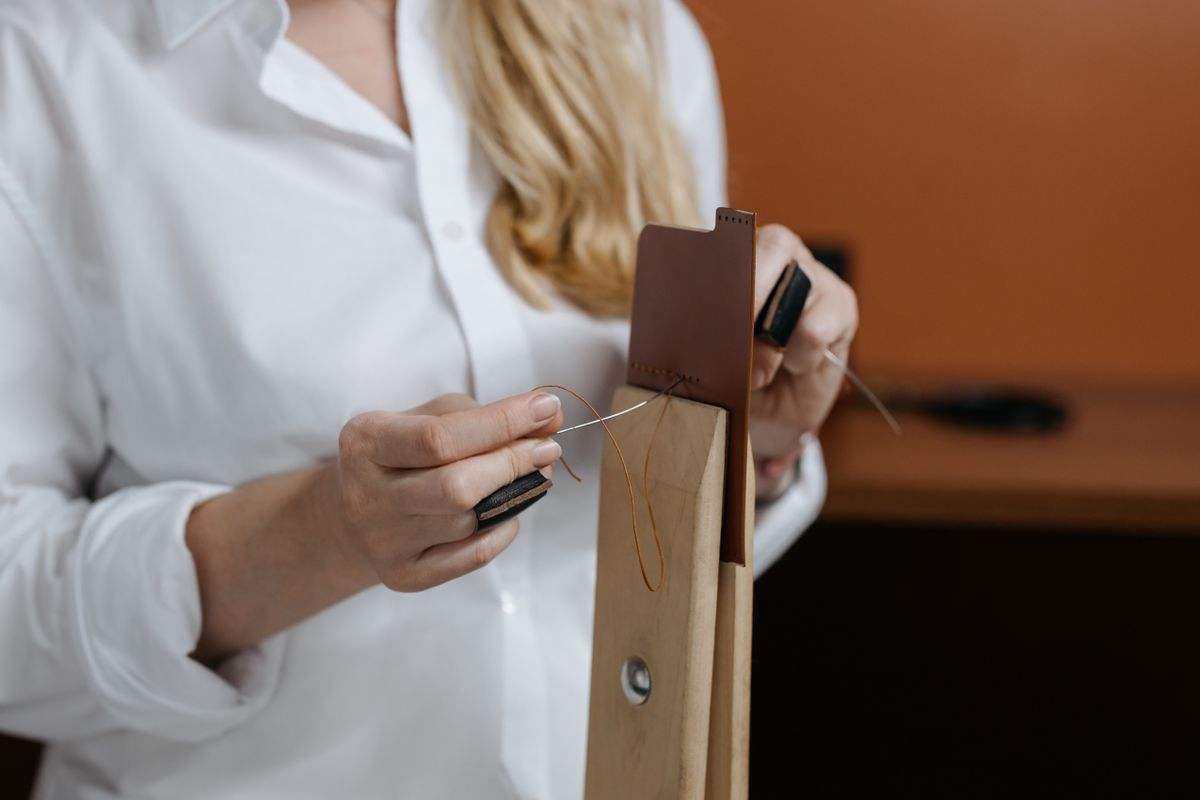
What can you realistically source from UK leather businesses?
Material to a specification, and products at modest volume, at a price that reflects the make.
Finished leather to a brief. The strongest case. A brand specifying a tannage, thickness and finish is buying something genuinely different. Expect long lead times and expect to buy by the hide or skin.
Suede and sheepskin. Charles F. Stead specialises in suede, and Devonia sells sheepskins and lambskins to manufacturers as well as to individuals (Devonia, for manufacturers).
Small leather goods and bespoke work. Billy Tannery offers bespoke products; Walsall makers produce small leather goods. Ask each maker for its minimum.
Hides for garment trims. An under-used option for clothing brands. Patches, tabs, belt straps and reinforcements need small quantities of leather rather than whole programmes, so a tannery selling by the hide can be a reasonable supplier for a garment brand.
What is not realistic is commodity leather goods at an import price. British leather competes on tannage, finish and construction, not on cost per unit.
If your specification is not written yet, a factory-ready tech pack (£79) makes a leather trim legible to the garment factory: tannage, thickness, edge finish, thread and hardware. Our how we work page sets out where that fits.
How do you verify a UK leather business?
Companies House first, then the trade body, then the technical questions.
The register is free and public (Companies House): confirm the company number, the status, the registered address and the nature of business. Tanneries are usually registered under SIC 15110, tanning and dressing of leather, and leather goods makers under 15120. Check that the company is active, not in insolvency or dissolved, and that the registered name is the one behind the website: Ettinger, for example, trades through G. Ettinger Limited. Then check the Leather UK directory (Leather UK).
Which processes happen on your site? A tannery describes its own tanning, retanning and finishing. A leather merchant sells hides tanned elsewhere, which is a legitimate business and a different one.
Where is the leather cut and stitched? A product assembled in Britain from panels cut abroad is different from one made start to finish on site. Ask plainly and accept either answer, as long as it is given.
What is the lead time? Ask before you ask about price. Oak bark tanning at J&FJ Baker takes about a year, and pit tanning is slow too. A brand that learns this after fixing a launch date has a problem money cannot solve.
Finally, ask for a swatch of the actual leather, not a photograph. Leather is assessed by hand: the temper, the grain and how the edge behaves when bent.
Related Reading
- Bag manufacturers UK
- Clothing manufacturers in Birmingham
- Clothing manufacturers UK: the verified list
- Made in UK clothing
- Low MOQ clothing manufacturers UK
Frequently Asked Questions
How many tanneries are left in the UK?
Few. Drapers reported in 2015 that the number of UK tanneries had fallen from about 125 in 1983 to 23. Those still working include Thomas Ware & Sons in Bristol, J&FJ Baker in Colyton, Devon, Charles F. Stead in Leeds, Devonia in Buckfastleigh and Billy Tannery in the Midlands.
What is the difference between a tannery and a leather manufacturer?
A tannery turns hides into leather and sells it by the hide or skin. A leather goods manufacturer buys finished leather and cuts, stitches and assembles it into products. They are separate businesses with separate equipment, so decide which one you need before you contact anyone.
What is oak bark tanning?
A traditional vegetable tannage that uses crushed oak bark in pits. J&FJ Baker in Devon, which describes itself as Britain's only remaining traditional oak bark tannery, says its tannage takes about a year. The leather is firm and hard-wearing and is used for saddlery, harness and other demanding uses.
Where are leather goods made in Britain?
Walsall, near Birmingham, has been the centre of the English saddlery and leather goods trade for centuries, and Walsall Council publishes a leather trade suppliers list. Ettinger, for example, has made its leather goods in Walsall since 1999. Our guide to bag manufacturers in the UK covers the makers there in more detail.
Can a clothing brand buy British leather for trims?
Yes. Patches, tabs, belt straps and reinforcements need small amounts of leather, and tanneries sell by the hide or skin. Specify the tannage, the thickness and the finish, ask for swatches, and allow for the tannery's lead time. Your garment factory then needs those details in the tech pack.
We're a group of documented clothing factories in the United Kingdom. Tell us your product, volume and timeline: our team replies within 24 hours and, if it is a fit, places and manages your production with the factory in our group built for it, from 100 pieces per style. The factory quotes and bills you directly. No commissions.
Get in contact Download the directory (£49)Need a tech pack? Get a factory-ready single-style tech pack for £79. See what's included.
Editorial note: all company names, certification marks and trademarks referenced here are the property of their respective owners. Company details are taken from each company's own website and Companies House, read in October 2026; they can change, so confirm terms directly with the business before committing.
Sources
- Thomas Ware & Sons: operating since 1840, biggest of the traditional British pit tanneries, leather ranges.
- J&FJ Baker and the process: Britain's only remaining traditional oak bark tannery, since 1862, Devon hides, tannage of about a year.
- Charles F. Stead, heritage: Sheepscar Tannery, leather from 1904, suede for shoe and bag makers.
- Devonia and for manufacturers: oldest established sheepskin tannery claim, Buckfastleigh, some 200 years, local and imported lambskins, sales to manufacturers.
- Billy Tannery, our microtannery and about us: 2016 microtannery in the Midlands, goat and deer leather, handmade goods and bespoke work.
- Ettinger, about us: founded 1934, Walsall since 1999, still manufacturing in the UK, Royal Warrants.
- Drapers, British leather manufacturers fight for growth: UK tanneries from about 125 in 1983 to 23 (published 17 June 2015).
- Leather UK, our members and Leather UK: trade body membership and directory.
- Walsall Council: Walsall leather trade suppliers list.
- Companies House: company numbers 00031652, 00050647, 00080604, 08432876, 10653455 and 00336826, read October 2026.