Gym clothing manufacturers in the UK are few, and a British address does not always mean British sewing. Only a handful of businesses say on their own websites that they sew leggings and sports bras here, and they publish little about minimums. This guide names the ones we checked in November 2026, says what each one actually claims, and then covers the part that decides whether customers come back: recovery, opacity, the waistband and the sports bra.
If you want the wider picture on technical stretch, seam types and grading, our guide to sportswear manufacturers in the UK covers those. This one stays with the garments a gym brand actually launches with, and with the tests you can run before you pay for bulk.
Who we are: UK Clothing Factory places and manages production with documented factories in the United Kingdom. The companies named below are independent businesses, checked on their own websites and on Companies House in November 2026, and are not members of our group. What we do is different: our team replies to your brief within 24 hours, then places and manages your production with the factory in our group built for your product, from 100 pieces per style.
In short
- Two businesses name gym wear on their own sites. Pinkfudge in Basingstoke says its services are all in house, and Apparel Inspired in Hartlepool gives 50 to 100 pieces per style, in the UK or overseas (Pinkfudge; Apparel Inspired).
- A Birmingham address does not mean UK bulk. Hook and Eye UK says it uses a team in China to bulk manufacture (Hook and Eye UK).
- Sheer fabric can sink a season. Lululemon's 2013 recall covered about 17% of the women's pants in its stores and cut its revenue forecast (CS Monitor).
- The sports bra is its own job. University of Portsmouth researchers tie over a third of sports bra performance to five design characteristics (University of Portsmouth).
- Duty if you make abroad: 12% on knitted leggings and 6% on sports bras, or 0% from the EU, Turkey or India when the rules of origin are met (UK Trade Tariff).
Making something? Send us the product, the quantity and your date, and our team replies within 24 hours. Brief us
Which UK manufacturers make gym clothing?
A short list. We looked for businesses that name leggings, gym kit or sportswear, then checked what their own websites say about where the sewing happens and whether the company is active at Companies House.
Pinkfudge (Basingstoke, Hampshire)
Pinkfudge describes itself as a designer, manufacturer and specialist in 4-way stretch fabric garments, working B2B in the performance, sport and athleisure markets, with its services and skills all in house (Pinkfudge). Its gym wear page lists sports bras, training hoodies, vests, leggings, crop tops and compression wear (Pinkfudge gym wear), and its bespoke leggings page offers supplex and compression fabrics (Pinkfudge leggings). The company is PINKFUDGE MANUFACTURING (UK) LIMITED, 11677358, active and registered in Basingstoke.
Two things to ask. It publishes no minimum. And its gym wear page still refers to a 2018 range and is written partly for its own label, so confirm how much contract gym wear it runs today, and what its CMT work looks like for an outside brand.
Apparel Inspired (Hartlepool and Harrogate)
Apparel Inspired has its production unit in Hartlepool and its design office in Harrogate (Apparel Inspired). Its activewear page lists leggings, yoga gear, gym kits and shorts, with sports bras among its styles, and gives flexible minimums from 50 to 100 pieces per style, depending on the product, with output of up to 3,000 pieces a month. The same page says it can manufacture in the UK and overseas, depending on your needs (Apparel Inspired activewear). That is a fair arrangement and it says so openly, but if you plan a UK origin claim, get the place of making in writing for your order. The company is APPAREL INSPIRED LTD, 14901020, active, incorporated in May 2023.
Tower Garments (Enfield, London)
Tower Garments says it has supported the UK fashion industry since 2012 from a London facility, with CMT and full package production and flexible minimums, though it gives no figure (Tower Garments). UKFT, the UK fashion and textile trade body, lists sportswear among its products (UKFT). The pages of its own website that we read do not mention gym wear or leggings, so ask to see a stretch garment it has made. The company is TOWER GARMENTS (LONDON) LIMITED, 07922591, active.
The Fashion Studio at Fashion-Enter (London)
The Fashion Studio makes first patterns, samples, grades and short runs from 1 to 300 units, and charges for development by the hour. It says it can stitch any product, and its list includes lingerie and swimwear, though not gym wear by name (Fashion Studio). The associated factory's core production is womenswear soft separates in jersey and woven, and it reports SMETA and Fast Forward audits (Fashion-Enter factory). Treat it as a place for samples and very small runs, and ask directly about its experience with high-stretch knits. The company is FASHION - ENTER LTD, 05779844, active, registered in Beckenham.
Bags of Love (Park Royal, London), for one-offs
This is a different kind of supplier, but it answers a question new brands often have. Bags of Love sells custom printed gym leggings labelled made in the UK, from £44.95 when we read the page, printed on its own lycra fabric, cut into panels and sewn with a cover stitch (Bags of Love). You can order one. It is print-on-demand on a set block, not pattern development, so it suits a design test or team kit more than a brand's own fit. Its terms name the operator as Contrado Imaging Ltd (terms), which is CONTRADO IMAGING LTD, 04666562 at Companies House, active.
One to read carefully: Hook and Eye UK (Birmingham)
Hook and Eye UK is a Birmingham studio that lists activewear among its services (Hook and Eye UK). Its manufacturing page says it uses a team in China to bulk manufacture your designs, with a minimum of 50 units per design and colour, rising with complexity, and at least two designs for bulk (manufacturing page). It is open about this, and it can be useful for development, but it is not a UK-made bulk option. The company is THE HOOK AND EYE CLOTHING COMPANY LIMITED, 10180775, active.
Of six UK-based businesses checked in November 2026, Pinkfudge in Basingstoke says it makes 4-way stretch gym wear in house, and Apparel Inspired in Hartlepool gives 50 to 100 pieces per style in the UK or overseas. UKFT names Tower Garments in Enfield for sportswear. The Fashion Studio at Fashion-Enter runs 1 to 300 units, Bags of Love prints single leggings in the UK, and Hook and Eye UK in Birmingham bulk manufactures in China.
Save the phone calls: browse our UK factory directory for £49, or get in contact and our team replies within 24 hours. No commissions.
How do UK gym clothing makers compare?
| Business | Where it sews | Gym garments named | Published minimum | Companies House |
|---|---|---|---|---|
| Pinkfudge | States all in house, Basingstoke | Leggings, sports bras, vests, compression | Not published | 11677358, active |
| Apparel Inspired | Hartlepool, or overseas | Leggings, gym kits, sports bras, shorts | 50 to 100 per style | 14901020, active |
| Tower Garments | London facility; Enfield | Sportswear per UKFT; not named on the pages we read | Flexible; no figure | 07922591, active |
| Fashion Studio, Fashion-Enter | London | Not named; lists lingerie and swimwear | 1 to 300 units | 05779844, active |
| Bags of Love | Labelled made in the UK | Printed leggings, set block | Single orders | 04666562, active (Contrado Imaging) |
| Hook and Eye UK | Bulk in China; studio in Birmingham | Activewear | 50 per design and colour; 2 designs | 10180775, active |
Source: company websites, UKFT and Companies House, read 6 November 2026. "Not published" means we did not find a figure on the pages we read.
Read the second column first. A low minimum tells you nothing about origin, and only some of the options above sew here as a matter of course. Then look at the first question on any call, which is how many leggings the business made last month. A short list of makers who run stretch every week beats a long list of makers who could try.
What makes leggings good or bad?
Recovery, opacity and the waistband. None of the three shows up in a product photograph, and all of them decide whether a customer buys a second pair.
Recovery. Nearly any knit with elastane stretches. Returning to shape after repeated stretching, over months of wear and washing, is the difficult part. It depends on the elastane content and quality, on how the cloth was knitted and finished, and on how it was handled in production. A legging that bags at the knee after a few wears has failed at this, whatever it cost. A laboratory can measure it. The older strip test standard, BS EN 14704-1, was withdrawn in 2020 (BSI), and Bureau Veritas names BS EN ISO 20932-1 as its replacement (Bureau Veritas), so that is the reference to ask for.
Opacity. A legging that turns sheer when the wearer squats is unsaleable, and even large brands get this wrong. In March 2013 Lululemon pulled its black Luon yoga pants from its shelves after finding the material too sheer. The pants were about 17% of the women's pants and crops in its stores. It cut its first-quarter revenue forecast from $350 to $355 million to $333 to $343 million, and said it had not changed the specification (CS Monitor). So a fabric can pass on paper and fail on a body. Weight, knit construction and colour all matter here, and light colours are harder than dark.
The waistband. It holds the garment up through movement. Its width, the elastic type, whether it is enclosed or bonded, and the tension at which it is applied all change the result. A waistband that rolls down is a tension or construction fault, so check it before you assume the customer ordered the wrong size.
Everything else, including seam placement and the phone pocket, comes after these three. A plain legging that gets them right will outlast a clever one that does not.
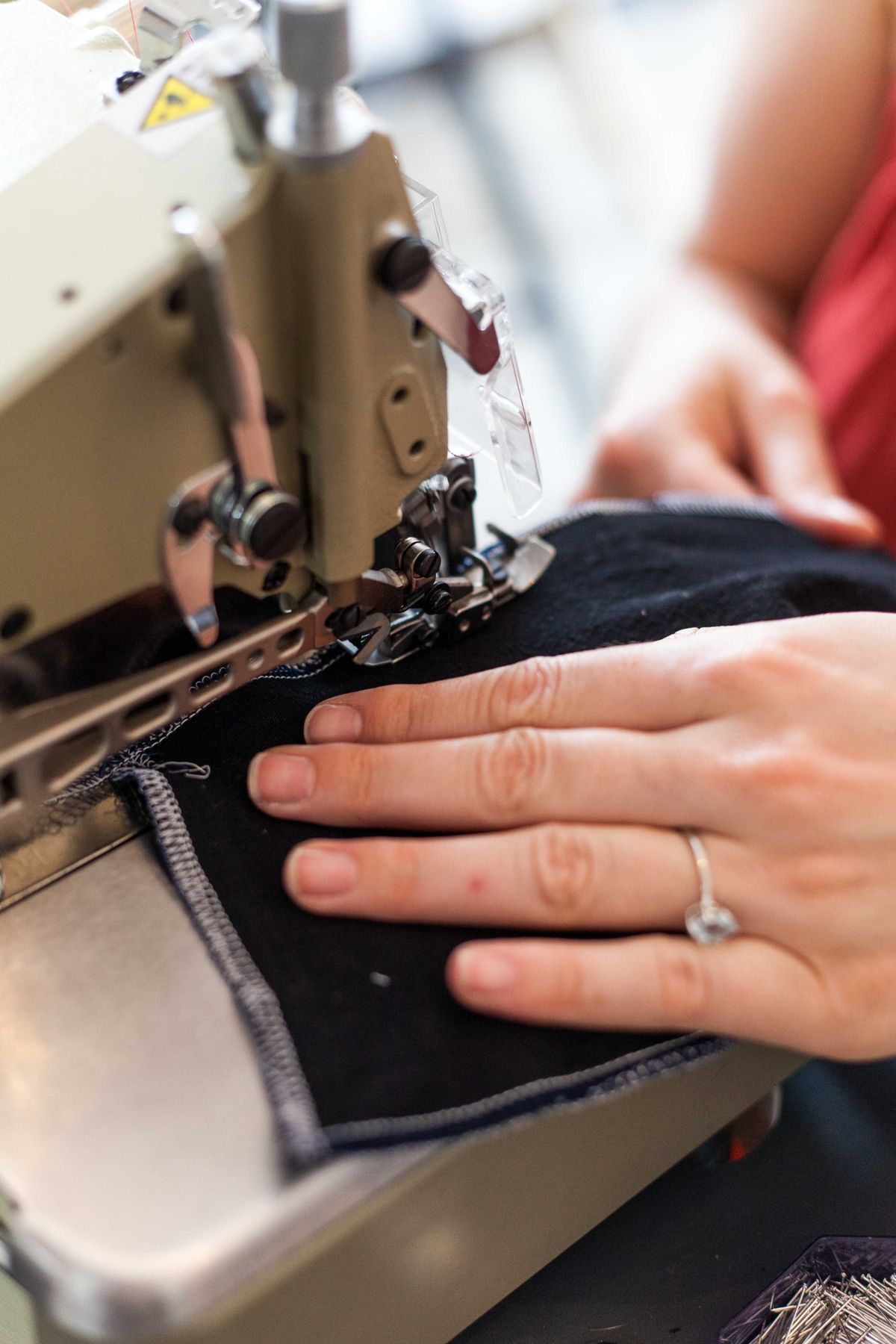
Leggings succeed or fail on recovery, opacity and the waistband. In March 2013 Lululemon recalled its black Luon yoga pants as too sheer, about 17% of the women's pants and crops in its stores, and cut its first-quarter revenue forecast, while saying the specification had not changed. A squat in daylight in the production fabric is a free test for the same fault.
What does a sports bra need that leggings do not?
More engineering, and it has unusually good public research behind it. The Research Group in Breast Health at the University of Portsmouth studies this directly, and says it works with lingerie and sportswear manufacturers as an independent group. It reports that over a third of sports bra performance could be explained by five characteristics: encapsulation style, padded cups, an adjustable underband, nylon as the principal fibre and a high neckline. Each increased the support provided (University of Portsmouth).
The same group reports that 51.5% of the 1,659 women it surveyed experience breast pain, and that women running in inadequate support showed higher perceived exertion, more upper body muscle activity and a stride shorter by 4cm (University of Portsmouth). Its study of more than 2,000 girls aged 11 to 17 found that only 10% always wore a sports bra when exercising (ScienceDaily, 2016). So this is a garment with a real job, and customers who train hard will notice whether it does that job.
For a new brand, three things follow.
- Do not treat it as a short top. A crop top with a band gives some compression. A bra built for high impact needs cups or encapsulation, an underband that holds, and straps that stay put. Decide which one you are selling, and say so in your product copy.
- Do not claim an impact level you have not tested. "High support" is a claim, and customers can feel if it is wrong. Test on several bodies and sizes doing the actual activity, because a bra that works in a small size may not work in a larger one.
- Budget separately. Sizing, cup construction and fastenings make it a different development job from leggings, and it may need a different maker. Our guide to British-made underwear and lingerie covers bra grading and the UK makers of non-wired and sports bras. Ask each factory to show you a sports bra it has made, not only leggings.

What should you test before approving bulk?
Test the sample as a customer would, then ask for numbers on the cloth. The table below sets out the tests that catch the faults that matter. Laboratory work costs money, so a small brand can start with the wear tests and add fabric reports from the mill or stockist, as long as the report is for the exact fabric and colour you are buying.
| Test | What it catches | How | Who does it |
|---|---|---|---|
| Squat in daylight | Sheer fabric at full stretch | Wearer squats in daylight, photographed from behind | You; free |
| Five-wash repeat | Bagging, shrinkage, seam puckering, waistband roll | Wash five times to the care label, then repeat the squat and fit check | You; free |
| Training wear test | Chafing, waistband drop, riding up | Wear for the real activity, several sessions, more than one body shape | You and your testers |
| Stretch and recovery | Fabric that does not return to shape | Strip test, BS EN ISO 20932-1 | Laboratory or mill report |
| Pilling | Surface wear at the inner thigh | Modified Martindale, ISO 12945-2 | Laboratory or mill report |
| Colour fastness to perspiration | Dye that bleeds or changes with sweat | ISO 105-E04, assessed on grey scales | Laboratory or mill report |
Standards as listed by Bureau Veritas and the standards catalogues linked above, read 6 November 2026. Agree pass marks with your factory or laboratory before you approve the fabric; the standards set the method rather than your pass mark.
Run the squat and the wash on the production fabric and in your real colours, because a dark sample tells you little about a pale bulk order. Keep the photographs with the sample approval, so that there is a record of what you agreed if bulk arrives different.
Plan for three sample rounds rather than two. The first shows the pattern, the second tests the correction, and the third is usually the one you can wear and wash in earnest. It is the same discipline as the fit work in our sportswear guide, and it costs far less than a return.
Before approving gym clothing for bulk, test the sample as a customer would: squat in daylight, train in it and wash it five times. Then ask for fabric results on stretch and recovery under BS EN ISO 20932-1, pilling under ISO 12945-2 and colour fastness to perspiration under ISO 105-E04. These standards set the method, so agree the pass marks with your factory or laboratory.
Why does fabric decide your colour range?
Because performance knits are often bought to a minimum per colour, and that arithmetic reaches you before the factory's does. Each new colourway of one legging is another fabric buy. Use the figures already on this page to see the effect at the factory end: at 50 per design and colour, three colours of one legging is 150 units, not 50.
A sensible first range in gym wear is narrow. One legging and one top in one or two colours teaches you more than six styles, because you can afford to test them properly and you will know why they sold or did not.
- Start in a dark colour. It is easier for opacity and hides minor construction flaws, so you test fit rather than fighting the cloth. Black is the obvious choice.
- Ask about stock performance fabric. If a factory holds one, your mill minimum disappears and your first order gets smaller.
- Try a stockist before a mill. You pay more per metre and far less in total on a small run. Ask how long that fabric will stay available, because your reorder depends on it.
- Add colour through print or trim. One base cloth can then serve several looks. Digital printing has low setup and a higher cost per metre, while rotary reverses that, so ask which applies at your quantity. Print also changes how a fabric feels, so test it again.
What does not work is cutting the quantity to afford more colours. Small runs of many colours raise the unit price, leave you with odd sizes, and spread your testing budget thin.
Does UK manufacturing make sense for gym wear?
For some brands, yes. The market is real: the UK Health and Fitness Market Report 2026 counts a record 12.2 million members, or 18% of over-16s (Health Club Management). But a large market brings heavy competition, and much of it is sold on price.
The case against is plain. If your customer is buying the lowest price for a black legging, UK sewing costs will be hard to recover, and no story about origin changes that. The case for rests on three things.
- Faster fit rounds. Fit is the product, and it takes several attempts. With a maker within reach, you can see a sample on a body in the same room and change it the same week.
- Faster reorders on a proven style. If one legging sells through, a short reorder cycle turns demand into revenue. That depends on keeping fabric available, so plan for it from the first order.
- A specific origin claim. A brand that imports cannot say its leggings were sewn in Britain. If yours are, you can say so at product level, and show it.
Be exact about that claim. Under the origin rules, Make It British's guide says a product comes from where it was last substantially transformed, and its example is imported fabric stitched into garments in Leicester (Make It British). So a legging sewn here from an imported knit can be labelled as made in the UK, but its cloth is not British. Our guide to what the made in UK label legally means goes through the detail. Many brands end up with a split: development and a UK-made line here, and volume basics made elsewhere, each labelled accurately at product level.
What import duty applies if you make gym wear abroad?
If you place gym wear outside the UK, duty goes into your landed cost, and sports bras and leggings do not pay the same rate. Under the UK Global Tariff, women's knitted trousers of synthetic fibres (6104 63 00), men's equivalents (6103 43 00), other knitted man-made fibre garments (6114 30 00) and cotton T-shirts (6109 10 00 10) carry 12% with no preference (UK Trade Tariff, 6104 63 00). Brassieres under 6212 10 90 carry 6% (6212 10 90).
The tariff lists 0% for these goods from the EU, Turkey, Vietnam, CPTPP members and, since the UK-India agreement entered into force on 15 July 2026, India (GOV.UK). Countries under the Developing Countries Trading Scheme pay 9.6% (4.8% on bras) at the standard rate and 0% under the comprehensive and enhanced preferences.
Do not read that 0% as automatic, because the rules follow the fabric. For garments sewn from knitted pieces, the UK-EU and UK-Turkey rules ask for knitting combined with making-up, including cutting, and the India and Vietnam rules set out the same pairing. Read literally, a legging sewn in one of those countries from a knit made elsewhere may not meet the rule and could pay the full rate. The agreements have tolerances and cumulation provisions, and classification can turn on the exact garment, so check your own product with a customs adviser before you rely on it.
Under the UK Global Tariff, women's knitted synthetic trousers such as leggings carry 12% duty, and brassieres under 6212 10 90 carry 6%. Goods from the EU, Turkey, Vietnam, CPTPP members and, since 15 July 2026, India can enter at 0% when they meet the rules of origin. For sewn knitwear those rules generally ask for knitting and making-up, so a garment sewn from third-country fabric may not qualify.
How do you verify a UK gym clothing manufacturer?
- Ask where it will be sewn, in writing. Several UK-based activewear businesses make overseas and say so openly, so this is a routine question.
- Check Companies House. Confirm the number, status and filing history on Companies House, and note that the registered office is often not the factory.
- Ask for the last leggings or sports bra it made. Hold it, stretch it and turn it inside out. A photograph will not show you the seam or the waistband.
- Ask about the machines. Which flatlock and coverstitch machines are on your premises, and how many? Anyone who owns them can say in one line.
- Ask how it sets waistband tension. A factory that makes leggings each week will answer at once. So ask also what correction it most often makes on a legging sample.
- Ask who owns the graded pattern. In a category where development is the main investment, settle this in writing before you pay for it.
- Ask for the fabric report, by colour. A result for black does not cover pale grey, especially on opacity and colour fastness.
- Run the tests above on the production fabric. Every fault that matters shows up after movement and laundering, so do this before you approve bulk.
If you plan a "made in the UK" claim, add one more question: which operations happen on these premises, and which, if any, go to another unit? Keep the answer on file along with the sample approval.
Related Reading
- Activewear production in the UK from 200 pieces
- Clothing manufacturers UK: the verified list
- Sportswear manufacturers UK
- Swimwear manufacturers UK
- Low MOQ clothing manufacturers UK
- Made in UK clothing: what the label legally means
Frequently Asked Questions
Who makes gym clothing in the UK?
Pinkfudge in Basingstoke says it designs and makes 4-way stretch garments in house, including leggings, sports bras and compression wear. Apparel Inspired in Hartlepool lists leggings, gym kits and sports bras, and says it can manufacture in the UK and overseas. Tower Garments in Enfield is named by UKFT for sportswear, and the Fashion Studio at Fashion-Enter in London runs short production from 1 to 300 units.
What is the minimum order for UK-made gym clothing?
Few makers publish one. Apparel Inspired gives 50 to 100 pieces per style depending on the product. The Fashion Studio at Fashion-Enter covers short runs from 1 to 300 units. Pinkfudge and Tower Garments publish no figure. Hook and Eye UK gives 50 per design and colour, but its bulk is made in China. Our own group works from 100 pieces per style.
Why do leggings go see-through when you squat?
Because the knit opens up under stretch, and a fabric that looks solid on a hanger can show through at full extension. Weight, knit construction and colour all play a part, and lighter colours are harder to make opaque. Lululemon recalled its black Luon pants in 2013 after finding them too sheer. Test by having someone squat in daylight in the exact production fabric.
What tests should gym clothing fabric pass?
Ask for stretch and recovery results, which BS EN ISO 20932-1 covers, pilling under ISO 12945-2, and colour fastness to perspiration under ISO 105-E04. Then add your own wear test: squat in daylight, train in the garment, wash it five times, and repeat. Agree the pass marks with your factory or laboratory before you approve the fabric.
What makes a good sports bra?
University of Portsmouth researchers found that over a third of sports bra performance could be explained by five characteristics: encapsulation style, padded cups, an adjustable underband, nylon as the principal fibre and a high neckline. Each increased the breast support provided. A sports bra is a separate development job from leggings, so test it on moving bodies.
What import duty applies to leggings made outside the UK?
Under the UK Global Tariff, women's knitted trousers of synthetic fibres, code 6104 63 00, carry 12%, and knitted brassieres under 6212 10 90 carry 6%. Goods from the EU, Turkey, India, Vietnam and CPTPP members can enter at 0% when they meet the rules of origin and you hold proof of origin. For sewn knitwear those rules generally ask for knitting and making-up.
UK Clothing Factory places and manages production with documented factories across Britain. Send the product, the volume and your date: our team replies within 24 hours and, if it is a fit, places and manages your production with the factory in our group built for it, from 100 pieces per style. The factory quotes and bills you directly. No commissions.
Brief our team UK factory directory (£49)No spec yet? A factory-ready tech pack for a single style is £79. What's in it.
Editorial note: trade names and marks mentioned here belong to their owners. Company details are taken from each company's own website, UKFT and Companies House, and duty rates from the UK Trade Tariff, all read on 6 November 2026. Prices and minimums change. Confirm terms directly with the business, and your commodity code and origin with a customs adviser, before committing.
Sources consulted
- Pinkfudge, gym wear and bespoke leggings: 4-way stretch, in-house services, garments and fabrics.
- Apparel Inspired, activewear and British clothing factory: garments, 50 to 100 per style, UK and overseas, Hartlepool and Harrogate.
- Tower Garments and UKFT, June 2025: London facility, CMT and full package, sportswear.
- Fashion Studio and Fashion-Enter factory: 1 to 300 units, core production, audits.
- Bags of Love, custom gym leggings and terms: made in the UK label, method, price, operating company.
- Hook and Eye UK, manufacturing and home page: bulk in China, 50 per design and colour, two-design minimum.
- University of Portsmouth, Research Group in Breast Health: sports bra characteristics, breast pain survey, running findings.
- ScienceDaily, January 2016: University of Portsmouth study of more than 2,000 girls aged 11 to 17.
- CS Monitor, 19 March 2013: the Lululemon Luon recall and revenue forecast.
- Health Club Management: UK Health and Fitness Market Report 2026, 12.2 million members, 18% of over-16s.
- BSI, BS EN 14704-1, Bureau Veritas bulletin, ISO 12945-2 sample and EVS-EN ISO 105-E04: test standards.
- Make It British, can I label my product as made in the UK: origin follows the last substantial transformation.
- UK Trade Tariff, 6104 63 00 and 6212 10 90: duty rates and rules of origin, read 6 November 2026.
- GOV.UK, UK-India FTA enters into force: 15 July 2026.
- Companies House: companies 11677358, 14901020, 07922591, 05779844, 04666562 and 10180775, read 6 November 2026.